Author: Samuel Tew

  • Going Back to Exeter for University: Interview with High School England Alum Emily Demski

    Going Back to Exeter for University: Interview with High School England Alum Emily Demski

    Like our High School Abroad France alum Zoe Lien, High School Abroad England alum Emily Demski studied as an exchange student in England when she was in high school and decided to pursue university abroad. We asked her about how this idea came about, how she applied, and tips for future students hoping to do the same.

    Emily in England, photo courtesy of Emily.

    Can you tell us about yourself?

    My name is Emily Demski and I studied abroad in Exeter, England from January 2019- June 2019. I am from South Lyon, Michigan and I was 16 when I began my experience. I lived with a host family just outside of Exeter with 2 parents, 2 kids, and another student and I attended Exeter College.

    Tell us a brief overview of what your program was like and what you did on a daily/weekly basis on program.

    I attended 3 AS level courses: psychology, sociology, and English language. I would have either 2 or 3 classes a day and would spend my free time meeting with friends, studying in the library, or exploring the city. I was taking 6 classes a day in the US, so I really liked that I got to focus on only 3 in the UK and learn much more about each subject. It was also interesting to learn about some topics from a different perspective.

    I spent most of my weekends with my host family exploring other parts of Devon. They showed me several local beaches where we would go for hikes or fishing and different parks and trails. I loved this because the destinations in England are so different to what I was exposed to in Michigan.

    Why did you decide to explore the possibility of going to university abroad, and how did you decide which schools to apply to?

    While I studied in Exeter, I fell in love with the area and the life that I lived there. I realized that I wanted to live there longer, so I toured the University of Exeter it immediately felt like home. Because it’s in the area that I wanted and is a great school that provides a great education, I only applied to programs through the University of Exeter. Even though it’s a perfect fit for me, I never would have found it without studying abroad at Exeter College first.

    Tell us about the application process. What was it like? How hard was it?

    I applied to 4 schools in the US and and to 4 programs in the UK, so I became very familiar with both application processes. Both can be done online and were fairly easy to complete. The first major difference  I noticed was while applying in the UK, instead of applying to a school, you chose a program to apply to. For example, I applied to the business economics course at the University of Exeter rather than just applying to the University of Exeter. Another difference that I noticed were the skills you emphasize on the essay portion of the application. For schools in the US, you write a personal story so the university can better understand you as a person. For example, my essay focused on my struggles of having lyme disease, how I overcame that and what I learned from it. However, the personal statement that I wrote for applying to programs in the UK held a focus on why I am fit for that program and was more academic based. I wrote about the classes I took that prepared me for the program and my interests in it. Another fact that is important to know is that you need 3 college level classes (AP or dual enrollment) to apply to programs in the UK. This is because they complete A level classes, which are equivalent to AP or dual enrollment classes, prior to applying to universities.

    Why do you think it was beneficial to study abroad before going to university abroad?

    Going to university abroad is an extremely huge commitment. For me, I will be there for 3 years completing my degree and I would feel a lot less prepared if I didn’t study abroad before. Going abroad alone can feel very scary, but now I have a host family and lots of friends to come back to. Since I studied abroad for only 5 months, it was a lot less scary to move to an unknown area for a few months rather than a few years. I also am very familiar with the area now, so I feel confident in navigating myself around and am excited to return. Having a support system for me there will really help with my transition back and throughout my whole experience.

    Do you have any advice for a high school student interested in studying at university abroad?

    I would highly recommend either visiting the area that you are interested in or studying abroad there beforehand. This is so you will feel confident that you will like living there. Because you won’t be able to come home as often as you could if you went to university locally, you have to make sure that where you go feels like home and you are comfortable there. If you are familiar with the area, the transition will go a lot better.

    If the university seems like a good fit for you, I highly recommend going abroad. You will learn so much about yourself and you will be exposed to so many life changing experiences. I have never felt more alive than I did when I was in England. Everything is exciting, beautiful, and breathtaking.


    Photo courtesy of Emily


  • Q&A With High School Abroad Italy Student: Daily Life in Italy

    Q&A With High School Abroad Italy Student: Daily Life in Italy

    When you study abroad, you find out that almost always, no matter where you are in the world, we all do the same things: eat, go to school, spend time with friends, and so on. But as you move through your new home, you’ll start to notice all sorts of small differences. Sometimes these are best part — and the things you’ll soonest forget when you return back home. We wanted to know what our 2020 First-Time Traveler Scholarship Recipient Jessica Durnell had to say about daily life in Italy.

    What kind of food/snacks do you eat during school?

    There is no lunch at Italian schools, since school usually ends around the same time that other schools have lunch. Instead, there’s usually a small break that you can eat a snack. You can bring
    something from home or go to a vending machine
    although I’m not really sure if every Italian school has a vending machine, but every one I’ve been in, there has been one. Quite strange,
    since in America it was basically illegal for a student to even touch the vending machine, haha.

    What is transportation to school like?

    There is no school buses in Italy. Instead, students take the public bus or the train. It’s fun to take the public bus, since there is no basic public transport in America unless you live in a big city –
    you need a car. The downside of public transport when going to school, though, is that you have to pay for each trip to and from
    and the cost can rack up quite quickly for only a few weeks.

    Jonathan Bean via Unsplash

    How are classrooms different in Italy?

    Italian classrooms are also very different. In stead of how students move around every 45 minutes or so in America, the teachers move around instead. Where I went to school in Italy,
    sometimes we could change buildings every other day since our school wasn’t big enough to hold everyone.

    How is the school schedule different in Italy?

    School gets out extremely early. Compared to American schools (and other schools around the world), Italian school gets out just before one o’clock. It starts at around 7:45 AM in the morning
    (which I didn’t know until two months of going to school, I was perpetually late). It’s around the same time American schools start, probably later than most, my American public school started
    15 minutes earlier, after all.

    Is the relationship between the teachers and the students any different?

    Greeting teachers when they walk in the morning is also very different. In America, I will say, we are not as respectful to each other. Even the teachers aren’t (well, it depends on the teacher,
    some don’t care and others do, it’s exchangeable) too worried about saying good morning to everyone. In Italy, everyone says good morning and goodbye to the teacher when they come and
    leave. And when the teacher walks into the classroom, everyone stands up from their seats until the teacher tells you to sit down. The students in my classroom only did this for a select few, so albeit it was something you were supposed to do, it didn’t seem that strict.

    Vitalii Chernopyskyi via Unsplash.

    How much different is pizza/how do they eat pizza in Italy?

    For some reason, when I ate pizza in America, whenever someone (or I) would fold their pizza over to eat it, someone would say that Italians would make fun of you if you did that in front of
    them. When I went to Italy I was mortified when everyone folded their pizza over. Everything my friends from 5th grade had told me had been a lie (what a surprise).

    How much different is pizza/how do they eat pizza in Italy?

    Compared to America pizza, pizza is much thinner. It’s easy to eat a whole pizza, compared to the big thick stuff that is painfully American. I also got many questions about whether or not I put
    pineapple on my pizza, which Italians see as a sin. I’m being serious. Every time I answered their question with no, I would hear a sigh of relief. When in reality I have never seen so many toppings that can go on pizza while I was in Italy. There was hotdogs and fries. You can put anything on a pizza. (Except pineapple).

    What plays on Italian TV?

    Italians have their own cartoons, which is pretty obvious. I never watched TV though, I will admit. I grew up with tapes and DvDs in America instead of cable, so I’m not used to it. There is a
    lot of America shows that are dubbed in italian that play on TV which I did recognize, and it’s rather amusing to see how the characters voices transferred over.

    There’s anime on TV. Which surprised me and my American friends (and we were extremely jealous). One Piece, Detective Conan, and Dragon Ball; the only channel I know of that played
    anime in America is Adult Swim, but I didn’t have cable, so I couldn’t watch anything anyways when those shows were airing. Plus I wasn’t even born yet. A lot of people here grew up
    watching One Piece without even knowing what it was, which I think is really cool
    and something I will forever be jealous over.

  • Travel for a Change This Summer on the Teen Leadership & Language Costa Rica Program

    Travel for a Change This Summer on the Teen Leadership & Language Costa Rica Program

    With so many great program options for teens in Costa Rica, how do you know which is right for you? Well, the facilitators of the Teen Language & Leadership Camp in Costa Rica, Laura and Amy, might be biased, but they want you to know they believe this one of the best options you’ll encounter!

    Here’s why they say this program is so impactful. 

    There are a lot of challenges you’ll face when doing experiential learning abroad – and they require a very open mind and desire to experience (and we mean truly experience!) a new culture. This means getting used to different standards of living and forgoing many of the luxuries you might be used to at home.

    Of course, like any developing nation, Costa Rica has its fair share of growing pains, but it is also has an amazingly welcoming and safe culture, plus one of the world’s top environmental protection structures. Its eco-friendly tour opportunities combined with its small size and accessible infrastructure mean that in just two weeks, students will experience lowland jungle, rainforest, a volcano, the beach, an island, enormous waterfalls, indigenous communities and a tropical wildlife rescue center.

    All of this in addition to studying Spanish and completing our Positive Leadership Workshop series, which includes the following:

    • Opening circle to meet participants, share reflections, examine expectations & perceptions, and contemplate personal goals for intercultural understanding and social action
    • Practices in Empathy: Participants will be asked to share and actively participate in a series of learning exercises designed to provoke awareness of “the other”, and develop strategies for how to engage constructively through the practice of empathy.
    • Social Responsibility: This is a common theme in many academic and professional circles, and we believe all global citizens have a duty to participate in and lead initiatives conceived with the objective of ensuring sustainable development, fair labor practices and environmental protection.
    • Mindfulness Sharing Circle: reflections on the courses of the first week; reflecting on changes in perception of culture and people, individual experience and more.
    • Empowered communication: direct, constructive and respectful communication is vital to every part of our lives, personal, professional and academic. In this workshop we learn to identify patterns, techniques for enhanced communication skills and how to effectively and positively communicate our message.
    • Social Media for Social Change: Instagram, Tiktok, Facebook, Snapchat… these and many more platforms are how a huge part of our populations gets its news and communicates about people, products, ideas and more. Students will learn how to effectively craft their message, prioritize objectivity and start to think about WHAT they can do to make a difference and HOW they want the world to hear about it.
    • Global Citizen Closing Workshop: Teens will reflect on their whole experience and share stories of things that inspired, changed and challenged them. We will all set further goals for personal development and to implement some of our new skills into socially responsible projects. We recognize that though our contributions may be small, they are all part of a global tapestry, and that working together we really can change the world!

    If you think you are too small to make a difference, try sleeping with a mosquito
    – African proverb quoted by the Dalai Lama

    In short, this camp will boost your language skills, intercultural intelligence AND give you the confidence and skills you need to positively influence and navigate the quickly changing culture of our world.

  • Best Free Apps To Have When You’re Living Abroad

    Best Free Apps To Have When You’re Living Abroad

    There are so many different apps available to assist you in your travels, but many of them are geared towards short-term vacationers to help put together an itinerary or find the cheapest flight. While those apps will be useful when you have some time to plan a vacation, you’ll want to add a few apps to your phone that will make your day-to-day life a little easier. Below are a few of our favorite (free!) apps:

    General

    Maps

    • Downloaded Google Maps
    • Maps.me
    • City Maps 2Go

    Even if you do decide to get a data plan for your phone while you’re abroad, it’s still a good idea to limit your use of it as much as possible. Downloading maps before you leave home or a wifi hotspot helps you not get lost and save some data! Everyone has their preference, but these are the three most used map apps.

    Communication

    • Whatsapp
    • Facebook Messenger
    • Kakao Talk
    • Line

    Another way to save on your phone plan is to find out which free messaging app is popular in your host country. WhatsApp is the most common in general, Kakao is most popular in Korea and Line is prevalent in Thailand and Japan.

    Learning the Local Language

    • Duolingo
    • Memrise

    Duolingo and Memrise are the two most popular language learning apps. They are free and structured so that you only have to study for 10 minutes a day. They offer a wide range of languages but aren’t 100% inclusive so you may need to seek out a language-specific app for some countries, like Thailand.

    Language On the Fly

    • TripLingo
    • Scan & Translate
    • Google Translate

    Duolingo is good for the continuation of learning a language, but sometimes you need quick translation or an easy way to lookup a word/phrase. TripLingo is truly amazing. With over 100 destinations available, the app offers basic phrases and slang terms to help you sound more like a native. There is also a live translator option that actually works well, a dictionary and a culture guide for each destination. Google Translate is a good guide if you’re stuck on a certain word, but gets messy (i.e. wrong) when you start asking for full sentences. Scan&Translate allows you to take a picture of text and translate it which comes in handy when the local language doesn’t use the Roman alphabet.

    For the Classroom

    • Kahoot
    • FluentU
    • Words With Friends
    • Heads Up

    Phones are generally not allowed in the classroom, but you know the kids have them anyway and are trying to sneak glances when your back is turned, so why not turn a negative into a positive? Kahoot is an app where students use their phones to answer questions in a quiz that you made which can either be taken in teams or individually. FluentU is normally used as a language learning app (like Duolingo) but they have a ton of authentic English-speaking video clips to supplement your lessons. Games that are traditionally not educational like Words with Friends and Heads Up can still be used as a fun way to incorporate English in your classroom.

    VPN

    • NordVPN ($40/year)
    • PureVPN ($40/year)
    • Safer VPN ($6/month)

    A VPN (Virtual Private Network) is an app on your phone (or software on your computer) that protects your device with less secure networks, like public wifi, by encrypting the connection and using a different IP address. VPN’s are not free, but they’re on this list for their usefulness – travelers benefit from a VPN mostly for streaming services that are unavailable outside of their home countries, like Netflix for example. The VPN is most useful for those living in China where most apps are blocked (Facebook, Instagram, Gmail, Google) but Netflix and Spotify aren’t always available in other countries and they’re nice to have, too.

    Transportation

    • Uber
    • Moovit

    Uber isn’t always available in every country, but most places will have their own version of Uber to make up for it. Moovit works on desktop and has an app to help you find the fastest way from Point A – Point B with whatever public transit is available. There is a wide range of countries and cities available with Moovit so it’s great to use when you’re traveling for vacation too!

    Miscellaneous

    • Money – XE Currency
      • Easy way to convert multiple currencies
    • Safety – Smart Traveler (US Citizens)
      • Sign up for the STEP program before you leave home and stay up to date with safety in your host country with this app
    • Food – Happy Cow
      • Use this app to find vegetarian-friendly restaurants or dishes in your area


    Country-Specific Apps

    Korea

    • Kakao Talk
    • Kakao Metro
    • Kakao Bus
    • Kakao Taxi
    • Kakao Maps

    Kakao everything!

    Thailand

    • Learn Thai, Thai Pod 101
      • Language learning apps specifically for Thai that offer short, manageable lessons
    • Grabcab
      • Especially on the islands or Bangkok, this app really gives you an idea of what you should actually be paying even if you don’t use it to hail a cab
    • Next Station
      • Map of the all the Bangkok public train stops including the BTS, MRT and Airport line
    • Food Panda
      • Food delivery app similar to Seamless that can be used in big cities like Bangkok and Chiang Mai


    Europe

    • Flixbus
      • Find bus routes, schedules and buy tickets around Europe
    • CityMapper
      • Navigation tool that displays public transit info, such as cost and live departure times of buses and trains. It will even tell you the best section of the train to find a seat! CityMapper mostly has European cities, but there are a few other destinations like Seoul, Istanbul and Hong Kong.
    • Trenitalia
      • Mobile ticketing for Italy

    China

    • WeChat
      • Similar to Kakao, WeChat is a savior in China. You use it to text, as a social media platform, to order food for delivery and even to pay your bills or a cab fare!
    • VPN
      • Everyone has their preferred VPN, but if you want to continue using your favorite social media platforms, you’ll need to shell out the money each year for a VPN on your phone and laptop

    New Zealand

    • Grabaseat
      • Find super cheap domestic flights
    • First Table
      • Discounts for participating restaurants
    • Grabone
      • Similar to Groupon


    Have you used an app that was a life-saver during your time abroad? Comment the name below!

  • Alumni Q&A with Zoe Lien: From High School Abroad to University in France

    Alumni Q&A with Zoe Lien: From High School Abroad to University in France

    High School Abroad France alum Zoe studied with Greenheart for a semester in Spring 2020. She’s now planning to go to university in France. We asked her about her program and why she decided to pursue higher education abroad.

    Would you tell us a bit about you?

    My name is Zoe Lien, and I am from Minneapolis, Minnesota. I went abroad for the first time with Greenheart in January 2020. I was in La Guerche de Bretagne, France. My first taste of France was a beautiful week in Paris. I laughed, lived and shared stories with all the other kids planning to study abroad in France through Greenheart. After sole breaking walks through the cobblestone streets of the most beautiful city in the world, I took a train to begin my new life. I arrived at the foreign metal scary station and was met by warm smiles. I was adopted into a family, and now had 3 more teenagers to live with. After a weekend of gluten, sugar, happiness, card games, and lots and lots of family time, I went to high school. My mornings started at 7 am, and my school day ended around 5, except for Wednesdays, those were half days. Hoorah! Thankfully, I did not have to be embarrassed alone. I lived with a host sibling who was my age, and had all the same classes as me. Usually we went to school by bus, but on a good day, he drove the Volkswagen.

    Tell us about your program in France.

    I was so embarrassed to speak with kids in my class, but it felt better to know that he was also going through pain, trying to repeat and explain every conversation anyone had to the new American girl. I didn’t understand anything in my classes, but considering I was taking Calculus, Physics, Philosophy, Biology, History, Gym and Spanish, I didn’t put too much pressure on myself to understand. 1pm was my favorite hour. A stampede of blurred teenage bodies would speed into the lunchroom doors, like they had just seen Tupac enter the room. It was understandable considering a French lunch for students consists of three delicious courses to stop the whale noises coming from your stomach. Somedays, we had duck, pâte carbo, fish, etc. All followed by a baguette bouffet, and a dessert made by the gods. Lunch was unimaginable, and it lasted 2 hours! Unfortunately there was no naptime that followed. Coming back to class was hard, but comforting for someone who likes a consistent schedule, because all your classes are in the same room, except gym of course.

    After trying to understand my professors speaking gibberish for 7 hours, I went back to my cozy home. After school, I was exhausted, and would usually take a nap. But If it was Wednesday, I would leave school at 1pm, and go eat kebab with my friends, and then nap later.

    After a quick snooze, I would do my homework, or at least try, and then go hangout with my family. I tried to study French, from apps like Duolingo, but I could never use the words and phrases I learned, in real life. I found out, the way to learn a language is to erase your ego and let yourself be frustrated. You need to step outside of your comfort zone, and speak with someone whenever possible.

    Why did you decide to go abroad?

    I decided to go abroad because I love to be out of my comfort zone, learn new things, and interact with people, but adjusting was hard sometimes, even for me. Adjusting to a new country was difficult, but that, and a worldwide contagious evil virus attacking my dreams and expectations of studying abroad, was harder. But nonetheless, I never let myself go home, because even though it was the worst, it was better than anything I knew.

    Online classes taught by professors who don’t know what a PDF is, was funnier than it was annoying. Real school came to an end about 2 months into my trip, so I didn’t acquire many writing skills, but staying at home really helped me learn how to speak. I was  blessed to have a host mother with a bookshelf the size of my apartment, so I passed my afternoons reading books like The Stranger, and fell in love with Albert Campus. When summer came, I spent my time with my host siblings and friends by the crystal blue, so cold you might cry, ocean, and spent my nights learning French games, and dancing.

    Leaving was honestly horrible, and I think I cried every day I was back. The post-study abroad depression was real, but slowly I went back to my old ways. I was sad because I was scared I was going to be the same person I was before the trip, and I loved the new, well dressed, trilingual, lovely Zoe. I stayed home for two months, but quickly went back to my new comfort zone, France.

    When did you get the idea that you wanted to attend university abroad, and in France?

    In Minneapolis, I started to reflect on what i was going to do for college, and where I was going to spend my future years. An $80,000 college tuition, along with a tiny dorm room, and dirty frat parties, didn’t sound ideal. College tuition is free in public universities for French students, and around $5,000-10,000 a year for international ones, depending on the school. I decided that I wanted to continue my journey learning French, and it was a win-win to go to college there.

    How did you start the research and application process? What obstacles did you find?

    I decided to apply to The University of Rennes 2, to study Psychology and Sociology. I picked Rennes, because it was the closest city to where i lived before, and I had plenty of friends and contacts in the area, and at the University. The application process was a handful, and not for the weak minded or lazy. You must gather all the documents you can imagine, get them translated, write essays, and pass a language test. Thankfully Greenheart had already made me recover the documents the Universities required. My study abroad experience also taught me that if you have questions or need help from a French person, such as the Director of a University, be prepared to wait 3-5 business months! My biggest obstacle was, and still is the French language test. To enter into a University in France, you must have a certificate that says you can speak, read, and write like all the other French kids in your class. I was planning to take it last year, but thanks to COVID-19, all the testing centers are closed. I applied either way, and expressed to my University that for half of this year, I am taking a 20 hour/week class to learn French. Hopefully things will end up working out. My study abroad experience paid off when I could write the essays needed for my applications without a sweat down my brow, and I passed the French speaking interviews with ease.

    How did your high school abroad program help you in the process for applying for universities in France?

    My experience studying abroad last year changed my life forever. I have gone through a journey of self discovery, one that I would never take back. If this article makes you think that I didn’t have a good time, don’t be fooled. All Parisians say they hate Paris, but none of them would ever leave. I was only 17, and did not speak a lick of French when I arrived, and now I bargain with the old French men at the supermarket. I told everyone I was going to France, before I even applied, and all I have to thank is Greenheart for helping me achieve my dreams. Do not underestimate yourself, and what you can do. And do not hesitate to learn about someone else’s culture for once. Greenheart provided me with an excellent family and a beautiful little town to plant the roots of my tree. I will be forever grateful for that experience and everything that Greenheart gave me.

  • The Foods Every Exchange Student in Norway Must Try

    The Foods Every Exchange Student in Norway Must Try

    Greenheart Travel note: Daphne is a high school student from New Jersey studying in Norway during the 2020-2021 year. 

    By: Daphne Becker

    If you plan on studying abroad in Norway, there are three different groups of food that you will be eating:

    1. Traditional Norwegian food
    2. Sweets
    3. Random foods that everyone in Norway eats.

    Before I left to go abroad, of course I needed to eat my two favorite foods that I thought I wouldn’t be able to eat until I landed back in the United States. Those were bagels and Mexican food. I am from New Jersey, so I think our only other competitor with bagels is New York, and we definitely have the best bagels by far. We also have a large Latino population, so we have some pretty awesome Mexican food too. These are the two things that I thought I would be depriving myself of because I wouldn’t be able to get them.

    It’s safe to say that Norway 50 years ago is very different then Norway today when you talk about food. Traditional Norwegian food is very bland due to the fact that Norway actually was a very poor country until 1969 when they hit oil. They were only eating what was available to them, so it was potatoes, fish, and brown anything. Norway is the definition of “brown lunch” – and if you don’t know what that is, it is where everything on your plate just has no color.

    So, here are the top 5 traditional Norwegian foods that your host family will have many times a week.

    Photo courtesy of Georg Eiermann via UnSplash
    • Salmon or Cod– Norway has some of the best most fresh fish that I have ever tasted and it’s safe to say that you will be eating this at least once a week (maybe more) with your host family.
    • Bread with pålegg – In Norway, a typical breakfast and lunch is bread with pålegg. We don’t have an English word for this because we don’t really eat pålegg, but it is basically anything you would put on bread (ex. Cheese, peanut butter, jelly, lunch meats, etc). You will be eating this every single day, probably even twice a day if you go to Norway. You also do not eat this like a sandwich, you eat it as two separate pieces of bread (this is VERY important to note). I am personally not a huge fan of pålegg bread because I think it is very bland, but it is part of the experience!
    • Brown cheese, or Brunost in Norwegian- Brunost is a very typical pålegg. It is a mix of goat and cow’s milk, and is a brown sweet cheese. The milks are boiled for many hours and the water evaporates, so that turns the milk sugars into caramel which gives it the brown color and the sweet taste. Brunost is definitely an acquired taste, and for me I am in the middle. I don’t really know what I think about the cheese yet, I think that my taste buds are still getting used to the sweet taste and the sticky texture.
    • Potatoes– This is a no brainer. Norwegian’s have potatoes as a side with any dinner. You should expect to have them boiled with no seasoning, in boats, mashed, literally any way you could imagine. Just when you think you are having spaghetti and meatballs for dinner, think again, you may be having red sauce, meatballs, and potetbåter (potato boats). This is definitely something you will be eating every night!
    • Norwegian Meat (moose, reindeer, lamb, and elk) with brown sauce- I call the meats that I listed above, “Norwegian Meats” because these are things that I have never eaten before I came to Norway. Lamb is something that people probably have eaten before they came to Norway, but I had never. The only one that I really like to eat is reindeer, that has to be by far my favorite. It is always eaten with brown sauce or brun saus in Norwegian! To be honest, I am not sure what it is made of. It is sort of a sweet creamy sauce that is of course, brown. Norwegians LOVE brun saus! My host family even eats it with a spoon after they finish the food.

    That wraps up traditional Norwegian foods you will definitely eat with your host family many times a week! Although they are very different to what you may be used to, it is important to give everything a try because you may be surprised!

    This one is the fun part. Norwegian baked goods and sweets are the best! They know how to bake here for sure!

    Here are 5 sweets that you need to try in Norway!

    Photo courtesy of Cherry Laithang via Unsplash
    • Freia Melkesjokolade– Freia is the Hershey of Norway, but 100 times better. Norway has very good dairy, so that is probably what makes the milk chocolate so good. This is a must, and a staple dessert in every Norwegian home, and something that you will eat if you “gå på tur” or skiing or anywhere! Freia is even so good, that if you are standing at the castle, and look down Karl Johans Gate you will see the Freia logo because the king loves it so much that he needed the logo to look at.
    • Boller- Boller is a sweet bun that is eaten all the time in Norway. You can find them with or without raisins, and I prefer them without. They are very common and are eaten all the time. You will be able to find them at any store you go to.
    • Skoleboller– Skoleboller is not a traditional Norwegian dessert because it uses coconut, and coconuts do not naturally grow in Norway. They are a variation on the traditional boller. It is a boller filled with custard and coated with coconut flakes on the outside. You will be able to commonly find them in any grocery store, bakery, convenient store, etc across the country.
    • Waffles– Norwegian waffles are very different from the traditional American waffle. They are thinner, crispier, and in little heart forms. They also are not eaten with butter, syrup, and a fork and knife. Norwegian waffles are eaten with jam, brunost, or butter and sugar. You also eat them sort of like pizza with your hands. These are also very common to eat when you go out grilling or “gå på tur” with friends or your family.
    • Pancakes– Norwegian pancakes are also way different then typical American pancakes. They are similar to a French crepe because they are thin and flat. Norwegian pancakes are also typically not eaten with butter and syrup like an American pancake is. My mom has made them for my siblings and I for our whole lives, so before I came to Norway I had already tasted them. I always would usually eat them with maple syrup or jelly. In Norway they are eaten with either sugar and lemon or jelly. Sugar and lemon sounds weird, but it is definitely really good!

    The last category is random foods that all Norwegians eat. These foods are not traditional Norwegian foods that every Norwegian family will eat on a regular basis.

    Here are 3 non-Norwegian foods that you will be eating with your host family, and that you definitely need to try regardless of what I say about them!

    Photo courtesy of Engin Akyurt via UnSplash
    • Fredagstaco (Friday taco)- Norwegian fredagstaco is probably one of the most random things that I have been eating almost every Friday night since I arrived in Norway. Taco is eaten by 8.2% of the population every Friday. It is a variation on a traditional taco, but with a Norwegian twist of course. Personally, this is my least favorite food that I have been eating in Norway. They are usually made with flour tortillas, ground beef with taco seasoning, Norwegian guacamole (avocado and a little lime), corn, and tomato paste. I don’t mean to sound spoiled when I say this, but I think that I am just used to a more traditional taco. To me, I just prefer something a little less bland and a little more traditional.
    • Grandiosa Pizza– Before fredagstaco took Norway by storm, they had pizza Friday with Grandiosa frozen pizza. Grandiosa frozen pizza is similar to the taco in the way that it is not traditional. They are of course made with Jarlsberg cheese which is a Norwegian cheese, so of course it is pizza with a Norwegian twist. They have crazy toppings like a fredagstaco pizza. The pizza is not bad, but not great.
    • Pølser– Pølser are Norwegian hot dogs. They are directly translated to sausages instead of hot dogs, but they are far from a sausage. You will be eating pølser when you go out grilling with your family of friends. They are eaten just like a hot dog, in a hot dog roll with ketchup, mustard, and/ or crispy onions. Hot dogs have never been one of my favorite foods, and I eat them but don’t love them. It is fun to grill them when you go out with friends or family!

    To sum up, Norway has many traditional and non-traditional foods that are eaten all the time. Traditional Norwegian foods are brown and do not have a lot of taste, but non-traditional Norwegian foods are very random, and a mix between Norwegian cuisine, and cuisine from other countries. These are all foods that you must try when you go to Norway, and probably will be eating multiple times a week!

  • 8 Things You Can Do as an Exchange Student in England

    8 Things You Can Do as an Exchange Student in England

    Greenheart Travel’s High School Abroad England program gives U.S. and Canadian students the chance to join their British peers in intensive academic courses called “A Levels” (Advanced Levels). Students are placed in the final two years of non-compulsory high school (Years 12 and 13, the equivalent of 11th and 12th grade in the U.S.) at semi-private Sixth Form Colleges.

    We often emphasize the rigorous academic aspects of this program with good reason – but as an U.S. teen on an exchange in England, there’s a lot you might know you can do!

    Win a scholarship for the 2021-2022 Academic Year

    All students who apply for the 2021-2022 academic year in England will be eligible for a $1,200 scholarship. While all students will be considered for the scholarship, we’ll give special preference to any student who identifies as a first-time traveler and is particularly interested in music or the arts. The deadline to apply is April 15! Hurry!

    Participate in Activities Through School

    The Sixth Form Colleges we place students at offer a range of “enrichment” activities, most commonly things like basketball, tennis, volleyball, soccer, and gymnastics. There are spas, sports facilities, performing arts centers, and even a rock climbing gym at one school! While the academics are a big aspect of being an exchange student in England, there are so many other incredible opportunities to get involved outside of class.

    Graduate From High School

    Well, sort of. Remember, it’s actually called Sixth Form College! If you’d like to earn graduate from a British Sixth Form College and be able to apply to universities in England, you can study for two consecutive years on the High School Abroad England program. You’d have to enter in your 11th grade year and study in England for both 11th and 12th grade years and succesfully pass your “A-Level” exams at the end of the two year.

    Earn an International Baccalaureate (IB) Diploma

    There are two schools within our network that allow U.S. or Canadian students to study in an International Baccalaureate (IB) program. This is highly competitive and only available for high achieving students. In order to participate in this program students have to commit to studying their final two years (11th and 12th grade equivalents) in England. We accept students on a case-by-case basis and this program has additionally fees — so get in touch before starting your application.

    Specialize in a Skill or Trade

    While our traditional High School in England program places students in Sixth Form College to get a window into the life of a student preparing for their “A-Level” exams, we also work with schools offering vocational tracks, known as BTEC (Business & Technology Education Council) courses.

    If you’re interested in getting real-world, hands-on experience in things like hair and make-up, massage therapy, hospitality and food science and nutrition, TV and film production, sports therapy or personal training, fashion design and textiles, photography, sound, lights, and stage, and many other skills, there are options for you! Get in touch to inquire about special pricing and options.

    Take a Gap Year

    Already graduated from high school in the U.S. or Canada? No problem. You’re still welcome to study abroad in England! In fact, with the specialization and high academic rigor of A-Levels or the practical knowledge gained from a V-Tech track, it’s a perfect prep for U.S. university or well-rounded career. Read more about why England is a great gap year location here.

    Travel on your own

    As a general rule across all Greenheart Travel high school programs, students are only permitted to travel through school or with their host families, but not on their own. England (and The Netherlands) are our only exception to this rule. In England, you’ll be treated more like an adult and so long as you get approval, have good academic standing and don’t miss any class, you and your new friends can travel on weekends and breaks. One alum Adelaide did several trips, including this weekend excursion with her friends to London. Another alum Josh traveled on his own from his host community Worthing to Bath and Stonehenge.

    Join a Football Academy

    And you know what we mean by football, right? Nope, not what they play at the Super Bowl! In the U.S. it’s called soccer, in the U.K. (and rest of the world!) it’s referred to as football. Any U.S. or Canadian teens with particular skill at soccer are eligible to play the sport while studying abroad in England. Throughout the world soccer is one of the most common sports, and England is no exception. Many of the Sixth Form Colleges where Greenheart Travel students study (for example, Bexhill College or Itchen College) have men’s and women’s soccer teams, where highly skilled players get top-notch training and coaching and the opportunity to play on teams. The Ladies Football team at Itchen College won the National Cup finals four years in a row and many former players of these leagues have gone on to play professionally!

    Not quite a pro yet? No sweat. If you love soccer but haven’t yet reached the skill level required to compete, you’d definitely still be able play soccer as an afterschool activity.

  • 3 Ways to Spend Summer Break in Costa Rica

    3 Ways to Spend Summer Break in Costa Rica

    A note from Greenheart Travel: Since November 2020, Costa Rica has allowed residents of all 50 U.S. states to enter the country. We will be still continue to monitor the health and wellness and entry requirements for Costa Rica, but we have successfully ran all programs in Costa Rica since then. Please refer to our COVID-19 blog for the most up-to-date information on current programming.

    If you’re a teen looking for a fun and meaningful way to spend your summer, you need to get yourself to Costa Rica. Greenheart Travel offers three incredible programs ranging in focus, length, and cost.

    No matter if you want to live like a Costa Rican teen or and simply snorkel some of the most beautiful beaches in the world, there is an option for you.

    Teen Language & Culture Camp

    Alternating between weeks in the capital San Jose and beachy Manuel Antonio, our teen summer language camp is a combination of Spanish courses and daily activities like cooking classes, surfing, walking tours and even karaoke. Spend evenings and weekends with your host family as you experience the tico way of life. This is a great way to pack in a ton of Costa Rican activities in a short period of time while practicing your language skills.

    • Length: Choose between 1-4 weeks
    • Accommodation: Host families
    • Cost:  ~ $2,500 – $7,000

    Ideal for:

    • Spanish learners
    • Meeting friends from around the world
    • Getting to experience beach + city
    • Short time frames

    Leadership & Adventure Spanish Camp in Costa Rica

    This program is designed for teens who want the rigor of language courses while also partaking in workshops, talks and informational sessions about social change, leadership, and sustainability. Located in both Heredia and Samaria, you’ll experience both an urban and beach setting. You’ll take back skills, global awareness, and tools when you join a small but diverse group of teens in this transformative program.

    • Length: 2 weeks
    • Accommodation: Host Family
    • Cost: ~$3,500

    Ideal for:

    • Spanish learners
    • Gaining global leadership skills
    • Harnessing tools for social change
    • Learning from Costa Rican experts

    Summer High School Study Abroad

    If you love the idea of being an exchange student but can’t miss part of your school year, don’t miss this opportunity. On our Costa Rica summer study abroad, you’ll live with a host family and be enrolled in a local high school in areas like San Ramon, Palmares, or Zarcero. You’ll leave speaking like a local and make lasting bonds with classmates and your host family. You’re also guaranteed to have a host sibling your age!

    • Length: 1 month or two months, dates will be released by December 2020
    • Accommodation: Host family
    • Cost: ~$6,000-7,000

    Ideal for:

    • Full language and cultural immersion
    • Experiencing a different education system
    • Those unable to study abroad during the school year

  • Q&A: The Language Requirement for High School Abroad Japan

    Q&A: The Language Requirement for High School Abroad Japan

    So you’re ready to be a high school exchange student in Japan: Your U.S. school has agreed to award you credit for Greenheart Travel’s program, your parents support you study abroad, and you’ve been living and breathing all things Japan since you can remember. The only thing holding you back? The Japanese language requirement!

    All applicants of the High School Abroad Japan program are required to show proof of one of the following as part of the application process:

    1. At least one year of Japanese language instruction at the time of your application, OR
    2. A level 4 on the Japanese Language Proficiency Test (JLPT)

    Well, earning a level 4 on the JLPT seems like a pretty clear way to prove your Japanese skills, but one year of language instruction? That’s a bit less straightforward to prove, and how to do so is a common question for many applicants. We asked the Associate Director of High School Abroad and Short-Term Programs Allison to clarify.

    Tokyo, Japan. Photo by Allison.

    What do you mean when you say to have at least one year of Japanese language instruction “at the time of your application”?

    You are required to show that you have had at least one full year of Japanese language instruction BEFORE you complete your application, not based on the time you would arrive in Japan. (It’s also required you have a good grasp of hiragana, katakana, and kanji.) So, if you are applying for the Spring 2022 or Fall 2020 High School Abroad program in Japan, the deadline submit your completed application is by September 15, 2021 for Spring 2022 (Psst! Get a discount on the Spring 2022 program if  you apply by May 28, 2021). That means the latest you should have started learning Japanese was September 15, 2020!

    Do I have to take the JLPT? Am I more likely to get accepted if I’ve taken the JLPT or if I could prove one year of study?

    During the application process, you choose the way you prove your Japanese skills, either by showing proof of a level 4 on the JLPT or by showing proof of one year of Japanese language instruction. You don’t have to do both. In our experience, the majority of students opt to prove one year of Japanese language instruction instead of taking the JLPT. While a level 4 on the JLPT is very impressive, you are not less likely to be accepted if you choose not to take it.

    So if I don’t take the JLPT, what’s the best way to demonstrate I’ve had one year of Japanese study?

    If you can take Japanese at your high school, do that! Make sure to have at least one full academic year (minimum two semesters) on your transcript before you apply. If Japanese isn’t offered at your school, there other ways you can fulfill the one year requirement and other places to find a course. Most students do a mix of methods, from self-study combined with a weekly tutor to language exchanges and short-term intensives to year-long community college courses.

    If you’re in the early planning stages and you’re deciding how to learn Japanese before  you apply, think about it like this: What’s the easiest way I can show a possible school in Japan or potential host family that I’ve taken one year of Japanese? My best recommendation is to take a structured, official course, with concrete start and end dates, learning objectives, levels, and set learning materials (textbooks, websites, etc.). Make the application process easier for yourself by taking out the guess work of those reviewing your application (myself and the in-country staff in Japan!).

    Where can I find a class, online course, or private tutor?

    Have you checked our Teen Language Camp in Japan? You’ll learn a lot in a short period of time (and have a blast!), and it’s the perfect way to jumpstart your understanding Japan’s language and culture before you apply to the high school abroad program. You’ll be able to see the curriculum and prove your starting and ending level after pre- and post-course exams. However, this program lasts 1-6 weeks so you’ll need to continue learning once you return home.

    Otherwise, you might consider local or online options. The ability to meet in person in your area with a Japanese class or private tutor will vary by your location. If you’re most interested in classes in person, you could try locating a local Japanese culture center or association for course or tutor recommendations, or reaching out to a local community college or university to see if they offer a Japanese course you can enroll in.

    If you’re okay with an online course or tutor, there are many opportunities! A simple Google search will populate many results, such as Outschool. Some of the best options are online courses through universities, such as Oregon State, University of Michigan, and even other universities featured on online edX courses.  Greenheart Travel also offers online Japanese language classes for teens!

    Whichever option you choose, again — make sure you’ll be able to obtain an official proof of enrollment or completion. (For private tutoring, this could be a record or log of meetings and what you covered in each meeting, verified by the tutor.) You’ll need it for the application!

    Does self study count as one year of language instruction?

    Luckily, yes! But the truth is, it’s a lot harder to prove and a lot harder for host schools in Japan to understand. If you’ve only learned Japanese on your own, I’d recommend taking the JLPT to prove your level. One of the application requirements is a letter of recommendation from a Japanese teacher or tutor, written in Japanese. So if you study on your own, it’s a bit difficult to fulfill that requirement.

    If you do study on your own, be very detailed from the beginning. I’d recommend starting an excel spreadsheet. There, you can log the times and dates you’re studying and exactly what you’ve used to study (duolingo? a textbook?) what topics you’re covering and how you’re measuring your progress. A good rule of thumb is to study 5-10 per week and spend no longer than one semester (around 16 weeks) on one level. Need some guidance? Check out our leveling guide here.

    What happens if I apply without at least one year of language experience?

    In some cases, we will still be able to consider your application even if you haven’t had a full year of Japanese at the time you apply. If other parts of  your application are strong, we may be able to offer a “conditional acceptance.” This means that you are a good candidate and your official acceptance onto the program is dependent on a host school accepting you to study.

  • How Does Social Life in Norway Differ from the U.S.?

    How Does Social Life in Norway Differ from the U.S.?

    Greenheart Travel note: Daphne is a high school student from New Jersey studying in Norway during the 2020-2021 year. 

    By: Daphne Becker

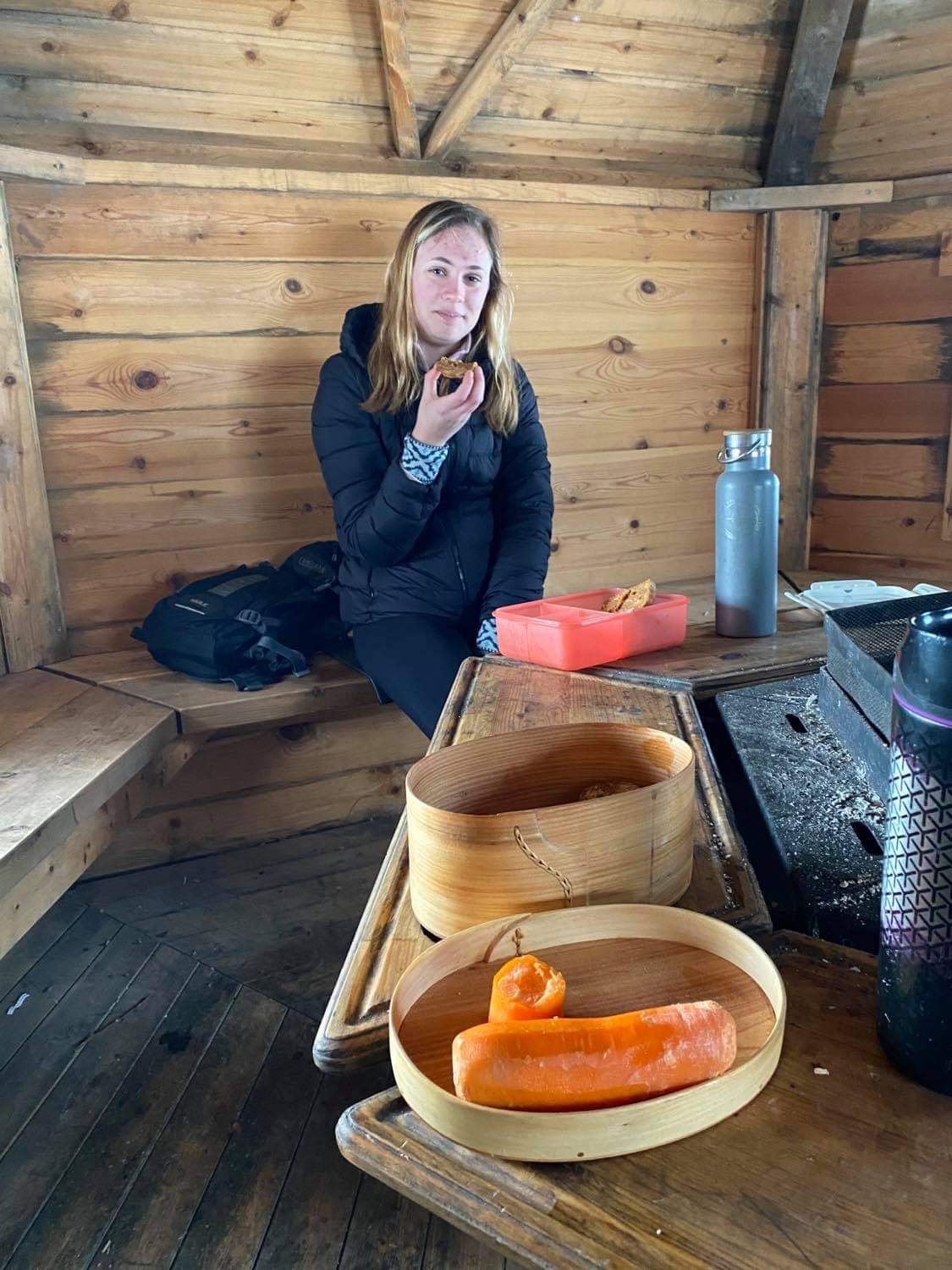
    Daphne having a snack while enjoying the outdoors.

    Norwegian’s typically have a reputation for being very outdoorsy people, and I can confirm that is true. A very typical question from a Norwegian is “Skal vi gå på tur” Which means “Should we go for a walk?” If you have ever even been on vacation in Norway for just a couple of days, you have definitely heard this phrase being said.

    Now, I know what you’re probably thinking, that you go on walks all the time at home just around the block or to the store. A Norwegian walk is different. It is usually in the forest not too far from your house, around lunch or dinner time, includes a fire (with grilling hot dogs, marshmallows, etc), and they are done all throughout the year. After all, “there’s no bad weather, only bad clothing” right? This isn’t just an activity that your parents drag you too for some family time on the weekends, and you just complain the whole time. This is something that every Norwegian has grown up doing their whole life, so naturally everyone young and old are able to make a fire and cook food over it. This is something that I have had to learn in the time that I’ve been here so far, and something that I will bring back home with me. Of course there are other activities that people do here like cross country skiing, ice skating, and swimming (all year long!).

    Norwegians don’t center activities around money. Of course they like to go out to eat or go on vacation, but the country offers so many free activities. This has to do with the fact that Norway is an expensive country to live in. To compensate for that, they have so many free outdoor spaces for anyone to use. Norway has a concept called the “freedom to roam” or “everyman’s right”. This means that you are able to walk, camp, picnic, etc on undeveloped land throughout the country. Of course there are some basic rules for camping that need to be followed such as:


    • People are allowed to camp at least 150 meters away from the nearest inhabited house or cottage.
    • Campfires are not allowed in the forest areas between 15 April to 15 September, unless it obviously can not lead to a fire.
    • Tourists are allowed to stay in one spot for only one day. After that, it is necessary to specifically ask for permission from the landowner. This rule excludes the mountains and the national parks.

    Nordmen are very environmentally conscious as well, so it is no problem picking up trash and cleaning up after yourself when you leave your spot.

    Daphne enjoying the outdoors.

    The Norwegian social life differs from mine in New Jersey. I do live at the Jersey shore though, so it is common in the summer and when it is warm in the spring or fall to be outside at the beach or in someone’s backyard. We do not have the “everyman’s right” concept though, so my friends and I do not do a lot of hiking or camping. This also has to do with New Jersey being very flat and populated, so there is not a lot of free land to hike. Of course we could drive to New York or Pennsylvania, but being 16, we don’t have our drivers license to take us there.

    We also center our activities around money a lot more. It is not typical in Norway to go to the mall or shops around and go shopping on the weekends, or go to a restaurant and eat out. Norwegians are happy with cooking their own food, and teenagers can cook nice meals too.

    On one Friday, I went over to my friends with another girl and we were going to eat dinner there. Typically if I were home, my friends and I would order pizza, sushi, Chinese food, or go out, but here it is common to go to the grocery store and cook for yourselves. I do know how to cook, but I can make the basic things, and I have never cooked with meat before. We went to the store with no plan whatsoever on what to eat. After walking around for a little, we decided to make chicken and some typical Norwegian potato dishes. When we picked out chicken to eat, I thought that it was crazy. I had never cooked with raw chicken before in my life. Partly because I am scared to death of it being raw. We went back to her house, and prepped and cooked chicken and potatoes for us to eat. After doing this, I was thinking about how different it was to me to just cook dinner with friends instead of going out or ordering take out. Thinking back on it, it is a good idea to cook more at home with friends because you make more funny memories, and save a lot more money!

    Of course there are many similarities though. In the winter when it is just too cold and snowy to do anything, it is very common to watch a movie and chill on the couch with your friends. Also to have game nights, which is a good way to learn the language because many games are translated from the English version to a Norwegian one. For instance, the game, Cards Against Humanity, has a Norwegian version where it not only teaches you just some of the language, but also some Norwegian pop culture!

    In short, I think that the main difference on social life in Norway vs social life in the United States is that Norway does not center their activities around money. They center it more around good company and nature.