Author: Samuel Tew

  • Greenheart Travel’s Ultimate Going Abroad Packing List

    Greenheart Travel’s Ultimate Going Abroad Packing List

    Whether you’re going on a short weekend trip or a long-term stay abroad, packing is an essential part of the travel planning process. It can be stressful figuring out what to bring, and how much to bring. Lots of people put it off until the last minute and then pack all the wrong things.

    Feeling overwhelmed by the packing process? Have no fear! Greenheart Travel is here to help! We’ve compiled the ultimate packing list, including checked & carry-on bags, for you as well as some of our staff’s favorite tips. With this helpful list, packing will be a breeze! Now, you won’t have to worry about over packing or spending an arm & leg on baggage fees.

    Checked Bag or Suitcase

    Depending on your length of stay abroad, you may decide to check a bag with the airlines. It will allow you more space for your items (and souvenirs you buy later!) but keep in mind, there are trade offs –larger size can be cumbersome in certain countries, may harder to move around, airlines might lose it — so it’s always good to have the essentials & valuables in your carry-on bag. If you are checking a bag, make sure to check with the airlines ahead of time about cost & weight requirements to avoid fees at the airport.
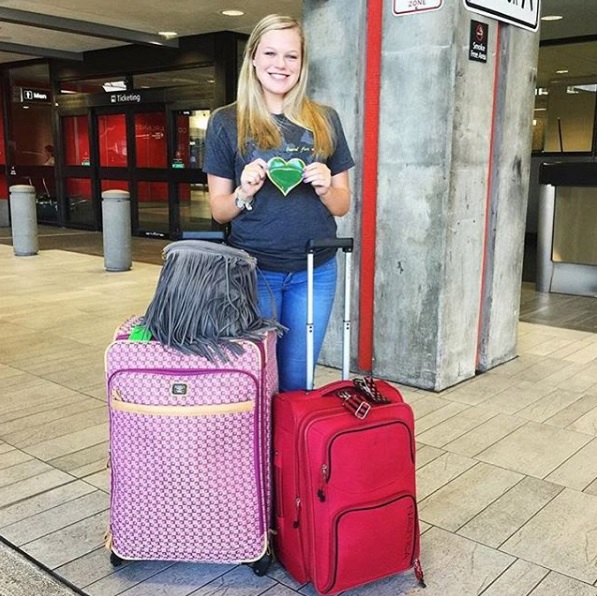
    stacy with bags

    Greenheart Travel’s Packing List

    All of these suggestions are assuming a 2 week stay, but you shouldn’t need much more than 2 weeks worth of clothing (regardless of length of stay) since you’ll likely be doing laundry along the way.

    It’s important for female or female-identified travelers to do a little extra research about the destination country before packing. In many countries, there are societal norms about modesty, appropriate dress and skin exposure that disproportionately affect women. Be aware that your appearance & apparel may draw unwanted attention to you, so it’s always good to try and fit in with the local customs.

    Please Note: You may not use some of these items. If they don’t apply to you, feel free not to pack them!

    What How Many? Special Notes
    Shoes 1-3 Pairs Recommended Sandals, Sneakers and Flats. Heels not necessary.
    Bottoms 3-5 Pairs Shorts, Jeans & Slacks
    Tops 4-6 Shirts T-shirts without writing or logos. At least one button down or polo is recommended.  Avoid low necklines
    Dresses 1-2 Dresses Maxis are modest & comfortable
    Pajamas 1 Set Shorts & t-shirts are usually fine
    Outerwear 1 Coat Raincoat for rainy climates, heavy coat for cold climates
    Underwear  7 -10 pairs Can be rolled for easy packing
    Socks  6-8 Pairs Might consider less for a warm climate if you’ll be wearing sandals
    Bras 3-5 bras Don’t forget at least 1 sports bra!
    Swimsuit 1 -2 sets Bikini, one-piece or shorts. Check social norms first.
    Hat 1 baseball hat or sun hat Helps to avoid sunburn
    Sunglasses 1 -2 Pairs Polarized make it easier to see in the sun
    Scarf 1-2 Scarves For quick cover up, or outfit change
    Prescription Glasses *if needed You never know when you might run out of contacts
    Shampoo & Conditioner 1 month supply Keep in small containers
    Toothbrush & Toothpaste 1 month supply Mini sizes under 3.4 oz are best for TSA
    Cosmetics 1 make-up bag Just the basics is usually enough
    Razor 1 handle & extra blades Avoid electric if possible
    Contacts *if needed Have at least a couple extra sets on hand
    Feminine Products As much as you’ll need Tampons are REALLY hard to find abroad.  Bring lots
    Basic First-Aid Kit 1 Kit Should include bandaids, over-the-counter meds (tylonol, imodium, etc) & cold meds
    Towel *if needed Check if it’s included in your accommodation. If not, quick dry towels are best!
    Cross-Body Bag 1 Purse or bag Make sure it has a zipper!

    Other Items You Might Want to Consider

    • Prescription Medication — If you have any prescription meds, you should bring enough with you to cover your entire stay because finding the same name brands abroad can be challenging. Always keep a doctor’s note with the written prescription available just in case you get stopped in customs.
    • Wrist Watch — Your traveling buddies will get sick of you asking what time it is every time your phone dies.
    • Alarm Clock — Even though most people use their phone, you might be without power and still need to wake up!
    • Bug Repellent — Depending on where you’re going, the mosquitoes and bugs might get a little nasty. Repellent can be hard to find, and is usually expensive.
    • Converters & Chargers– Check whether the power in your destination country will be different than at home, and buy a converter if you need it. Nowadays, companies make universal converters which are usable around the world, and are definitely worth the extra money if you plan to travel a lot! Keeping all your cords & chargers in one zipped bag makes organization easier.
    • Mini Detergent — You might not always have access to a washing machine, and may have to wash your essentials (ie underwear) in the sink so having mini detergents will help you wash stuff more easily.
    • Shower shoes — If you’re going to be changing hostels or accommodation frequently, the communal showers can get gross. A cheap pair of flip-flops will make your life easier.
    • Greenheart Travel T-Shirt — Don’t forget this comfy shirt! If you snap a picture in it, you might be featured on Instagram!

    Large Carry-On Bag

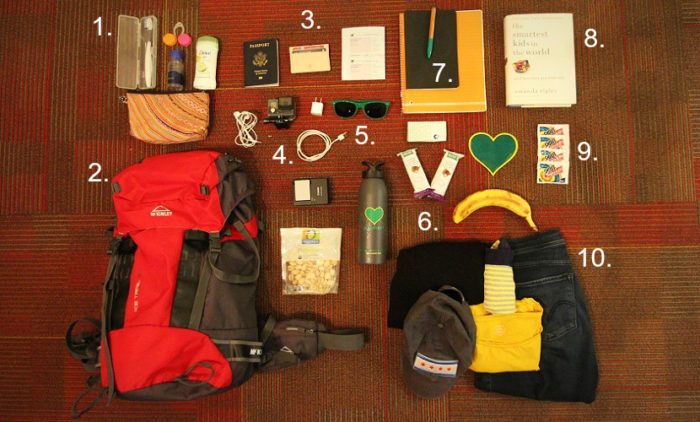
    Here at Greenheart Travel, we are big supporters of the #carryononly trend for travel, but for longer programs, it can be hard to fit it all in a small bag! You might check a bag and still need a backpack or larger carry-on. In that case, here is your complete list.
    flatlay carry on bag with numbers

    1. Basic Toiletries — On long international flights, you’re going to want your basic amenities. Its a good idea to pack your toothbrush & tooth paste, contact solution, and deodorant. Other nice things to bring are some cleansing face wipes, hand-sanitizer and perfume/cologne so that you can freshen up right when you land.
    2. Comfortable & Easy to Carry Bag — Whether you prefer a roller bag or backpack for your carry-on, it needs to be comfortable and easy to move around in. Lugging a heavy or uncomfortable bag through an airport as you change flights is a hassle you just don’t want to deal with.
    3. Passport & Important Documents — Having easy availability of your passport and wallet is an absolute necessity in your carry-on bag. You won’t have access to your checked bag before passing through immigration, so you need it in your carry-on bag. It’s also a good idea to have copies of important documents, like your visa (if applicable), address of residence, and a copy of your credit cards on hand in case the immigration officer requests it.
    4. Electronics, Chargers & Headphones — Maybe it’s just me, but I don’t trust the airlines with my expensive electronics! Computer, tablets, cameras and chargers are always in my carry-on bag where I can keep an eye on them. It’s also a good idea to pack at least one power converter in your carry on bag if you need a quick power-up once you arrive in the foreign country, because their outlets might be different.
    5. Sunglasses — These are easily broken in checked bags, and you’ll probably want to put them on right away!
    6. Snacks & Water Bottle — Buying food and water at the airport is expensive! And these days, the airlines hardly give out any freebies, so it’s economical to come prepared. For domestic flights, you can pack pretty much any food you might want. Your water bottle will need to be empty when you pass through security, but you can fill it up on the other side. Plus, you’re saving plastic from ending up in a landfill! If you back any perishable fruits or veggies, you’ll need to eat them before you land so you don’t have to declare them in customs.
    7. Journal, Pen & Paper — With hours on a plane, your mind is likely to be racing with excitement and energy. You might feel inspired to reflect or write about your upcoming adventures, so having a journal on-hand is a great way to pass the time.
    8. Book — Even in the days of electronics, nothing beats a good book! We recommend paperback if you can manage it, since it’s lighter weight.
    9. Shout Wipes — Because you never know when you  might spill on yourself.
    10. Extra Change of Clothes — There is nothing worse than landing after 14 hours of travel to find that your bag didn’t make it and you’re stuck in your dirty clothes. Always back an extra pair of clothes (especially socks & underwear) in your carry-on bag, just in case!

    Small Carry-On Bag

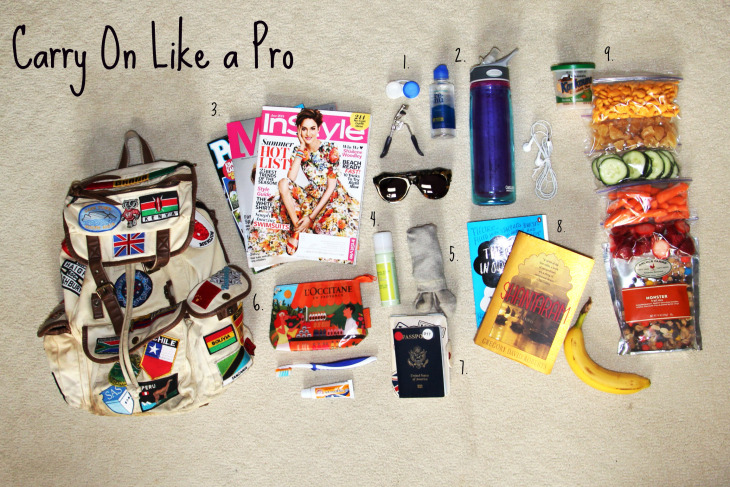
    If you prefer having a smaller carry-on bag (like a purse or small backpack), that’s fine too! You’ll need to downsize a few things, but the essentials are still likely to be in your bag. Check out what we suggest below.
    carry-on-collage

    1. Eye drops & Contact Solution— Dry eyes are the worst!
    2. Water Bottle — Saving the planet and dollars at the same time.
    3. Magazines — These are easy to pick up and swap at airports.
    4. Sunglasses — Yup, still make room for those!
    5. Socks — If your feet get cold like mine, socks are always in my carry on bag, even if it’s just a purse.
    6. Toothbrush & Toothpaste — Gotta get that fresh breath, amiright?
    7. Passport & Important Documents — I’m not trying to get rejected at the border.
    8. Books — Something to fall asleep to.
    9. Snacks — No hangry travel for this savvy traveler.

    Packing Tips from the Greenheart Travel Staff

    I keep a bag for my dirty clothes and I always put a dryer sheet inside the bag to keep it smelling fresh. That way it doesn’t stink up the rest of your stuff! You can also turn your clothes inside out to know which ones are dirty vs clean” — Savannah McDermott, Teach & Work Program Coordinator

    Pack your favorites. Never bring something that you haven’t worn before. I always travel with basics, like a white t-shirt or black vest, and then jazz up my outfits with jewelry or a colorful scarf” — Sara Dorsey, Senior Teach & Work Abroad Program Manager

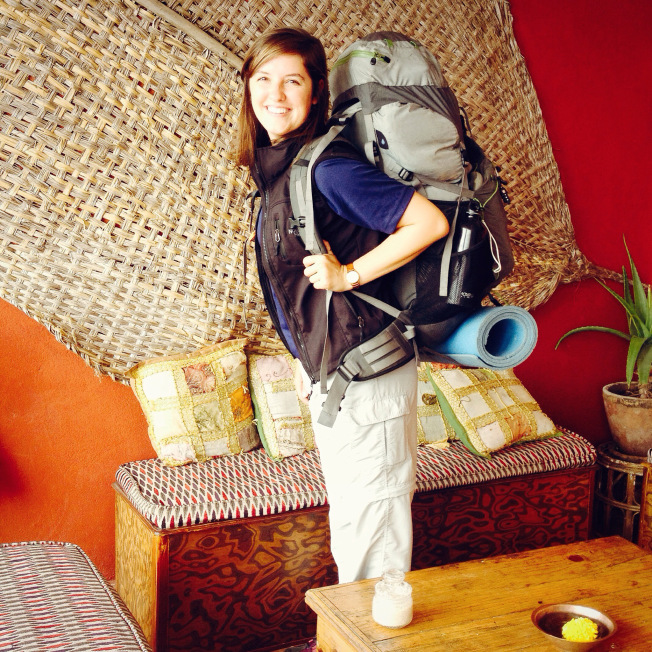
    I never travel with a suitcase. My trusty backpack has been with me since the beginning and I love it. It’s so much easier to move around with a backpack than a suitcase, especially in developing countries. No matter how long my trip is, I will find a way to fit it all in my backpack” — Kara Menini, Teach & Work Program Manager
    backpacking

    Rolling underwear & socks and then stuffing them into my shoes helps save space. Plus, it helps maintain the shape of dress shoes or for the ladies, keep your flats less flat.” — Kyle Trebotich, Director of Greenheart Travel

    I save up all the cosmetic & lotion samples that I get from like Birchbox and Sephora for my travels. They’re the perfect little sizes, and are easy to pack. Those mini perfumes are the best!” — Lauren Bauer, Teach & Work Abroad Director

    I am a big exercise nut, so I always think about how I am going to work out while traveling. I pack a swimsuit instead of running shoes, because it saves space and still gets my heart rate up!” — Hope Pavich, High School Abroad Director

    I pack all my small things (shirts, underwear, socks, etc) into gallon plastic bags. It makes it easy to squish them down and save space, and it also makes it easier to find inside a big backpack or suitcase. I always pack a few extra too, for dirty clothes and toiletries. Sometimes the air pressure explodes the bottles, and I don’t want lotion all over my stuff!” — Megan Arzbaecher, Short-Term Programs Manager
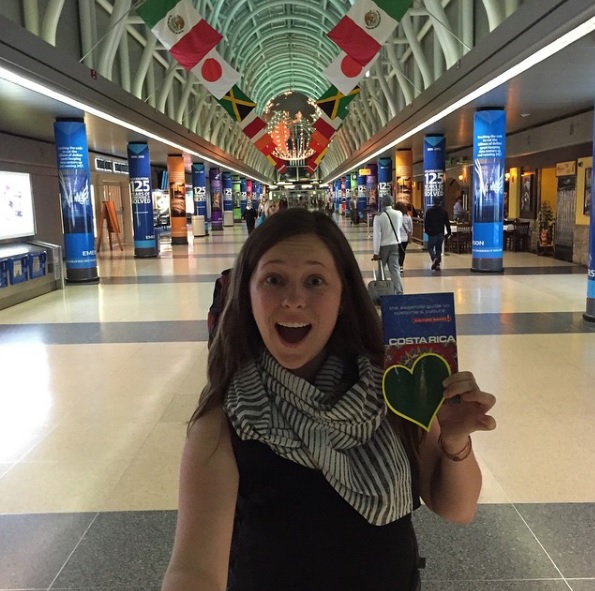

    kara at ohare

    Did we miss anything? Comment below with any packing tips or suggestions that you use while you travel!

  • “Yes, and…”: One High School Abroad Austria Student on How Exchange is a lot like Improv

    “Yes, and…”: One High School Abroad Austria Student on How Exchange is a lot like Improv

    By Mollie Block

    A semester abroad is kind of like one long improv class. No, I’ve never taken an improv class before (unless you count the exercises I did in my 3rd grade after school drama club) but granted I’ve never been on a semester abroad before either. A bit of a bold statement, I’m aware, but don’t discount it until you hear me out. If you have taken an improv class before, and even if you haven’t, you know the one main rule of improv. “Yes, and …” For those of you who don’t know, and those that need a refresher, allow me to try and explain (sorry real improv students for how I’m going to mess this up!) what this means: Whenever a person is improving a scene and is asked a question the appropriate response is always “Yes, and …”. This opens up multiple paths for a scene to take and ensures there is always more to be acted. 

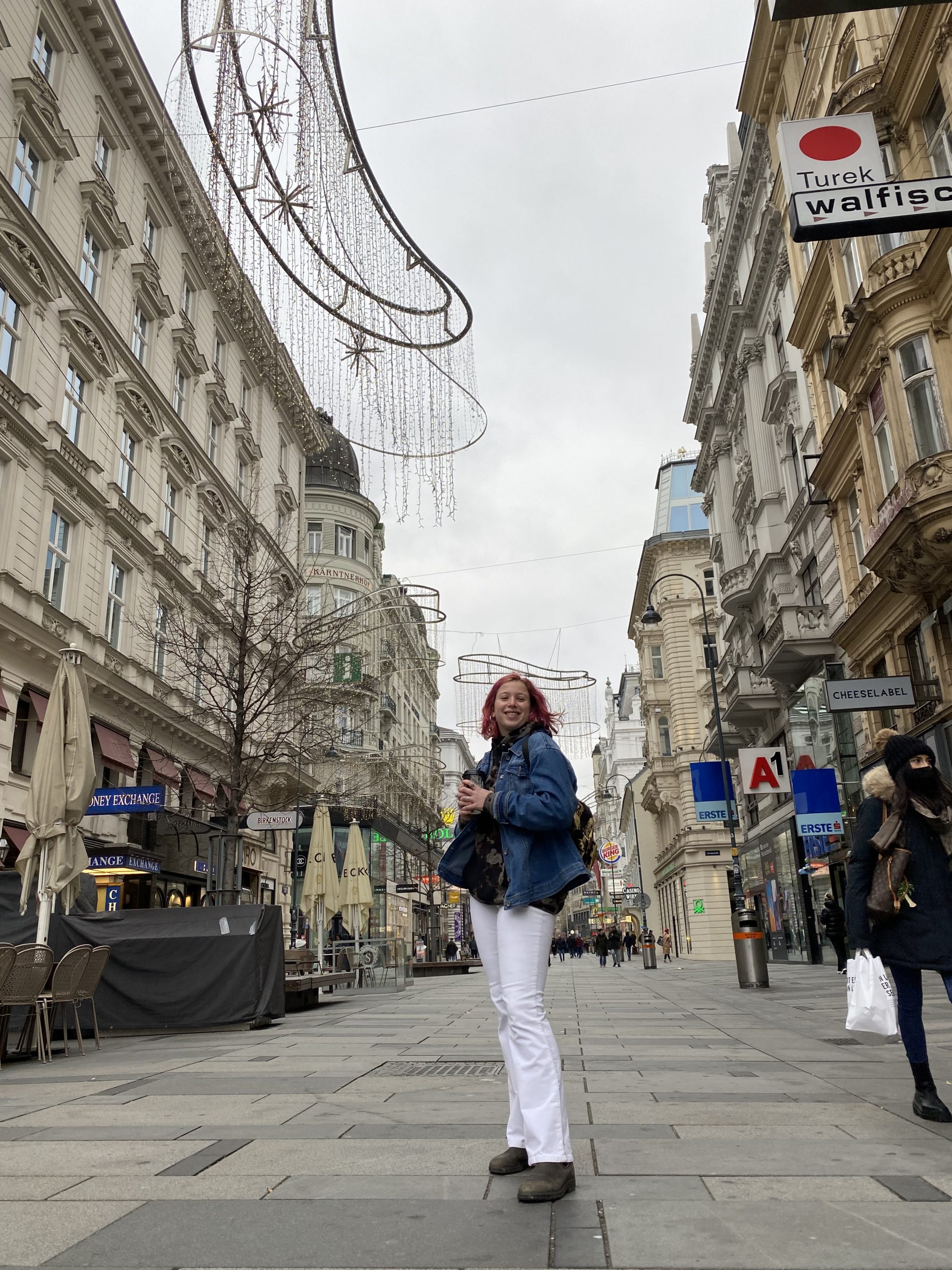
    Mollie in Vienna, enjoying the city in a Coronavirus safe way.

    I’ve only been abroad for about three months and yet I can say with confidence that the number one rule for improv happens to be the same number one rule for being an exchange student. I’ve found that the only way I’m going to get the most out of this journey is by opening myself up to new experiences, even if I’m scared or hesitant. 

    Maybe you’re still not on board, my comparison doesn’t make a lot of sense in the abstract, so let me give an example. One of my first days here, my host dad asked me if I wanted to go on a bike ride after we dropped off my host sister at her practice. Now I know what you’re thinking; this is a pretty insignificant thing to mention, what’s the big deal about a bike ride? I never really liked biking that much, downhills are scary and uphills are taxing, but the summer before my 8th grade I got into a bike crash. It wasn’t terrible, nothing broken and no scars, but I did have to go to the ER and I haven’t been on a bike since. Until coming here. I felt bad turning down my host dads offer, I had only been here a few days and I wanted to show my host family how eager I was to become a part of their life, so I said sure. I expected to maybe walk my bike for a little and stop somewhere on the path. However, I ended up riding my bike for a couple hours. 

    Yes, it was flat and yes, we were going slow but if you had asked me to go on a bike ride any time before I left (which people did, often) I would’ve (and I did) said no. I ended up having a really fun time biking (I can almost hear my sister saying “I told you so”) and while I haven’t been on a ride since, I know I will again and I’m already excited. 

    “My point is, people don’t come into study abroad programs having everything figured out.”

    The “Yes, and… ” rule isn’t the only way a study abroad and an improv class are alike. The whole point of improv is that the actors have no idea what they’re doing until they do it. A bit like the whole “fake it till you make it” mindset. In my experience, this is the same when you’re an exchange student. I came to Vienna with basically no German, not a whole lot of knowledge about the city and a ton of excitement. I had no idea what to expect. I’ve been here three months and I’m still getting surprised by this place everyday. My point is, people don’t come into study abroad programs having everything figured out. Most of us aren’t fluent in the language, I could barely introduce myself in German!, and we’re equal parts scared out of our minds and unbelievably excited for the amazing journey ahead of us (at least in my experience, I can’t talk for all exchange students). Just like in an improv scene, you learn as you go. 

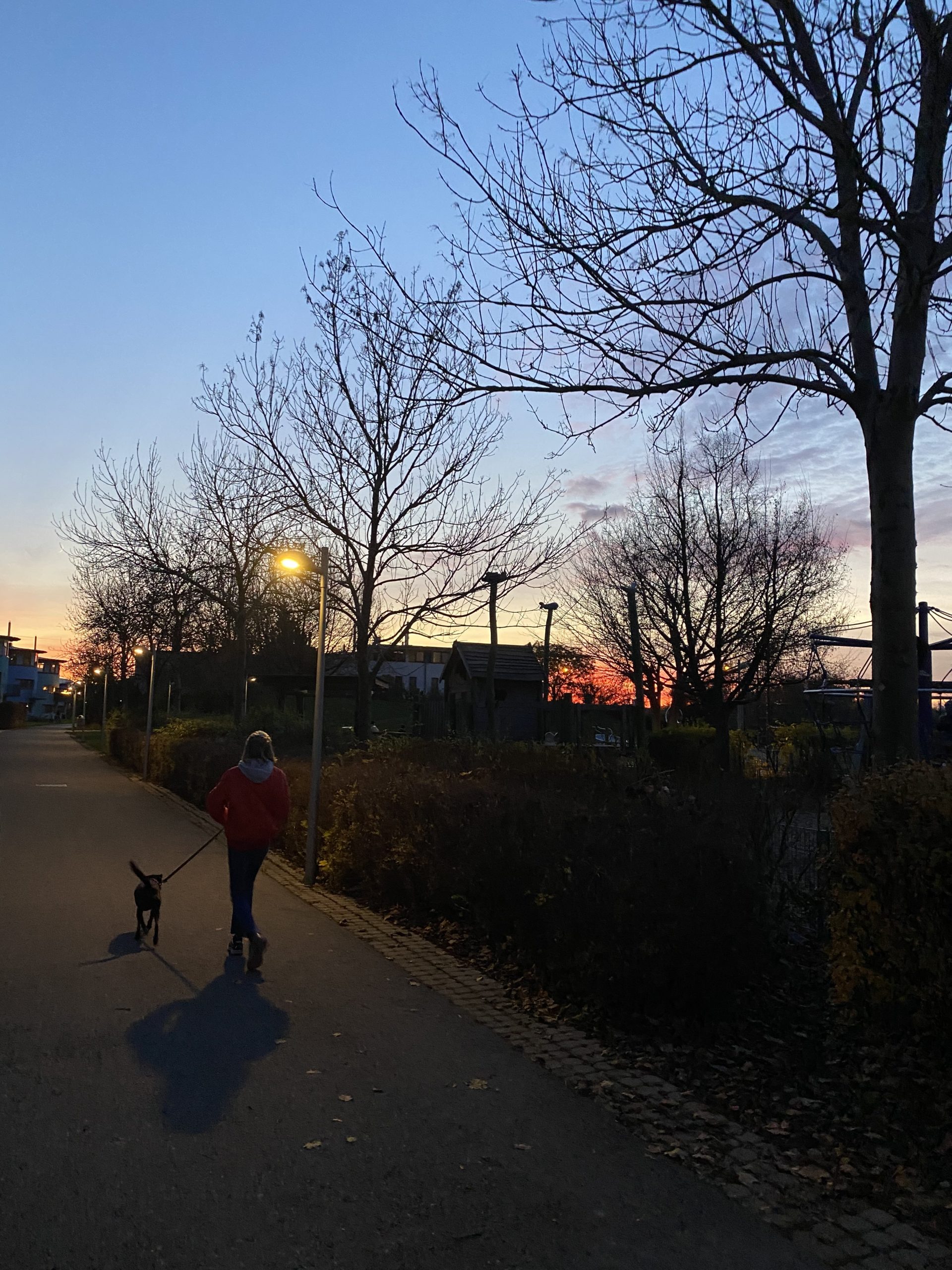
    Mollie’s host sister walking her host dog.

    There is no way to make a plan for or accurately anticipate your time abroad. Of course, I know my semester abroad looks even more different from other years because of the Coronavirus and everything it entails (online school, lockdown, restaurants and cafes are closed, etc.), but even without a worldwide pandemic, everybody’s experiences look different. 

    “…Even without a worldwide pandemic, everybody’s experiences look different”

    If this analogy, of an exchange program being like an improv class, made sense to you, I’m glad. And if it didn’t, whether you’re a fellow exchange student, an interested parent, a prospective traveler or anything in between, that’s also ok. For me, thinking about my experience in this way has been interesting. It helps me to remember everything is part of the experience. Just like improv, there’s no right or wrong way to do an exchange program.  

    Mollie Block is a high school student from Maryland currently studying abroad in Vienna, Austria with Greenheart Travel. 

  • Teaching English in Colombia: Can I Live on the Stipend?

    Teaching English in Colombia: Can I Live on the Stipend?

    The Teach in Colombia program is a unique opportunity to live in South America while earning money and working legally. Though technically a volunteer program, teachers receive a living stipend of 1,500,000 Colombian pesos per month, plus a completion bonus at the end of their contract. The exchange rate fluctuates, but that generally works out to about US$500, which can look like a scary small income if you’re doing the math from your overpriced studio apartment in an American city. Keep in mind the US dollar is also very strong right now, and the stipend was worth as much as $1,000 USD only around 3 years ago. It still goes just as far in Colombia.

    So let’s break it down.

    On average, Colombians make 975,037 pesos/month. This means that a typical family of 4 gets by on about 450,000 pesos (US$147) more than the stipend.

    So the short answer is: yes, you can live on your stipend. However, like any country in the world, your money will go further in some cities than in others.

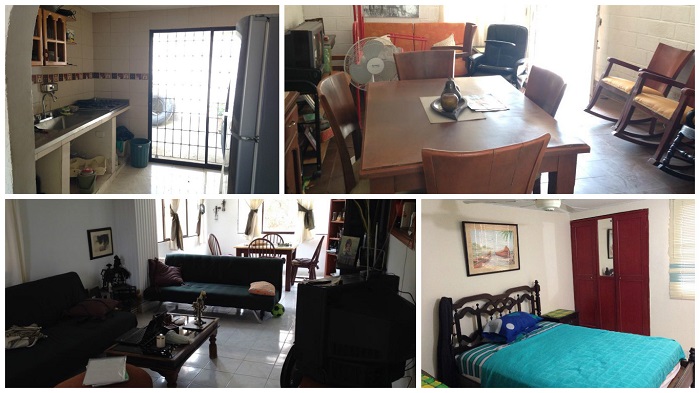
    Some typical apartments previous teachers have rented.
    Some typical apartments previous teachers have rented.

    Rent varies by location, but our teachers generally report that they pay between 300,000 and 600,000 for rent in a furnished space and utilities. The lower end of that range is generally for a room in a shared apartment, and the higher end is for a private one-bedroom or studio. The most expensive cities are Bogota, Medellin and Cartagena, where some participants have reported paying as high as 800,000.

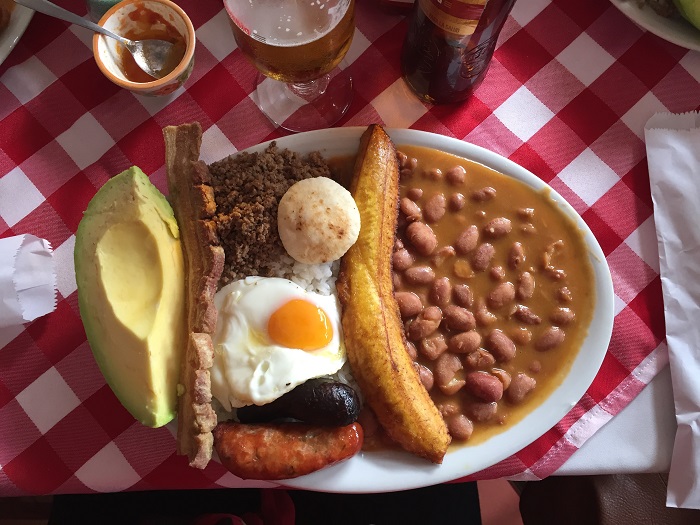
    colombia meal
    Three bucks.

    Typical restaurants are very cheap. You can expect to pay around 7,000 for a low-key dinner in most cities, and around 8,500-10,000 in Bogota or Medellin. Groceries are also much cheaper than you’re probably used to. For groceries and restaurants combined, you can expect to pay anywhere between 400,000 and 600,00 pesos a month.

    So yes, you can absolutely live on your stipend. Your lifestyle and your location will determine exactly how you live; if you’re living in a fancy apartment and eating all of your meals out, you probably won’t have much left over for travel. But for your basic expenses and modest travel, that 1.5 million pesos is more than enough.

    Check out more info on living expenses in various Colombian cities here.

    Ready to start your adventure in Colombia? Check out the program details here!

  • 8 Fall Celebrations from Around the World

    8 Fall Celebrations from Around the World

    When traveling, you’re going to encounter new festivals, events, and holidays, whether you’re teaching in China or studying abroad in Ireland. Although many countries celebrate versions of Halloween, there are also totally different fall traditions that you’ll get to experience.

    We would like to kindly remind travelers that many celebrations have deep spiritual significance. As an outsider observing or partaking in these traditions, it is important to be respectful both to the historic meanings as well as the locals celebrating them. You are first and foremost a guest in someone else’s culture.

    With that said, here are some fall celebrations from around the world.

    1. Yulan Festival: China

    The Yulan Festival roughly translates to the Hungry Ghost festival in English. It is believed that on this fifteenth day of the seventh month on the lunar calendar, spirits roam the earth for food and money. This celebrated by burning paper offerings and leaving food outside. Grasshoppers in dragonflies are believed to be a reincarnation of humans who have passed away. Another superstition is to avoid taking pictures during the event or your image will contain a spooky figure.

    2. Loi Krathong & Yi Peng: Thailand

    These two festivals fall on the same day in November, but these are two separate events. Yi Peng, or the “Festival of Lights” entails sending a paper lantern into the sky, symbolically releasing any bad luck from the previous year.

    Rewind to a bit earlier and you’ll experience Loi Krathong. During this event, people decorate leaf-made boats with colorful flowers and float them down the river, along with a little prayer for good fortune. There’s also a parade, dance shows, and firecrackers.

    If you’re going to be in Chaing Mai for the celebrations, be prepared for the intense crowd. After all, each one of those floating lights you see in pictures is being released by an individual.

    3. Oktoberfest & Feast of St. Martin: Germany

    Ironically, authentic Oktoberfest begins in September. Originally, the 16-day celebration started as a royal wedding party in Munich. Now, over six million people make their way to attend the food and beer tents while sometimes dressed in traditional clothing. There are different activities scheduled throughout the duration, so research the schedule if you are making a special visit just for the event.

    If you’re attending high school abroad in Germany, you will probably experience the Feast of St. Martin on November 11th. Though this holiday is celebrated in many European countries, in Germany this Christian-rooted holiday is celebrated by singing in the street while holding paper lanterns, followed by a dinner of suckling pig.

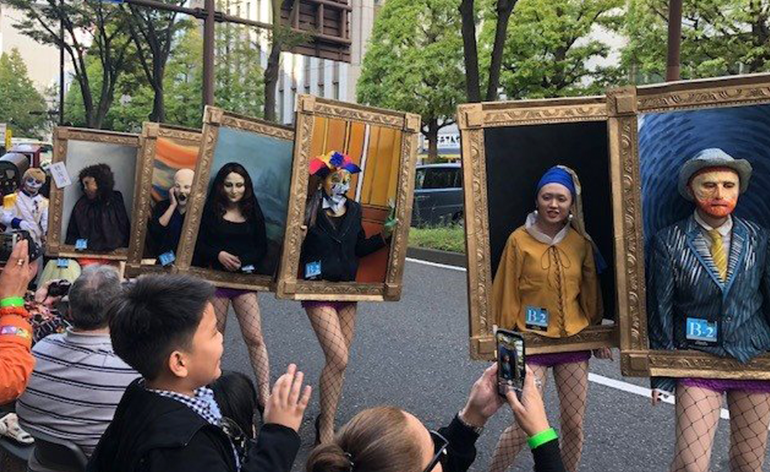
    Picture from the Kawasaki Halloween Parade Facebook page

    4. Kawasaki Halloween Parade: Japan

    The Kawasaki Halloween Parade is truly a showcase of creepy creativity. This newer tradition spans 1.5 km (about 1 mile) where participants dress up in elaborate costumes. However, this isn’t something you can simply attend. There is a maximum of 2,500 people allowed and tickets run out fast! Participants have to register months in advance.

    5. Samhain: Ireland

    Samhain, an ancient Celtic tradition, is said to be the root of what is considered Halloween today. There are bonfires, festivities, and perhaps what is most notable is a fruitcake called Barmbrack that acts as a fortune-telling game. The loaf contains tokens that signify a meaning, such as wealth or marriage.

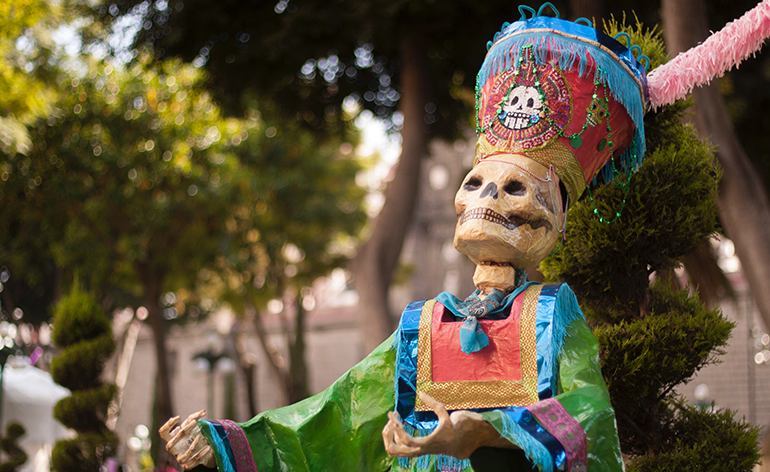
    6. Día de Muertos: Central America

    In Mexico and some Central American countries, Día de Muertos is a day honoring family members who have died. This is a lively celebration full of bright colors and food. Ofrendas (offerings) are decorated with marigolds, skulls, and things the loved one enjoyed.

    7. Bon Om Touk: Cambodia

    You might hear this three day holiday referred to as the “Cambodian Water Festival.” This non-religious holiday is meant to celebrate all the benefits of water as a resource, specifically at the end of the rainy season. Boats are raced in the river and free concerts are given in the streets.

    8. Ognissanti: Italy

    This celebration, similar to Día de Muertos, celebrates those who have passed away. This is a national holiday where school, stores, and government offices are closed. Cemeteries are beautifully decorated with flowers and red candles. Families feast together over a large meal and have an extra place set at the dinner table in hopes the spirit of a loved one will come home.

     Which ones did we miss? Leave a comment down below!

  • Ready to Learn a Language This Summer? What You Need to Know About COVID-19 and Our Teen Language Camps

    Ready to Learn a Language This Summer? What You Need to Know About COVID-19 and Our Teen Language Camps

    Yes, 2020 has been a year. So just like you, we can’t wait for a great Summer 2021. And as much as you’re ready to jump on a plane now and experience a Japanese tea ceremony in Fukuoka or watch gelato melt from your cone in Florence, we bet you and your parents have lots of questions before you apply for our Teen Language Camp programs. (Wondering what a Teen Language Camp is? Here’s a brief explainer.)

    You can always find the latest COVID-19 programming information here.

    So, here’s what you need to know about applying for a Teen Language Camp and traveling abroad in Summer 2021.

    We’re still planning to run Summer 2021 Teen Language Camp programs. 

    Currently, with the exception of Costa Rica, U.S. tourists are not yet permitted to enter our Teen Language Camp destinations. (Our Teen Language Camp students don’t apply for student visas and are granted 90-day tourist permissions upon arrival – this won’t be a piece of paper. It’s just a stamp in your passport!) At the time of this writing, we’re hopeful that entry restrictions will change soon. We’ll keep you updated every step of the way.

    Our applications will open on November 15, 2020, and the final deadline to secure your spot for Summer 2021 is on March 15, 2021. Ready to apply? Hit this button to receive a link to the application.

    But like the rest of the world, we sadly can’t predict the future, and we don’t know what 2021 will hold. If we’re unable to run your program due to health and safety or entry restrictions or requirements like mandatory government quarantines, we’ll cancel your start date six weeks prior. You’d then have options to defer, switch to a new program, or request a partial refund. Read the full COVID-19 Cancellation and Refund Policy here.

    We’ll keep you updated with any and all COVID-19-related health and safety guidelines for your destination. 

    Closer to your start date, you will participate in an online pre-departure training with a Greenheart Travel staff member. The details will be provided to  you upon acceptance onto the program. During this online training, the Greenheart Travel staff member will provide any specific COVID-19 guidelines or entry requirements (such as getting a COVID-19 test 72 hours prior to departure). All students will be required to adhere to any local or federal government guidelines while on program, such as wearing a mask and maintaining six feet of distance with anyone outside of this program. These will be discussed with students during the online pre-departure as well as upon arrival. Guidelines, requirements, and restrictions change frequently, so we will give you the most accurate information as possible as close to your start date as possible.

    If you get COVID-19 while abroad, we have protocols in place. 

    The protocols will vary by country,  but we’ll give you the most up-to-date information during your online pre-departure training. (For example, if you get COVID-19, you’d be expected to quarantine with your host family until you’re COVID-19 free.) And remember, all students have 24/7 emergency number to call in case of any concerns, and you’ll be counting on support from both the local in-country staff and long-distance from our Chicago offices, as well as your host family. Another great piece of news? Part of your program fee goes towards comprehensive medical and accident insurance that covers COVID-19.

    At Greenheart Travel, we’re committed to safely running Summer 2021 Teen Language Camps. The world has brought many twists and turns this year, but you can always count on our support of your cultural exchange experience.

    Are you more interested in high school abroad? Here’s what you need to know about being an exchange student during the COVID-19 pandemic.


  • Is It Safe to Send Your Child to Japan?

    Is It Safe to Send Your Child to Japan?

    So, your teen can’t stop talking about Greenheart Travel’s Teen Summer Language Camp in Japan (and high school abroad). They can’t wait to dive into an arcade to play Taiko no Tatsujin or find their perfect bubble tea spot.

    And your biggest question?

    Is Japan safe?

    We understand why you’re asking. Whether it’s through the narrow streets of Florence, Italy or the coast of Chile, safety is an important topic to consider before going on a program. Especially when sending your teenager across the globe, alone!

    But before we gush about what a great program our Teen Summer Language Camp in Japan is, we have to be honest: we would never send our participants somewhere we would not go ourselves. We will continue to travel personally and professionally and many of us visit Japan frequently.

    Of course, no matter where you are – even in your suburban neighborhood in Ohio – there is always a certain amount of risk in traveling.

    Greenheart Travel’s Associate Director of Marketing, Sara, in Japan

    Here are a few things to consider when wondering if Japan is safe:

    By international standards, everyone is jealous.

    Remember your question “Is Japan safe?”

    Yes.

    Japan overall is an extremely safe country, in many respects actually far safer than the United States. So safe, that in fact it was ranked the “safest country in the world.” Why? One writer has some reasons.

    Greenheart Travel’s Program Manager, Kara, in Japan

    There is no Department of State Warning against Japan.

    The U.S. Department of State does not have any warnings or advisories for Japan. Even so, Greenheart Travel recommends our students enroll in the STEP program through the US embassy to receive alerts in case of emergency.

    Just to give some perspective, the United Kingdom has a travel alert about the United States right now. They warn UK citizens traveling to the US that gun violence is common, hurricanes are a problem, and there is a general threat of terrorism. The moral of the story is that from a distance, looking only at news reports and reading your own country’s travel advisories, foreign countries look much scarier than they actually are.

    Greenheart Travel’s High School & Short-Term Abroad Programs Coordinator, Allison, in Japan

    In case of emergency – we’ve got you covered.

    Greenheart Travel programs include 24/7 local and long-distance emergency support.

    Plus, our local staff have evacuation plans in place for all major threats – not only potential military escalations with North Korea but all manner of disasters such as typhoons, earthquakes, etc – so you can rest assured that in the unlikely safety event, we will take the necessary steps to ensure student safety.

    We recently hosted a webinar about safety & security abroad.

    Greenheart Travel’s Teach & Work Programs Director, Lauren, in Japan

    Remember, you should treat Japan like anywhere else. You should expect the best, but always be aware and trust your gut. It is ultimately your decision to travel, and with the trust and support of an organization like Greenheart Travel, we hope you will feel comfortable doing so.

    We firmly believe that travel and cultural exchange bring the world closer together, person by person. Now is exactly the time we need the type of cross-cultural communication our programs provide.

  • Want to Experience a European City as a Teen? 10 Reasons Choose Vienna in 2021

    Want to Experience a European City as a Teen? 10 Reasons Choose Vienna in 2021

    Across all Greenheart Travel High School Abroad destinations we prioritize placing students in small town or at biggest regional medium-sized cities. Why? Smaller areas general safer. You’ll get to know members of your community and there will be people looking after you. You’re also less likely to encounter a strong expat community whose common language is English. Smaller areas mean more opportunity for you to strengthen your language skills and make the most out of your time abroad. It also generally means less commute time and a lower cost of living. Win, win!

    On our High School Abroad Austria program, students are placed throughout the country, often in stunning mountainside villages, near rolling hills, or charming small cities. But in this country, we make exception to our smaller-area-as-a-preference rule: Vienna, Austria.

    As an applicant, you can request to be placed in Vienna for an additional fee. Here’s why:

    1.Vienna’s public transportation system is one of the best in the world

    For most U.S. teens, trying to get around means relying on older friends with driver’s licenses or constantly asking your parents to take you somewhere. In Vienna, you won’t asking your host family for a ride every time you want to leave the house. Vienna has four different ways for you to explore the city: a subway (U-Bahn), local trains (Schnellbahn or S-Bahn), trams (Straßenbahn), and bus (Autobus). Buy a monthly pass for €51.00 – academic year students might even consider buying an annual pass that costs €1 a day! As long as you communicate well with your host family about where you are and who you’re with, you’ll have lots of freedom to transit wherever you’d like.

    (Tip: Don’t forget to download the app Scotty to easily access timetables and train lines.)

    2. Compared to other European cities, Vienna is affordable

    Greenheart Travel recommends students bring at least $300/month spending money for items like public transportation, shopping, entertainment, and whatever else isn’t covered by your program fee. So if you’ve dreamed of living in a European city – with all it’s perks (see point #1) but cringe at the thought of  paying $23 for a big mac (we’re just using McDonald’s as a comparison – please don’t make that your go-to meal abroad!), Vienna is a great option. With money going further, you can do and see more.

    3. Vienna was nominated as one of the cities with the highest quality of life in the world

    For ten years in a row! Attention aspiring urban planners – this is for you! It’s known for its “green spaces, cheap and efficient public transport, and a low crime rate.” Who wouldn’t want to live in a city like that?! If you’ve already tried to convince your parents to let you study abroad you’ll know: safety is one of their biggest concerns. With Vienna’s impressive stats on safety, it won’t be hard to prove it’s a great place for you to study.

    High school abroad students eat together.

    4. You can easily find German courses for foreigners

    There’s no language requirement to apply study in Austria, but you’ll need to put in a lot of effort to learn once you arrive. Luckily, Vienna is full of German courses for foreigners to catch up to speed and excel in school. Need help? Your host family and local coordinator are there to point you in the right direction.

    As one student Ximena explains it, coming to Vienna is a great idea because “You get to learn German, a language that is very important and that will help you in your future. I recommend 100%!”

    5. Students placed in Vienna have the most options for after schools sports or activities

    Being placed in a city means there are a variety of options for afterschool activities. You can find your passion and get involved in what activity you’re dreaming about! (Or in the case of our alum Sarah, you could take German on Mondays and Wednesdays, bass lessons on Tuesdays, and orchestra and circus on Thursdays.)  Sports? Photography? Skiing? Cycling? Rowing?

    Attention music lovers: if you’re placed just outside Vienna, you’d be able to reap the benefits of living near the city and also play in a village orchestra.

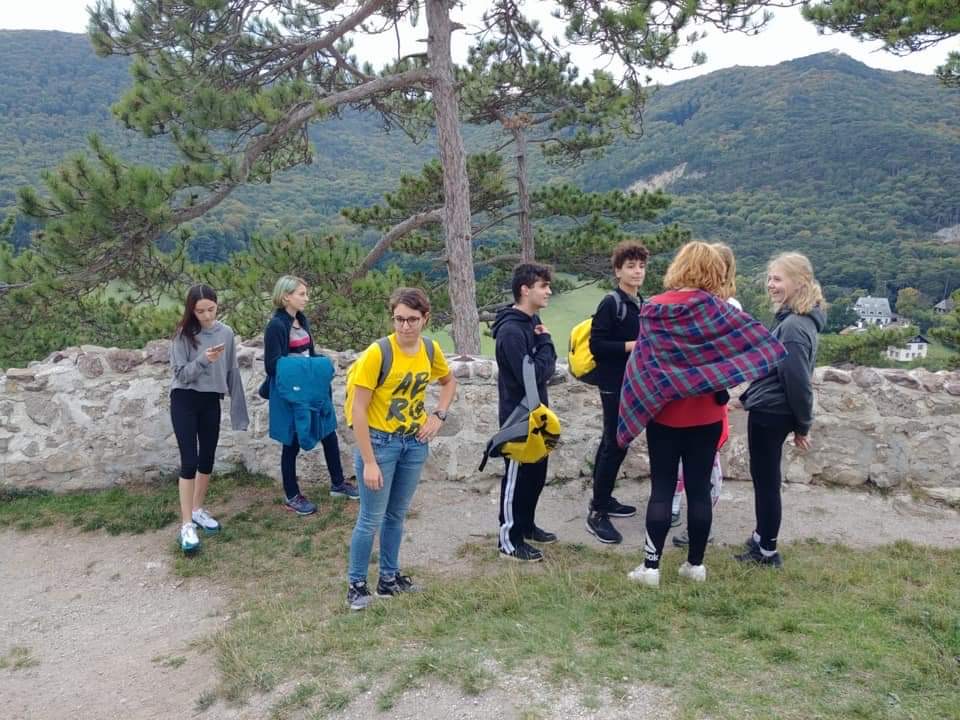
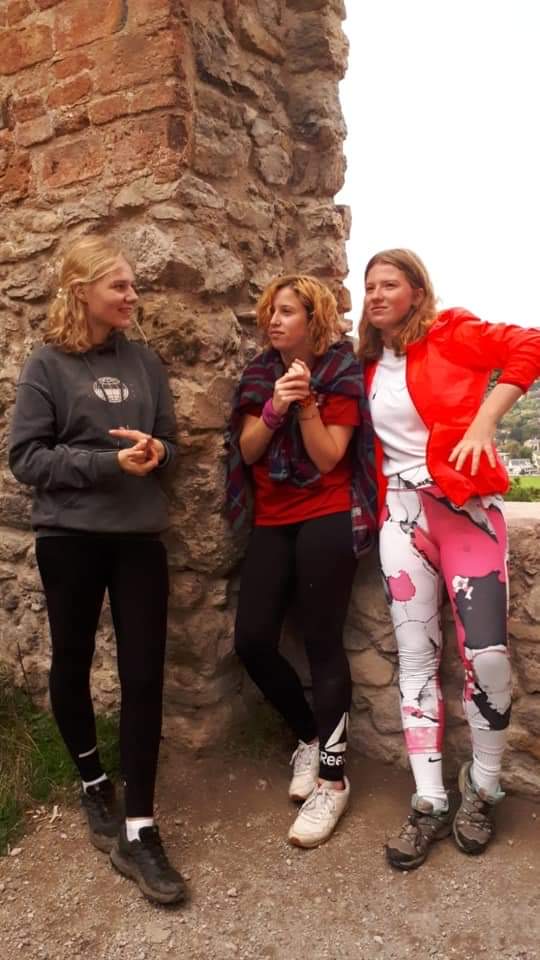
    Students at Burgruine Modling excursion

    6. You’ll have a jam-packed schedule of excursions and trips 

    With easy access to Austria’s bordering nations (Germany, Lichtenstein, Switzerland, Slovenia, Hungary, and Czech Republic), there’s no shortage of possible opportunities to travel. Some students travel with their host families, but if your host family doesn’t travel, our in-country staff have plenty of plans for you. Students can join trips for an additional cost to places like Venice and London, and you’ll also be able to partake in the Welcome Party-Orientation Meeting, a snowboard weekend, yodeling course, and farewell party.

    Just last weekend our students traveled with local staff to visit Burgruine Modling, a historic castle. As one student says, “The landscapes are beautiful! Going hiking was a really cool activity because the views from the mountain were so pretty!”

    Students at Burgruine Modling excursion

    Additional trips not in your budget? Each local coordinator organizes meet ups throughout the year so you and other exchange students can reconnect and experience another aspect of Austrian culture. We hope it includes all of these delicious foods!

    7. Have a special academic interest? You can request a specialized school

    While we could go on and on about all of the incredible exploring you’ll do in Vienna, we can’t forget to mention school. That’s one of the main reasons you’re studying abroad! Most exchange students take the same compulsory subjects like German, English, Math, Biology, History, etc., but Austria also has specialized schools you can request. There are schools focused on things like sports, music, science, economics, tourism, handicrafts, and agriculture. Meeting fellow students who share your interests is a great way to jumpstart friendships and find commonalities.

    8. Students won’t stop gushing over it 

    We think Vienna is pretty awesome, but don’t just take our word for it! “Vienna has become my favorite city ever. It is soooo pretty, it feels so safe, it’s a great place to hang out with your friends, it is so easy to get there, the museums are amazing, it is really a beautiful city!” says Ximena.

    Well, count us in! What about you?

  • Learning Italian While Quarantining Upon Arrival

    Learning Italian While Quarantining Upon Arrival

    A note from Greenheart Travel: Now several months into the COVID-19 pandemic, our high school abroad programs in most destinations are still able to run. However, like all aspects of life, Greenheart Travel’s programs are a bit different than in the pre-COVID-19 era. One of those things, our 2020 First-Time Traveler Scholarship Recipient Jessica Durnell tells us, is quarantining for two weeks with her host family upon arrival before starting school – and not understanding Italian! In this post, she gives tips and tricks to picking  up the language when you can’t leave the house.

    So, you’ve just gotten off the plane. You’re in a different country, everyone around you is speaking in their mother tongue and much faster than you expected, and you’re feeling everything at once. Maybe you’re tired and just want to pass out as soon as your host family picks you up, you’re nervous – but one thing’s for sure, and that is: you’re excited. You have so many new things to experience, but there’s one little hindrance… you can’t leave your house for the next two weeks.  

    Jessica sitting in the chair that she sat in every single day when she was studying Italian on her laptop.

    That’s exactly how I felt when I got off of my plane and arrived in Italy. I felt everything at once, but most of all, I was excited. I was seeing so many new things, and I wanted to be able to experience them all. Sure, my ability to speak Italian was in shackles, rather surprised with how easy it was to fly, and I didn’t exactly know where my luggage was because I forgot to read a sign, but I was hyped. But first, I have to survive quarantine. 

    The first thing I had to conquer through quarantine was the irrefutable fact that I had no idea what anybody was saying to me. So, I started studying Italian on my own time. But the easiest way of knowing what you’re going to need to prioritize how to say is right in front of you: your host family. So, you listen to their conversations. There’s always common words and topics that people will focus on, or more so, these are the “basics.”  

    This way, I’ve learned what people commonly say, and common expressions that they use as well. Even if you don’t know the full extent of what someone is saying, you can use the words you do know and context to figure out what people are saying. It’s how I’ve been getting by until I myself can form coherent sentences… and it has worked, well, at least, it has worked well enough!

    But even when you’re studying another language, there’s still a lot of spare time left over. And you have a full two weeks worth of it to go through. Even if you’re doing other things to take up your time – like watching movies, a TV show, or reading a book… do it in the language you’re studying. So, I started to re-watch an animated show in an Italian dub. Not only was it amusing, but I could pick up on what people were actually saying, and translate it in my head, since I was already familiar with the show.  

    If you’re going to watch something, I recommend a cartoon or an animated show, as they usually have simpler scripts for the younger audience they are directed towards, which can be easier for you to translate into your mother tongue!  
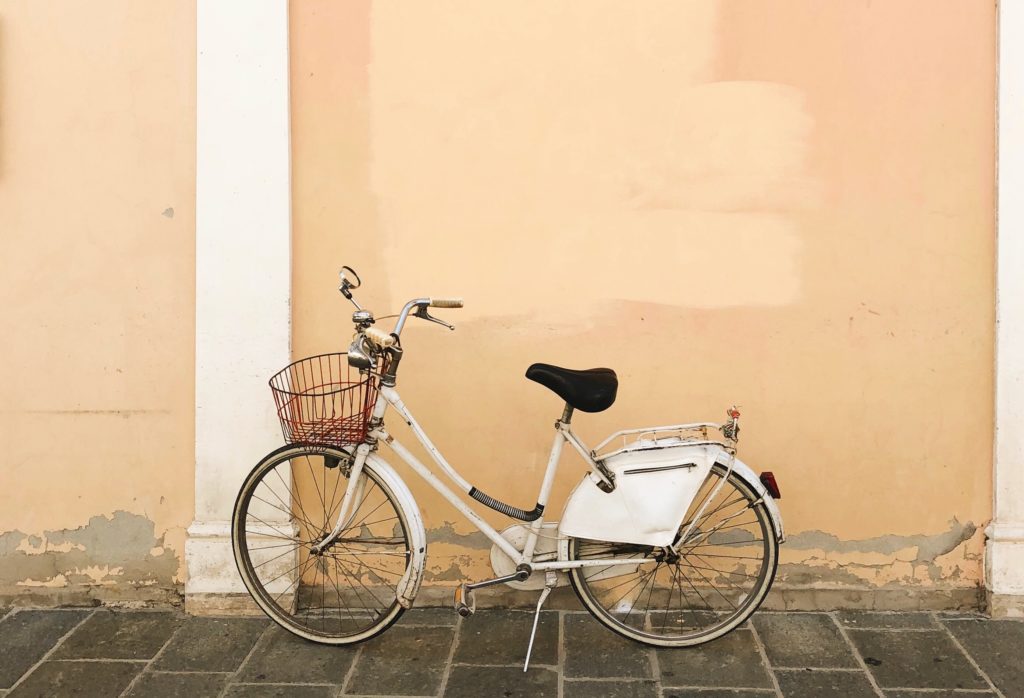
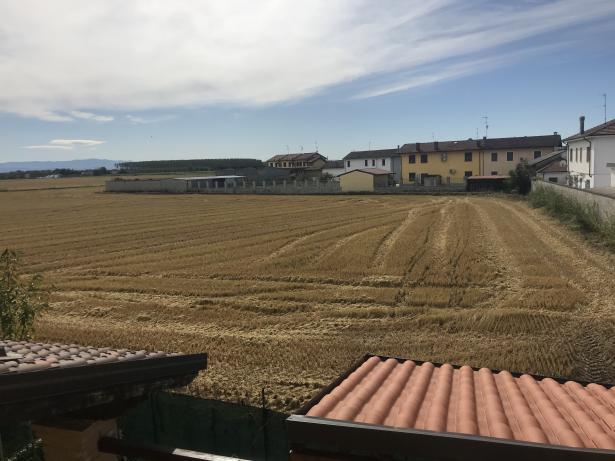
    The view from Jessica’s host family’s house.

    Writing this now, I’ve completed quarantine. And boy… was it a long ride. Tomorrow, I go to my first day of school! Excitement, nerves, and the fear that I still have no idea what I’m doing is coursing through my veins. But in the words of one of my favorite YouTube channels: say yes to discomfort. 

  • Vote! Common Ground Issues

    Vote! Common Ground Issues

    If you care about issues like taking care of the environment and of each other, you are not alone. It is critical that you vote in the November General Election! 

    Contrary to the way it often seems in the polarized environment we live in, the majority of Americans–regardless of political party affiliation–agree on climate change, the environment, social/income inequality, health care, and immigration. These are not partisan issues. These are issues that matter to our daily lives, our travel hopes and dreams, and our health and well-being.  

    The essence of democracy is majority rule. If you care about these issues that a majority of Americans  – Republicans, Democrats and Independents – agree on, then prepare now to vote in the General Election on or before Tuesday, November 3rd, according to your state’s voting rules and guidelines. Please visit Vote.org for all the details on voting.

    Finding common ground 

    Sometimes it’s hard to talk to someone with completely different views on issues. However, there are many areas where the majority of Americans AGREE. Start conversations. Listen. Fact check and share data. Be kind, yet firm in standing up for the issues that matter to you, to humanity, and to the peaceful exchange of ideas. 

    Climate Change and the Environment: 

    In a new survey conducted in August by Resources for the Future and Stanford University, over 80% of American adults believe that the climate has warmed over the past 100 years, and that human activity is responsible. Of those surveyed, 76% believe that global temperatures will continue to rise over the next 100 years.  

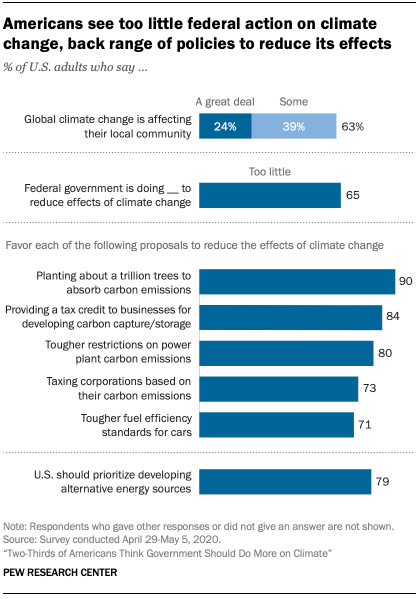
    In a Pew Research Center survey taken in May 2020, 65 percent of Americans agree that the U.S. Government should be doing more to reduce the effects of climate change on our environment.

    80% of Americans agree there should be tougher restrictions on power plant carbon emissions, and 84% agree there should be incentives for developing carbon capture and storage technology and renewable energy sources. 71% of Americans agree that automobile fuel efficiency standards should be tougher 

    Such overwhelming agreement on climate change and the environment transcends partisan politics and political party affiliation.   

    Social/Economic Inequality: 

    In 2019 the World Bank ranked the U.S. as having one of the highest inequalities of wealth distribution in the world.

    According to a study conducted by the University of California – Berkeley, in 2018, the average effective tax rate paid by the richest 400 families in the U.S. was 23 percent, a full percentage point lower than the 24.2 percent rate paid by the bottom half of American households. 

    In 1980, by contrast, the 400 richest families had an effective tax rate of 47 percent. In 1960, it was as high as 56 percent. The effective tax rate paid by the bottom 50 percent, by contrast, has changed little over time. 

     Pew Research Center study published in January found that 61% of Americans agree that social and economic inequality in the U.S. is a major problem. And according to a Monmouth University poll published in early July, more than 65 percent of Americans say racial and ethnic discrimination, a cause of social and economic inequality, is a big problem in the U.S. 

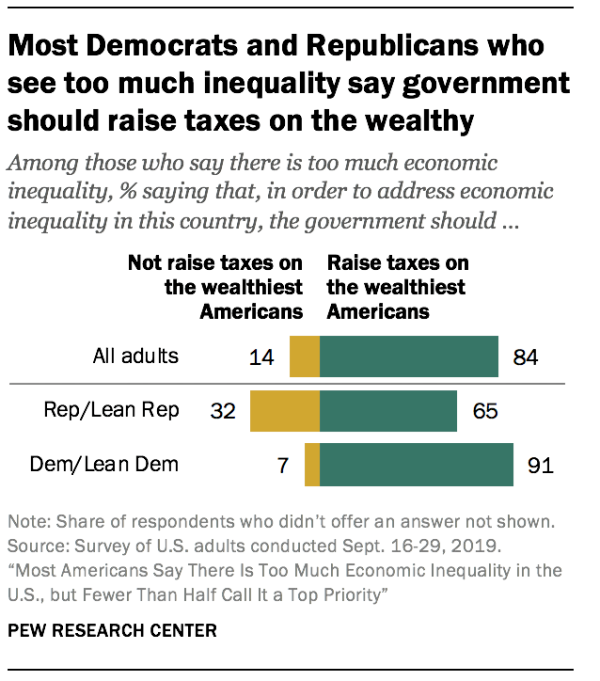
    Among those who agree that social/economic inequality is a problem, there is broad nonpartisan support for a solution. 84% of Americans who believe economic inequality is a problem agree that part of the solution should be to raise taxes on the wealthiest Americans. 

    Americans’ overwhelming agreement on a solution to social and economic inequality transcends partisan politics and political party affiliation. 

    Health Care: 

    Closely aligned with social/economic equality is the issue of health care. Social/economic equality cannot be realized unless all people have access to health care coverage that is affordable to them. Affordable health care coverage does not mean free health care coverage. Many Americans are pleased with their current health care coverage. It may also be necessary to provide essential health care for the poorest and most vulnerable among us.  

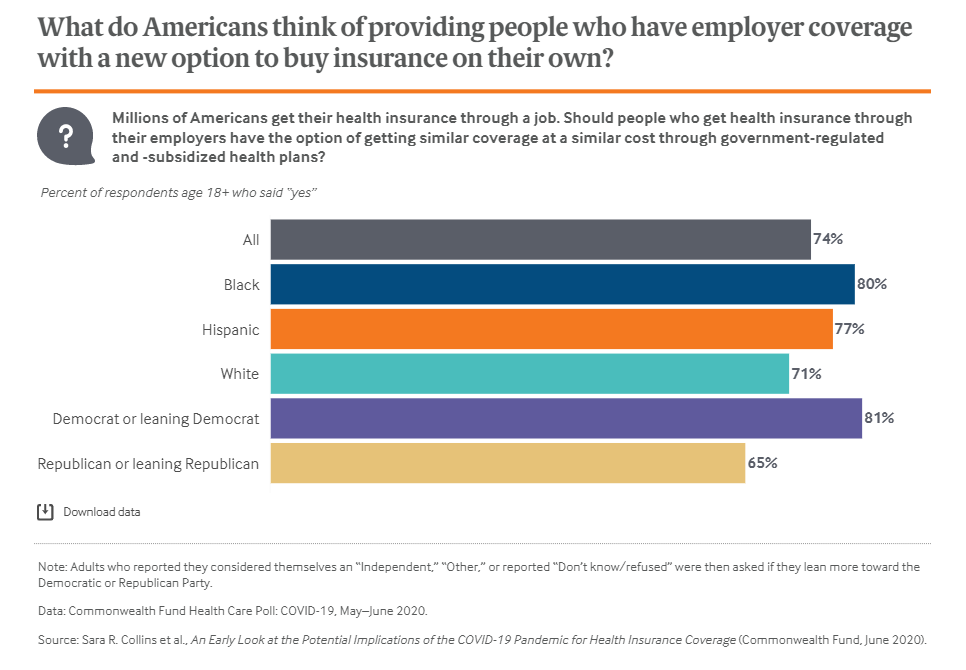
    According to a Commonwealth Fund Healthcare poll conducted in June, three months into the COVID-19 pandemic, 74% of Americans – 81% of Democrats/leaning Democrat and 65% of Republicans/leaning Republican – agree that all Americans should have the option of securing health insurance coverage through government-regulated and subsidized health plans.  

    Only 4% of Americans believe in no Government involvement of any kind in assuring all Americans, including the elderly and the poor, have health care coverage.  

    Americans broadly agree on a fundamental belief that the Government has a responsibility to assure that all Americans have access to health care coverage.  

    Such overwhelming agreement on the government’s responsibility in assuring that all Americans have access to health care coverage transcends partisan politics and political party affiliation.  

    Immigration: 

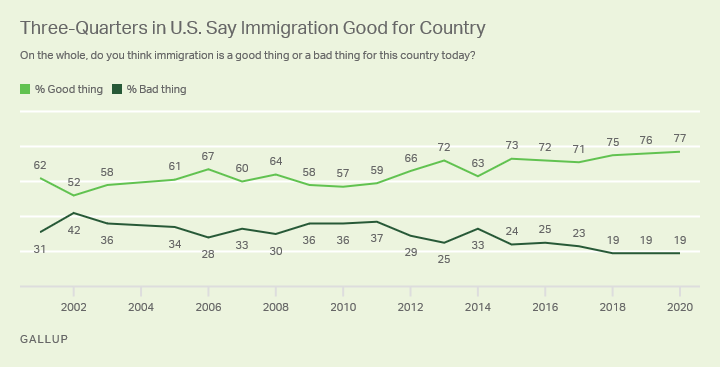
    Although the majority of Americans support a temporary ban on immigration to slow the spread of the COVID-19 coronavirus, the majority of Americans – 77% – agree that immigration is good for the country. Only 19% believe that immigration is bad for the country.  

    Americans’ consensus on immigration policy transcends partisan politics and political party affiliation.

    Americans perception of the direction of our country:

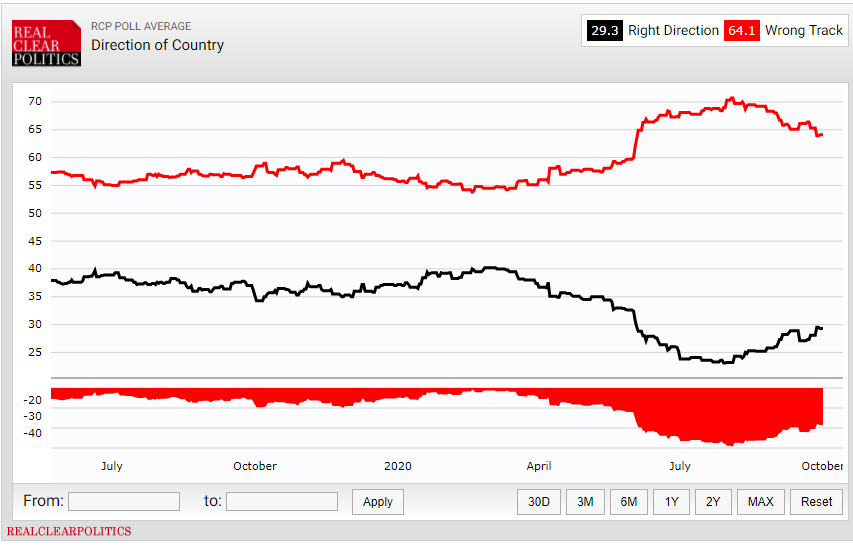
    According to six different polls compiled by RealClearPolitics on August 25, only 26% of Americans agree that the country is headed in the right direction.

    68% of Americans believe the country is on the wrong track. Lack of government action that aligns with majority positions on the issues can be considered a major cause.  

    What can WE do about it? 

    At Greenheart, these issues – the environment, immigration, and social and income equality – are intrinsic to our mission, vision, and programs as catalysts for improving the lives of people everywhere.  

    If you are passionate about one or more of the issues that most Americans agree on, PLEASE VOTE!  

    With over 80 million eligible voters, the 18-34 year-old age bracket is the largest voting block going into the November General Election. You can decide the future direction of our country for you, your children, and your children’s children. You have the power!

    Vote for candidates who share your world-view and who will enact legislation that represents the beliefs and views of a majority of Americans.  

    Voting can be less complicated than you might think! If you or someone you know needs to register to vote or confirm your registration, or request an absentee or mail-in ballot, https://www.vote.org/ is easy to navigate and has all those tools for every state. The site also has a state-by-state local resource list with the state websites and forms for each step.  

    Because of the COVID-19 pandemic, it is anticipated that a record number of Americans will vote by mail. If you are one of them, be sure to follow the instructions for your state’s ballot carefully and sign your ballot if required. Most importantly, be sure to mail your ballot in before Election Day if possible, to assure that it will be counted.  

    Share this information with your relatives, friends and associates, and encourage them to vote as early as possible. Make a plan to go vote. Make it an event! Go with a friend. Just please vote. 

    You can make change happen if you vote! You cannot make change happen if you do not vote!

    Voting is the most important thing you can do to make sure your voice is heard, and to assure the fundamental democratic principal of majority rule drives the U.S. legislative agenda.  

     Greenheart International Board of Directors and Leadership Team

  • New 2020 Program: Teen Online Language Learning Camps

    New 2020 Program: Teen Online Language Learning Camps

    Our Teen Language Camps have gone digital! Travel may be restricted this summer, but you can still sharpen your language skills and soak in a new culture – just in a new form.

    Studying a language online this summer is a great way to get some social time with teens from around the world and give purpose to your time off and plus, you’ll ensure you’ll hit the ground running when you travel next year.

    All you need is an eagerness to study and a computer with a camera.

    General Course Information

    For all the language class options listed below, students will take an online placement level test prior to their start date. The instructor will provide any class resources and materials to you digitally, via a shared folder, learning platform or email. All classes will run daily on weekdays, Monday-Friday.

    Applications:

    The deadline to apply is at least 1 week prior to the Monday you’d like to start! If you’d prefer private lessons, please let us know.

    • Students who have already been accepted onto a Greenheart Travel program or been in touch with a program manager, please email your contact at Greenheart Travel to enroll.
    • New students, please complete your online application here

    Study Japanese online

    Study Japanese for 8 hours/week, choosing any length between 1-6 weeks! This special online offer is for absolute beginners only. Studying Japanese this summer is a great way to get a head start for Summer 2021 or prepare to apply for a future High School Abroad program.

    Students who complete a minimum of 16 hours of classes are eligible to receive university credits for an additional fee. If you’re interested in this, please ask during the application process. Here are the details:

    Class time options: 7-9pm EST or 9pm-11pm EST (8am-10am or 10am-12pm Japanese time), Monday-Thursday [US time]

    Start dates

    • June 1
    • June 15
    • July 6
    • July 20
    • August 3
    • August 17

    Class sizes: Minimum of 2 students, up to 6 per class

    Cost

    • 1 week: $250
    • 2 weeks: $370
    • 3 weeks: $490
    • 4 weeks: $610
    • 5 weeks: $740
    • 6 weeks: $860

    Study Spanish online

    By studying Spanish online for 10 hours/week for 2, 4,6, or 8 weeks, you’ll meet daily with teens from around the world and focus on the four main skills of reading, writing, listening and speaking. You may not be able to physically be in Spain this summer, but these classes also have an emphasis on teaching culture through games, quizzes, exciting exercises and projects.

    This course is open to all levels – beginner, intermediate, and advanced. Here are the details:

    Class time: 10am-12pm EST (4pm-6pm Spain time)

    Start dates:

    • June 15
    • June 29
    • July 13
    • July 27
    • August 10
    • August 24

    Class sizes: Maximum of 10 students per class

    Cost:

    • 2 weeks: $370
    • 4 weeks: $610
    • 6 weeks: $860

    Study Italian online

    Follow Emily on Instagram: @em__mcnamara

    Through over 10 hours/week of online Italian courses, students from all levels from complete beginner to advanced will focus on their language skills and also diving into the history and culture of Florence through multimedia resources. You may not be with your fellow classmates in person, but you can strengthen your Italian while sharing your love of Italian culture virtually with length options of 2, 4, or 6 weeks. Here are the details:

    Class time options: 10am-12:30pm EST or 1pm-2:30pm EST (3pm or at 6pm Central European Time)

    Start dates:

    • Non beginners: every Monday from June 15- August 24
    • Absolute beginners:
      • June 15
      • June 29
      • July 6
      • July 13
      • July 20
      • July 27
      • August 3
      • August 17

    Class sizes: 4-8 students per class

    Cost:

    • 2 weeks: $360
    • 4 weeks: $540
    • 6 weeks: $720

    Study German online

    Language School Munich city

    The focus of these online German classes is on speaking, so expect a lot of interactive situation-related lessons – and lots of laughs! All levels welcome, from complete beginners to advanced, for any length 1-6 weeks. Here are the details:

    Class time: 9:30am-12pm EST (2:30pm-5pm Central European Time)

    Start dates:

    • Non-beginners: every Monday June 22 – August 29
    • Absolute beginners:
      • July 6
      • August 3

    Class sizes: 4-8 students, maximum of 12

    Cost:

    • 1 week: $350
    • 2 weeks: $510
    • 3 weeks: $670
    • 4 weeks: $830
    • 5 weeks: $1,000
    • 6 weeks: $1,160

    Study French Online

    For length options 1-5 weeks, these French courses with native speakers from Quebec, Canada are for all levels. Students will strengthen their oral and written comprehension and expression – and don’t worry, there will be plenty of opportunity to interact with other teens in the class. Here are the details:

    Class time: 10am-1pm EST

    Start dates: Every Monday June 29-July 31

    Class sizes: 5-15 students

    Cost:

    • 1 week: $290
    • 2 weeks: $420
    • 3 weeks: $550
    • 4 weeks: $670
    • 5 weeks: $710