A note from Greenheart Travel: This blog post was written by Greenheart Travel alum and 2021 summer intern, Noah Torres.
Greenheart Travel Summer Language Camp
Studying abroad is an invaluable experience that teaches more than language skills – you’ll grow your arsenal of social and personal life stratagems that propel you into a life of adventure and constant growth. It is a mix of the people you meet, the challenges you face, the problems you solve, the moments you savor, and the opportunities that open when you put yourself in an entirely new world. There is one technicality that most of us race to address with this experience though; procurement of academic credit.
State Language Requirements
Each state has different coursework requirements for high school graduation, and even these requirements vary by type of high school attended, whether it is public, private, or charter, etc. Language requirements for admission into universities vary even more, as each institution may have their own expectations, though these expectations are mostly parallel across most state-funded universities. General language requirements for high school graduation as of the 2021-2022 school year are listed below, though it is imperative that you double-check this information with your high school of attendance and projected university of attendance.
California: 2 years
Kansas: 2 years
Maine: No requirements found but 2 years sought by universities
Michigan: 2 years
New York: One year for Regents Diploma
North Carolina: No requirements found but 2 years required for UNC admission
Texas: 2 years
It is also important to note that different colleges will have different language requirements for degree completion as well, and these requirements can vary even by major. This is important if you plan for the long term. Following is information on how you may best wield your study abroad experience in acquiring high school and college credit for language requirements.
Getting Credit
High School
Acquiring credit for your language experience abroad is more likely possible in university than high school, as the graduation requirements are more individually tailored to the student body. However, here is a guide on attempting the procurement of language credit in High school.
Contact your high school counselor and inform them of your travels abroad and the academic purposes of the program.
Collect all certificates and awards received during your program, including certificates of completion. This may help in officializing your grant of credit, in both high school and college.
Connect your high school counselor with your Greenheart travel counselor, ONLY after receiving permission from both parties to do so. Your school will likely need some administrative paperwork to be done that only the organizing institution can complete.
For your convenience, a template of an email or letter you may send your high school counselor is below.
To whom it may concern,
My name is _______, a _______ year student at _______ high school. I am writing you as I have just completed an immersive language study program in ________ with Greenheart Travel. Due to the academic rigor and language instruction of this program, I would appreciate your help in exploring paths I may take to pursue credit for my time abroad, that would fulfil my language requirements in any capacity. If you are able, I would like to schedule a time to speak with you on this matter, and discuss all possibilities of pursuing credit procurement, whether through _______ high school, the local district, or any other institution. I can provide (insert any paperwork/certificates you have) and connect you with my program counselor if it may help.
Thank you sincerely for your time and consideration.
Sincerely,
___________
Lastly, it is important that you try to get the credit to show up on your high school transcripts, as universities may use these transcripts to determine whether or not you are eligible to apply. An example of a Los Angeles Unified School District transcript mentioning Greenheart’s two week Arcachon program is below.
****Note that the two week Arcachon program was completed twice by this student, and one semester’s worth of credit was granted for each program completion****
College/University
Securing language credit for colleges and universities can be much more complicated than high school, as each university has their own language requirements, though it is also more likely that you will receive credit. Below are a few ways in which high school students may pursue college credit for their time abroad.
Students In High School
These methods may also apply to current college students, though it is advised that you check with your counselor individually if you may pursue these paths.
Take the AP test for the language you are studying – a passing score is likely to secure you college credit.
Take the International Baccalaureate DP assessment – while you may petition for college credit with any score you receive on this test, earning a bilingual diploma can test you out of your college’s language requirements completely.
Students In College/University
Take your college’s own language placement test. Depending on your institution of attendance, you may either test out of the language requirement entirely, or test into an upper level language class, potentially fulfilling some of the requirement. Check with your academic advisor.
Email your college’s language department and request placement based on language experience. This is a more difficult and unorthodox method, though it is possible that, with proper documentation, your institution of attendance will recognize and reward your experience with foreign language with some credit. Depending on your institution of attendance, you may either place out of the language requirement entirely, or test into an upper level language class, potentially fulfilling some of the requirement. Check with your academic advisor.
A note from Greenheart Travel: Amelia is a high school student who studied abroad during the 2020-2021 school year.
Hi, my name is Amelia and I am an exchange student in Belgium.
I’ve had the chance to travel around the country a little bit on my own and it’s been an interesting experience. The first time I tried to travel by myself, I planned to visit a small town not too far from where I lived. I figured out the bus schedule and I was all ready to go. I was successful in getting myself to the town. Getting home was a different story.
I was unprepared for the amount of bus stops you can fit in a 1 kilometer radius. I knew which bus I was looking for; however I was less sure of which stop I needed to be at. I was soon confused and ran around all the bus stops trying to decipher the timetables. In the end I took the correct bus route…in the wrong direction and ended up in the wrong town. I did eventually get home, although I had to wait around for an hour and a half for the next bus to arrive. This first trip was an outlier, all of my other solo excursions went off without a hitch with the exception of minor travel adjustments due to construction, etc.
One of my favorite trips was to the city of Namur. I went on a Saturday so I got to see the Saturday market set up in the main street of the city. The most popular stands are the fruit and vegetable seller and the flower vendors. In the heart of the city is the Citadel. It dates back to medieval times when the city was under siege. While the interior of the citadel was closed due to COVID all the outdoor areas were open. So I spent a few hours exploring the paths and passageways and lookouts. The day I was there, the city was hosting a 5K run around the citadel so that was fun to watch. But the two best things I saw all day were the giant golden turtle, and the bagpiper. The golden turtle is on the lowest ring of the citadel. I’m not sure why it was there. There was no information about it but it was still pretty cool. At the very top of the citadel is an amphitheater. This is where I found a man practicing his bagpipes right next to a pair of people practicing their kickboxing. It was truly a sight to behold, definitely not a combination I would have expected. It was a wonderful day in a beautiful city. So when you travel in a forgiven country, remember to explore, because sometimes the best things are the little things that just make you smile. Wandering around can lead you to the prettiest views and best memories.
Photo by Olga Subach
My tips for taking day trips are:
Make a general plan; in Belgium a lot of the scenic towns have a town website that will give you a general idea of the things you can see there (example: https://www.namurtourisme.be/en/ ). There will probably be things that you have to register for in advance so that you can get a time slot. I liked planning a few things to go see, and then leaving myself some extra time to explore a little and check out other things that caught my eye.
Make sure your family knows where you are; this is just kind of common sense, especially if you are going by yourself like I did. Also if you don’t know where you want to go, ask your host family for recommendations. They know the country better than you do so they should be able to give you some pointers.
Know you public transport; the bus and train system in Belgium is pretty good…as long as you know how to read the schedules. So learn to read the schedules before your trip, not during. And make sure you have a ticket (if you are on a bus and don’t have a ticket they sometimes kick you off and if you are on a train they will fine you).
Use a map; once again common sense, try to keep a general idea of where you are.
Be aware of your person and your belongings; I tried to stay in areas where I knew there would be bystanders, such as churches, schools, shopping districts, parks. If you aren’t familiar with the area don’t just meander off with no idea of where you are or what kind of things are around you. Also try not to get stuck out at night, it is a lot harder to get home at night since the buses stop, so be aware of your time constraints.
Be polite to people around you
Public transportation workers will help you, just ask. They will let you know about delays, they will tell you which train stops where, if a train is canceled they will let you know which replacement train you can take.
Have some spare change; a lot of public restrooms will change you between .5 and 1 euros. So be prepared to pay to use the bathroom.
Bring other people; it’s not always necessary, but it can be more fun and less stressful if you bring a family member or friend along with you.
So really most of this just comes down to be smart and be aware.
A note from Greenheart Travel: Noah Torres is a Greenheart Travel alum and Greenheart’s summer 2021 intern.
By Noah Torres
Teens
When looking for financial aid opportunities to study abroad, it is best to start as local as possible to both minimize competition and to find the scholarships/grants best tailored to your
needs and academic/personal situation. You may need to broaden your scope as you search, moving from school to state to federal, keeping private organizations in mind as well. Below is a
roadmap to help you with the process; you don’t need to strictly follow this if you have your own leads, though refer to it if you need guidance.
Start by checking what types of aid your school can offer. If they do offer any aid, it will often be from $50-$500, though it is worth checking. You should go to your academic counselor
if you have one, and ask them if your school has any available funds or programs that you can apply for to help you study abroad. You should also ask the counselor if they know of any school
district funds that you can pursue. Specify the program type, just in case it is important whether or not you are pursuing credit from the said program.
From school district, start searching for State-sponsored scholarship programs. We recommend searching “(Your state) Scholarships ‘Study Abroad’”. You’ll want to look for
something from the state government or department of education, but pro tip: you’ll likely see a lot of sites with information about financial aid for college-specific study abroad programs
in your state. This is worth checking out as they will often list sites where anyone can apply for scholarships, regardless of whether or not you attend the university, but you may need to be a university student, so be mindful.
The last source of public funding you’ll want to search is at the federal level. At the federal level, you will likely only find government-sponsored programs, as the only aid available
directly from the federal government is for universities. The United States Department of State and Department of Education share a page intended solely for K-12 scholarship information,
found here. Check this site for updates, but as of the time this blog is being written, there is no available aid applicable to Greenheart’s programs.
Whether you are checking them before or after public financial aid options, private financial aid is plentiful and most likely to be best for you. Every year there are new scholarship
and grant options, and every year others end. Below is some guidance on how to search for privately funded scholarships and grants that you can use to study abroad, followed by the links
to some of our favorite and more constant private funding options. When searching for financial aid, it is important to specify your grade level with either “K-12” or “high school” in the search
bar, to ensure you qualify. You also want to add “study abroad” or “high school abroad” to specify the program type. Lastly, write in “financial aid”, “grants”, or “scholarships”. Your search should then look something like this:
“High school study abroad financial aid”
You may want to take the time to substitute for different phrases or words within the search to generate different results. Another pro tip: Use quotation marks around the most important
words within your search so that the results you generate always include the words you put the quotation marks around. For example, putting the marks around “high school” will
ensure that the generated results include the words “high school” on their site. As you research different funding options, always be mindful of the eligibility requirements; some scholarships or grants may require you to belong to a particular identity group, while others may require that you study a specific language, and so on. Lastly, here are some of the financial aid options we recommend, as promised. Below are three credible sites that you can use to generate a list of scholarships and grants based on a variety of identifiers; ethnicity, age, income, planned
field of study, and more. Many scholarships and grants do not require an essay to apply for.
If you find no financial aid options that work for you, don’t stop! There are funding opportunities available, it may just require that you broaden your search. For example, you can remove any
indications of “study abroad” from your search, and instead look for organizations that grant aid to high schoolers with no preset purpose, but rather on a case-by-case basis. Furthermore, you
can always consider starting a donation campaign like GoFundMe – study abroad and culture exchange are once-in-a-lifetime opportunities that can be infinitely valuable, and there are many people that would love to help you experience that.
Adults
When looking for financial aid opportunities to study abroad, it is best to start as local as possible to both minimize competition and to find the scholarships/grants best tailored to your
needs and academic/personal situation. You may need to broaden your scope as you search, moving from state to federal, keeping private organizations in mind as well. Below is a roadmap
to help you with the process; you don’t need to strictly follow this if you have your own leads, though refer to it if you need guidance. If you are not a university student, skip to the paragraph
about privately funded aid options. Start by checking what types of aid your University can offer if you are a university student. Check to make sure that any aid they do offer can be used for programs outside of the university. You should go to your academic advisor if you have one, and ask them if your school has any available funds or programs that you can apply for to help you study abroad. Specify the program type, just in case it is important whether or not you are pursuing credit from the said program.
Next, search for state-sponsored scholarship programs. We recommend searching “(Your state) Scholarships ‘Study Abroad’”. You’ll want to look for something from the state government or department of education, but pro tip: you’ll likely see a lot of sites with information about financial aid for college-specific study abroad programs in your state. This is worth checking out as they will often list sites where anyone can apply for scholarships, regardless of whether or not you attend the university, but you may need to be a university student, so be mindful.
The last source of public funding you’ll want to search is at the federal level. At the federal level, you will likely only find government-sponsored programs, as the only aid available directly from the federal government is for universities. The United States Department of State and Department of Education share a page intended with scholarship information intended for
university students, found here. Check this site for updates, but as of the time this blog is being written, there is no available aid applicable to Greenheart’s programs. Whether you are checking them before or after public financial aid options, private financial aid is plentiful and most likely to be best for you. Every year there are new scholarship and grant options, and every year others end. Below is some guidance on how to search for privately funded scholarships and grants that you can use to study abroad, followed by the links to some of our favorite and more constant private funding options. When searching for financial aid, you want to search “study abroad” or “volunteer abroad” or “culture exchange” to orient the search. Then, write in “financial aid”, “grants”, or “scholarships”. Your search should then look something like this:
“Volunteer abroad grants”
You may want to take the time to substitute for different phrases or words within the search to generate different results. Another pro tip: Use quotation marks around the most important
words within your search so that the results you generate always include the words you put the quotation marks around. For example, putting the marks around “volunteer” will ensure that the generated results include the word “volunteer” on their site. As you research different funding options, always be mindful of the eligibility requirements; some scholarships or grants may require you to belong to a particular identity group, while others may require that you study a specific language, and so on. Lastly, here are some of the financial aid options we recommend, as promised.
If you find no financial aid options that work for you, don’t stop! There are funding opportunities available, it may just require that you broaden your search. For example, you can remove any
indications of “study abroad” from your search, and instead look for organizations that grant aid to scholars with no preset purpose, but rather on a case-by-case basis. Furthermore, you can
always consider starting a donation campaign like GoFundMe – study abroad and culture exchange are once-in-a-lifetime opportunities that can be infinitely valuable, and there are many people that would love to help you experience that.
One of the most frequently asked questions we get asked is, “Do we offer scholarships?” At the beginning of each year, Greenheart Travel accepts applications for the First Time Traveler Scholarships, which grants up to $14,000 towards a Greenheart Travel program for those who have never traveled own their own.
The scholarship is open to anyone in good standing with their school or place of employment who has a strong desire for a cultural immersion experience.
However, we realize that not everyone is able to receive this scholarship, which is why we want to showcase some of the other scholarships out there that might be able to make your travel dreams a reality.
Past Greenheart Travelers have been awarded this scholarship, for work on our Volunteer Abroad programs. We recommend if you are looking into our volunteer abroad programs to consider applying for a grant with them.
AllPeopleBeHappy foundation was established on August 29, 2007 by the family and friends of Eric Tang, following his untimely death at the young age of 25. The Foundation was borne out of Eric’s hope that All People Be Happy, which he used as the pseudonym for his blog.
Eligibility:
The volunteer activity must be a part of a program run by an organization with U.S. 501(c)(3) tax status (Greenheart is!)
The activity must address at least one of the areas which align with the AllPeopleBeHappy foundation vision of ending extreme poverty: Education and Training, Health Care, or Sustainable Agriculture.
Applicant must be 18 or older before receiving the grant funds
Applicant must be a US Citizen or US Resident
Greenheart Travel’s reforestation project in Puerto Rico
Established by Earth Island Institute in 2000, the Brower Youth Award for Environmental Leadership honors environmental advocate David Brower, who said, “I love to see what young people can do before someone old tells them it’s impossible.” The scholarship aims to help those involved in a sustainability project. The six recipients are given $3,000, as well as a professionally produced short film about their work with the environment by an Emmy award-winning crew. Plus, a flight and lodging to a week-long stay in the San Fransico Bay Area, where recipients will receive coaching and leadership activities.
Eligibility:
Must be between the ages of 13 and 22 as of May 1, 2019
Must live in North America (including Mexico, Canada, some Caribbean Islands) and US “Territories”
HI USA has created the Explore the World Travel Scholarships, that grant $2,000 to help finance international trip that includes an educational or service component.
Eligibility:
Be 18 – 30 years of age at the time of application
Be a US citizen or permanent resident (possess Green Card)
A note from Greenheart Travel: Eva Levin is a high school student from Maine who studied in Finland during the Spring 2021 semester.
By Eva Levin
School life all across the world leaves a very bold mark on the culture of every nation’s youth. The way that we learn in our communities affects our relationships, our free time, and our overall outlook on life. I was lucky enough to get to experience a semester abroad in Tampere, Finland, to conclude the final five months of my freshman year. Having lived in a relatively small town in Maine for the past five and a half years (excluding my time abroad), I was very used to the Northern climate, and a lifestyle with certain aspects influenced by Nordic culture, due to my previous fascination with the region. Because of this, prior to travelling to Finland I faced some concern that the social environment would be similar to that of my own region, just like the physical environment is. However, this notion was far from the truth, which I soon realized upon entering Finland and it’s school system, and getting the chance to become acquainted with Finnish school culture and their communities.
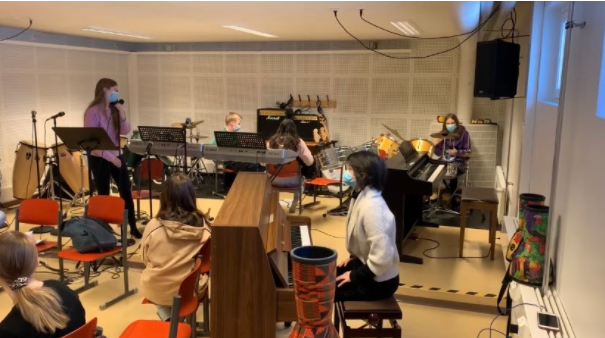
Oftentimes, schools in Finland will have different classes that specialize in different subjects, and take extra classes in their group’s subjects. When I attended Linnainmaan koulu (Linnainmaa’s school) in Tampere, Finland, I was lucky enough to be placed in a music class, (where we’d have more music lessons each week than the average group of students as every student in the class was a musician prior to joining the class), where we’d play a variety of different songs on different instruments. My school would hold events where the students who played music would perform songs in both English and Finnish (many students in Finland are interested in American or English music and pop culture).
Photo courtesy of Eva Levin
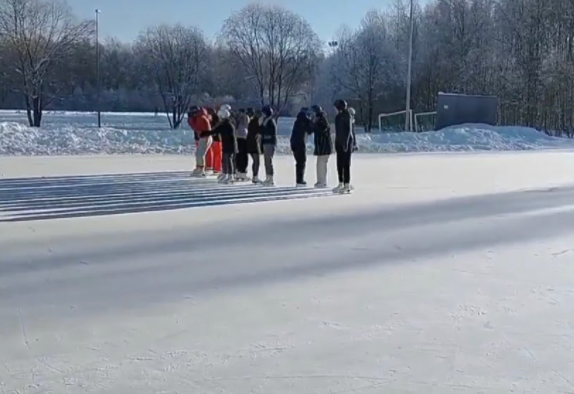
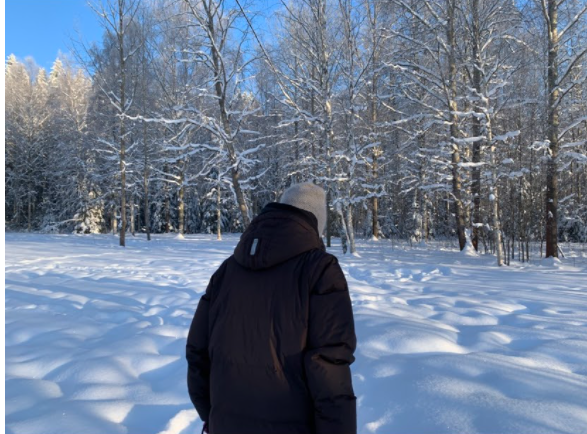
In terms of physical education, gym teachers in schools in Finland will utilize the advantage of the cold winter and sometimes excessive amounts of snow. On my first day in Finnish “liikunta” class, or “exercise” class, we got to go out and do cross country skiing across the paths in the back area of the neighborhood that my school was located in. Other activities that students get to do together in the winter time that may not be very common for schools in the U.S., specifically in the southern U.S. where snow can be rare, are outdoor skating and ice hockey with chairs (one person skates and pushes someone in the chair who is holding an ice hockey stick to play against the other sitting students and their partners.) As an exchange student who didn’t know the language well, I particularly enjoyed playing ice hockey, as I got to learn a lot of new words in Finnish about speed and turning, so it was a fun opportunity to communicate in Finnish to use teamwork with a classmate.
Photo courtesy of Eva Levi
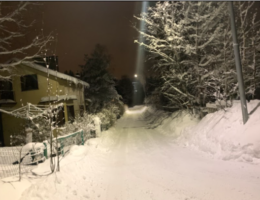
Depending on what time of year you choose to travel, you’ll get to experience different strangely lengthened days during your life in Finland. As most of the states in the US (minus parts of Alaska) are too far South to experience the elongated days in the summer and the elongated nights in the winter, going to Finland and seeing daylight for nearly 24 hours (depending on your city) in the summer, or walking to and from school in the dark in the winter may seem like the strangest thing. At the very beginning of my trip in mid-January, I would walk to school in the dark, and by the time I left school, the sun would already have begun setting. By the very end, in mid-June, the sun would officially set around 11:30 at night, but the sky would never truly get dark as it would in the wintertime. Though this aspect to Finnish life may seem very strange to most Americans, or most people from any part of the world, it’s also a really amazing thing to experience. To a foreigner from any country that’s further south, the long nights and long days depending on the season make the days feel special and unique.
There are many small and large aspects to Finnish lifestyle and school culture that will differ from your life as a student in your own country. However, the close communities and well trained, friendly school teachers will make you feel at home in your future community and town. Most students and teachers will likely be accommodating to your language requests in terms of how much Finnish you use or how much English you use, as many people in Finland are proficient in English. However, if it is your goal to learn the Finnish language, don’t be afraid to push yourself to practice Finnish and ask those around you in your host community to speak Finnish with you, as with such a difficult language, the best way to learn it is to speak it as often as possible. Hopefully you’ll be able to recognize some of these fun cultural differences and aspects to Finnish school culture and life on your trip, and discover many more with meaning to you.
A note from Greenheart Travel: Eva Levin is a high school student from Maine who studied in Finland during the Spring 2021 semester.
Eight Things You Should Know: A Guide of Information and Recommendations for American Students Travelling to Finland
By Eva Levin
If you’re an American student who plans on travelling to someplace in Finland, whether it be for a short or a long amount of time, you’re definitely in for some experiences with unexpected differences to life in the U.S.. (Or to your past experiences travelling the world.) These aren’t necessarily bad things, so long as you keep an open mind to the lifestyles and practices of those around you and prepare yourself for a few funny or awkward moments of cultural misunderstanding, you’re going to have a great time learning about Finland and it’s wonderful, unique culture. Below is a list I’ve made of a few key differences between American and Finnish culture, along with a few recommendations or just things to think about. Bear with me, as the list is a bit scattered between the three categories, but you’ll see once you’ve taken your time abroad that organizing all your interesting and funny memories might be a bit chaotic too.
Eva in Finland. Courtesy of Eva Levin.
Recognizing your own familiar pop culture thousands of miles from home
Though there are many distinct films, songs, and shows that come from Finland that are popular amongst Finnish youth, nowadays, it’s very common for Finnish kids and teenagers to take an interest in American pop culture. This includes, but is not limited to, American movies, shows, and music. When I got to Finland, I immediately saw posters and advertisements for either American movies and shows, or their covers with a Finnish translation. (Note that it wasn’t just American pop culture, but also British, Australian, and some from higher populated Western European countries such as France or Germany.) As most Finnish films or songs don’t reach an international crowd, a lot of the pop culture that they enjoy comes from America or England. When I first realized this, I felt a bit of disappointment at first, as I feared it meant I wouldn’t get to absorb true Finnish culture as much as I’d hoped, however, if you ask around and talk to friends or your host family, you’ll be able to find some really great Finnish movies, shows, and music. It just depends on where you look. It was also a very strange feeling to be able to relate to people who live in a different country than me about the same films and songs that I grew up with. It was a really nice feeling a lot of the time, because it led to experiences like teaching my friends the meanings of English lyrics to songs, or talking about the slight differences in the plots of American films vs. their Finnish translations that were released in Finland.
Removing your shoes before you enter the house, and changing them at school
I’m aware from prior international experience that the practice of removing your shoes at the door before entering a house is definitely not something unique to Finnish culture. In fact, many countries around the world (for various reasons) do this before they go inside. However, I’ve found that in the U.S., it’s a lot more common, especially when you’re a guest at somebody’s house, to leave your shoes on when you go inside, and simply wipe your feet at the door so as to not get dirt on the floors. Of course, this somewhat strict rule in Finnish households may seem natural to some Americans, as I do know people in the U.S. who follow this practice almost religiously. Regardless, I believe that to some students who are used to being in too much of a hurry to take their shoes off and put them back on when running in and out of a house, this may seem strange at first. You likely won’t find yourself in trouble for forgetting to take your shoes off, however many times you will be reminded by those around you. No worries though, they recognize that where you’re from things like that might be different, it’ll just be a funny change you might have to get used to.
The English language… everywhere
Even when it’s a conversation between two Finnish people, you could hear English being spoken. Now, I’m sure if you’re interested in travelling to Finland, you might know that nordic countries generally speak very good English these days. All students are required to learn it from a young age (the age differs but it’s generally 3rd-5th grade), and so, naturally, many of them are able to speak it very well by the time they’re in high school. I’m going to go ahead and make the assumption that if you’re interested in being an exchange student you must have at least a little interest in different languages, and maybe you even know a few yourself. If this is the case, then you know how exciting it is to use a second or third language, and you probably enjoy using it whenever you get the chance to speak with a native speaker. For Finns, it’s the same way. Especially the teenagers, who, as I previously stated, have been exposed to a lot of media published in the English language. I rarely got the chance to pick up on English conversations between just Finns with no background or relation to a conversation with myself, however, if I spoke in conversation (in English) to certain friends, some of them would continue the conversation in English even after I’ve walked away. Many jokes, references, and quotes beyond the realm of Finnish origin are often made or quoted in English (sometimes even if the person saying it doesn’t know what all the words mean!). You’ll find that, as an American, Finnish students will be eager to speak to you in English about a whole ocean of topics, but a lot of people I met were better at speaking the language and forming their own sentences than understanding the language (especially when it’s being spoken quickly). Because of this, if you’re interested in helping out a friend in Finland with their English, or just having a conversation in your native language, try to speak slowly, so that the conversation flows better, and there are less questioning faces and confused responses.
A less than satisfactory amount of Finnish language resources, even in Finland
Though I enjoyed speaking in English with my Finnish friends and helping them to grow their vocabulary, I myself was (and still am) very fascinated by the Finnish language, and I really wanted to learn it before, during, and after my trip. Unfortunately, seeing as though the Finnish language is only really spoken in Finland, it’s really hard to find resources to learn the language, especially if you’re not in Finland. Thankfully, if you’re an exchange student, you have all the resources you need living around you if you really put your mind to it. Now, I’m not saying just being in the country will teach you the language, nor am I saying that you’ll be able to achieve fluency in your trip (I certainly didn’t) However, pushing yourself to use the language as much as possible sets a really good foundation in your head for future studies of the language. I know that in the last paragraph I talked about how much fun it can be to talk in English with your friends, however, if it is truly your goal to learn the Finnish language, I’d say it’s best to force yourself to only speak Finnish (perhaps at designated times), so that you can burn as much of the language and it’s insane grammar system into your head. However, it can be overwhelming to constantly speak a second language, especially if those around you speak your language and you know it’s an available option. This doesn’t mean you’ll never learn the language, seeing as though the options for personal studies are limited, there are some very good courses and books. I’ll put a list here of the ones I think helped me to learn the most Finnish during and after my trip, and a link so you can find them.
Duolingo Finnish course – this is a new course, so the lessons are very limited, however, I’d recommend completing this course sometime during your time abroad, as once you know the basics of the language, this can be helpful to teach you some new vocabulary.
FSI Finnish course – the Foreign Service Institute (FSI) offers an incredible amount of free courses and resources for all the languages you can imagine, Finnish included. Unfortunately for me, I didn’t discover this until the end of my trip, but if you read through the book (downloadable as a PDF and printable) then you can gain a really, really useful amount of information about the pronunciation, grammar, and vocabulary of the Finnish language.
Survival Finnish for Travelers: Lumi Bear’s Basic Travel Finnish – this one is a book that I was given for my birthday about a month before my departure from my parents, and it’s full of really helpful phrases and words that you can use when you’re travelling and you don’t have a translator at hand.
Suomen Mestari 1 – when you get to Finland, you’ll probably have organized with your program a course with which you’ll be learning Finnish for a portion or all of your trip. The Suomen Mestari 1 book is the book which I bought for my class. The whole book is written in Finnish, as it’s made for people from any country to learn Finnish, not specifically English speakers. You’ll likely end up buying a book for the class you attend, but on the off chance that you want to buy this book anyways (assuming you don’t automatically buy the same one for your course), I’d recommend getting this after you already have obtained a basic understanding of the Finnish language with a source made for English speakers.
I must confess, of all four sources listed above, I’ve only completely finished the work in the Duolingo course. However, I’ve completed or reviewed a lot of the work in the other sources, and I can see at this point that they really helped with my growth in the Finnish language.
The ultra-hot saunas, and feeling like a chump in them compared to the Finns
Okay, if you’ve been in an American sauna before, you’ve probably noticed that they’re really hot, but at least tolerable (hopefully). At least, in my experience that’s about how I’d describe them. However, if you end up going to a Finnish sauna during your trip (which you definity will, they’re unavoidable), I recommend you prepare yourself for a level of heat that is unmatched by saunas outside of Finland. There’s a reason why they’re known all around the world for their saunas and how they use them, and that is because they will not stop throwing water on the rocks, even if to you it feels like you’re sitting in an oven. My first time going in my host family’s sauna, it got so hot that when they told me we were going to jump into a hole in the frozen over lake, I didn’t have to debate it in my head, I got in the water as soon as I could. You’ll likely hear a few jokes by your Finnish colleagues who have travelled to America about how ‘cold’ our saunas are, but don’t worry, because the more trips you take to the sauna in Finland, alone or in a group, the stronger resistance you’ll build up to the heat. In fact, if you go enough, by the end of your trip you may be able to make it through a whole sauna session with some Finnish peers without flinching when they add more steam.
Tipping- don’t do it
This one you may have heard before, either about Finland or about another country. This is another thing like taking off shoes, one that depends on where you go, as many places have it one way while others have it the other way. In Finland, it isn’t offensive to tip your waiter or someone helping you with service in a store, however, it is unusual. It’s one of those things that you might want to avoid doing if it’s your goal to fit in better in your community.
Day and night
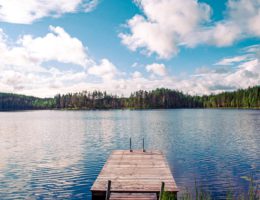
As far as the daylight goes in Finland, you’ll generally get elongated days in the summer and elongated nights in the winter. Depending on what time of the year you travel and how far north you go, you’ll likely get to experience something unlike what you see in the US, even in the heart of summer or winter. In the summertime, when the days are long, oftentimes people in Finland will go swimming in the lakes late at night, as they can still see with the sun up or barely set. In the wintertime, the sun will be set by the time school is out, or it will begin to set soon after. As tough as this might sound, it’s actually quite nice as Christmas decorations are very common late in the winter there as they are in the US, so even though it’s dark out for so long, you get to see the fun lights and decor in the long nights. This aspect of the Finnish environment might be particularly special for students from states further south in the US, as day and night for them remains fairly consistent throughout the year.
Candy and Salt
This last one I’d consider a recommendation not to be taken lightly. In America, our idea of candy is usually things like gummies or chocolate or hard candies. Seldom in my life in the U.S. have I eaten a candy that was completely salty, not making an exception for things like “salted caramel” which are nearly always sweet in whole with just a bit of salt. However, at times in Finland, finding candy that did not contain salt was a challenge. Finns really love their candy a lot, they have a ton of selections of chocolate and other mixed types of candies like pastels or gummies. However, what I believe they are best known for (or should be if they aren’t), is their ‘Salmiakki.’ Now, if you don’t know what this is, you can look it up. It’s like liquorice, but it’s more salty than it is sweet. Like, that’s not my opinion, that’s just the catch. This isn’t to say it’s a bad thing, as a ton of people (including myself at times) like the salty liquorice. However, there are types that (in my opinion) are way too salty, or that are just surprising to find. What I mean by this is that you can go into a store at the beginning of your trip without knowing how to look out for salty liquorice (they have a specific type of package and key words on the cover that you’ll eventually grow accustomed to), and you could buy what you think is a chocolate bar, only to find that the inside is full of a black goo. That’s a liquid form of salmiakki (and a real candy that they have in most stores). There’s chocolate covered salmiakki, there’s fruit candy mixed with salmiakki in bags, there’s pastels, there’s gum, I even bought a licorice flavoured shampoo towards the end of my trip. They have managed to package one of the most controversial candies in virtually every form. So my recommendation to you is simply, beware. If you don’t like liquorice, salty candy, or both mixed together, or if you just aren’t accustomed to it yet (as most Americans aren’t), just be careful when purchasing candies there. Now, obviously this isn’t a matter of life and death, but there were times there when I would pick up a piece of chocolate, and bite into it only to find that it was just double-salted liquorice disguised as chocolate. So again, just beware.
I’m going to leave some of the other things you’ll learn about while in Finland up to you to discover, as this was simply a list of what affected me most. Throughout your time abroad, you’re going to run into things that seem different from the way life goes for you normally, in a multitude of ways. All I can say is you have to view these surprises as positive, and let the changes be good things. Even if they seem hard to adjust to at first, you’ll ultimately learn to love a lot of aspects of your host country, it just requires time and patience. So be sure to always prepare for new experiences, keep an open mind, and good luck on your adventure abroad!
You’ve heard us say it a thousand times: cultural exchange is lifechanging. We say it a lot because it’s true. Whether your cultural exchange program inspires you to become a chef instead of an accountant or changes your outlook on community, there’s no shortage of ways that living abroad impacts your life. In this Q&A, Greenheart Travel Associate Director of High School Abroad and Short Term Programs Allison asks High School Abroad Spain alum Meredith all about her best memories of studying abroad and how it’s changed her life.
Photo courtesy of Meredith.
Q: What made you decide on studying in Spain?
A: Originally applied to study abroad in English speaking countries. Prior to my time in Spain I was one of those monolingual Americans who didn’t see the value in learning another language when English was so globalized. I was told that there weren’t any spots left in any English speaking countries but that there was a spot in Spain and Austria. I still wanted to study abroad and I had taken two years of high school Spanish so I chose Spain. That year completely changed my whole life and my whole perspective on language education. It even changed my career path. Beforehand I wanted to be a Speech Pathologist. Now I want to go to law school to study international and comparative law.
Q: What was your life like when you studied in Spain?
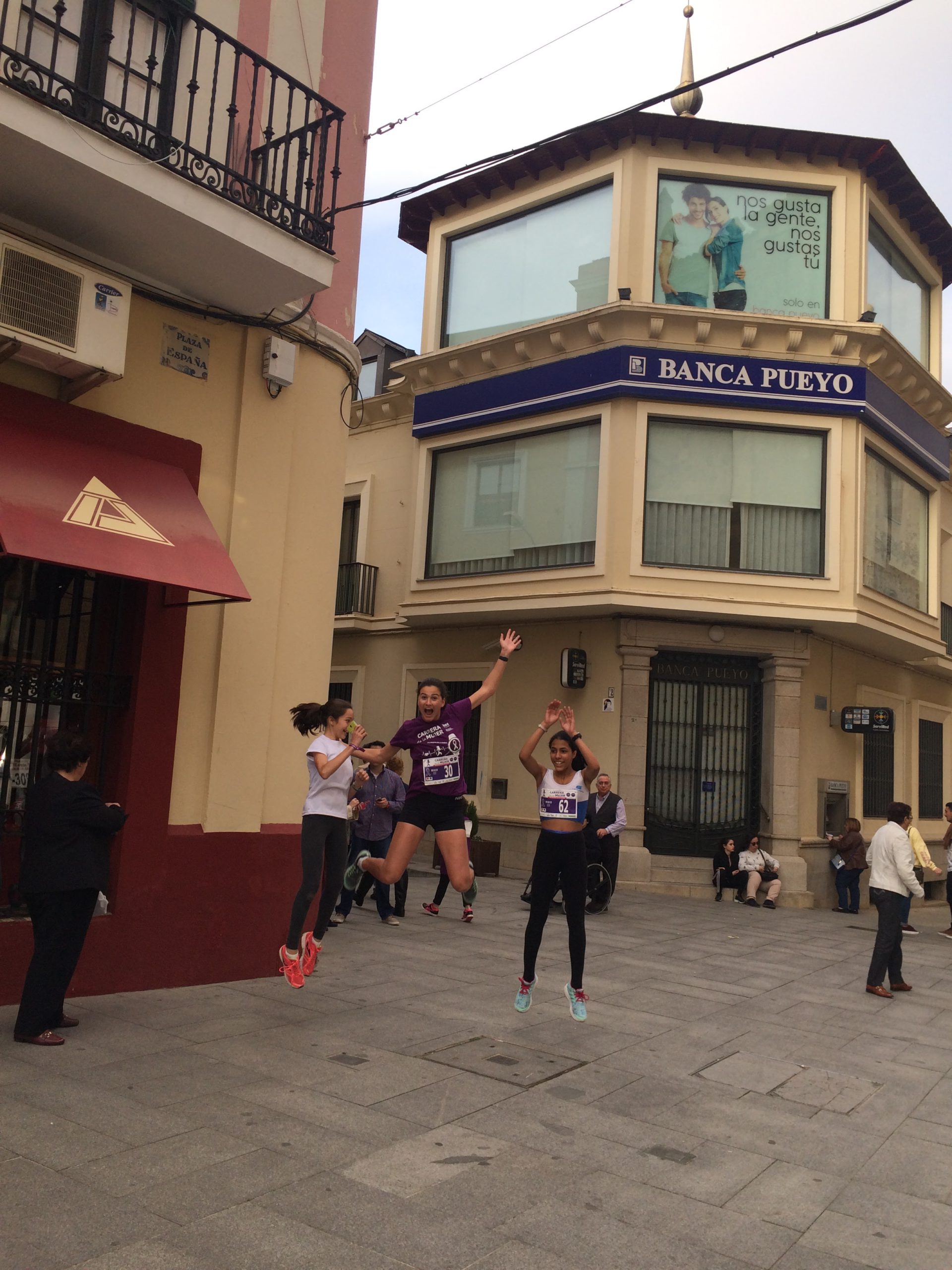
A: I went to IES Pedro de Valdivia in Badajoz and completed Primero Bachillerato. I was a part of the town’s track club and I competed in cross country and track. I participated in a charity race (Carrera de la Mujer) that strived to bring awareness to domestic violence against women in Spain as well as raise money for women’s shelters. I placed in the top ten in the race (and so did a couple of my teammates) so we qualified to run in the international race in Lisbon, Portugal.
Q: Wow, it sounds like you did a lot of extracurriculars. What else did you do?
A: Throughout the school year I worked with my English teachers to help my school qualify to compete in an international economics competition (Erasmus). My town’s English program wasn’t as great as schools in the cities so I would spend free periods going through their presentations with them and correcting grammar/pronunciation etc. They ended up presenting their project in Poland! I participated in a play (entirely in Spanish) for my literature class where I played a supporting role. I had about 12 lines and my classmates were so encouraging as I was learning them (the Spanish was very old, like Shakespeare level old English). Preparation for the play was about two weeks so we practiced every day during class or during free periods.
Photo courtesy of Meredith.
Q: If you had a to pick a really fun memory of your time in Spain, what would it be?
A: Segundo Bachillerato did a baking competition and my friends in Segundo Bachillerato convinced the teachers to let me participate with them. We spent a week planning and a whole day cooking only to lose to someone who admitted that they just used Chips Ahoy that they snuck back from America! The irony of an American losing to an American cookie had us laughing all afternoon and this experience was the first time I had to bake without using US measurements. Using a food scale to bake blew my mind.
Q: Overall, how do you think your year in Spain changed you?
A: This is my favorite story to tell to when I explain how much Spain changed me: My sophomore year of high school we had an exchange student from Barcelona named Ana. The day she was leaving she was helping me with my Spanish homework. I remember sitting at our kitchen table and crying about how stupid and useless Spanish was out of pure frustration. Two years later I met up with Ana in Barcelona after my year in Spain and we didn’t speak in English the entire week I stayed with her family. She brought up the story of me crying about Spanish the day she left and we could not stop laughing about it.
Photo courtesy of Meredith
Q: What are your plans now?
A: I am currently applying to Peace Corps. My year abroad in Spain played a huge part in my decision to apply to the Peace Corps.
Early in my travels, Europe was always the place I dreamt about. If you were to give me one of those “which city are you?” BuzzFeed quizzes that are utterly addicting, I would almost always be the whimsical romantic in the group, receiving Paris as my city time and time again.
There’s no denying it; that continent has incomparable allure.
It can also be mind-numbing, especially for anyone like me who is predisposed to obsess over maps and “must-see” lists. However, learn to avoid a few common pitfalls, and your 90 days could be full of unforgettable experiences.
Fly by the seat of your pants…not your pocketbook
When I planned my trip, I figured that I could always do it better and cheaper on my own. I only knew about travel agents. I didn’t know about cultural exchange programs, and I certainly didn’t think anything like that would end up saving me money.
Traveling in Europe or moving there for an extended period comes with all the same costs as living in the U.S. You have to pay for housing, utilities, food, transportation – everything just as you would back home. Even if you stay in hostels your whole trip, you’ll end up paying the same or more than rent each month. And that is one of many reasons why homestay programs are a beautiful thing.
Find the right fit
First and foremost, you have to be invested in the cultural exchange experience to commit to a homestay. If you’re genuinely interested in experiencing the day-to-day life of your host family, sharing your customs with them and learning about their own, as well as having a lot of independence and personal time to explore, then a homestay might be the right fit for you.
What’s more, it will cost you far less than trying to live in Europe on your own, whether you’re planning to stay in one place or travel around, and your travel insurance, logistics, vetting of your homestay family, and so much more will be handled for you. Most importantly, you’ll have a unique, quality experience living and learning abroad, like a local.
Making the most ≠ seeing the most
A common mistake that travelers make is to try and fit in as many cities as humanly possible. When I planned my five-week trip, I knew that I wanted cushion days where I could just sit in cafes and people watch. Sightseeing is a blast, but it’s also exhausting, and it doesn’t continue to be a blast if you do it day after day after day.
The key to travel, as with most things in life, is quality over quantity. Give yourself time to absorb each place you visit. You’ll have such a better chance to learn about the culture and history, rather than just memorize the tourist sites, and you’ll return home refreshed and ready to plan your next trip!
So, ask yourself why you want to go to Europe so badly? Is your goal to tour the country, or to teach? Is it to learn a new language or experience the culture? Or is it all of the above? Whatever combination you’re looking for, it’s possible. The following two options are just a few of the ways to fit it all in!
1. Teach English in a Homestay
If you’re highly independent and itching to spend a chunk of time gallivanting wherever you please, Teach in a Homestay is a good option for you. Greenheart Travel has placements in countries such as France and Spain with one to three-month program options as well as rolling start dates! It’s a highly flexible and cost-effective program to incorporate into your European adventure.
You’ll spend 15 hours a week teaching your homestay family, allowing you to try out teaching English in a more relaxed setting and see if it’s something you want to pursue. The rest of your time is yours to explore your new home.
If you’re looking to get a little bit of everything on your Euro-trip – professional development, cultural immersion, language practice – this is an excellent program to pair with any independent plans you want to make.
2. Teach English in a Local School
If you would like more structure to your 90 days and prefer to try teaching English in a school setting as a teacher’s assistant, Teaching English in Italy or France could be your jam. You’ll also gain the experience of a homestay, but you’ll get to go abroad with other Greenheart Travel teachers at the same time (with the same start date!), have the support and community of your school, and the opportunity to travel to destinations all over Europe on the weekends.
No matter how you decide to spend your days experiencing a new culture, you’ll come back having had a life-changing, one of a kind experience that taught you more about yourself and what you want in life.
Learning a foreign language is essential in today’s world. But learning a language is more than studying from a text book: it’s about immersing yourself in that language and experiencing true cultural exchange, and there is no better time to head abroad than in the Fall! Here are 8 reasons why you should apply for a Greenheart Travel Teach in a Homestay program.
1. No summer crowds
Avoid the herds of tourists, enjoy shorter lines to museums and take advantage of off-season prices at restaurants while exploring in your free time. No lines at the Louvre!?
2. Beautiful Weather
Save yourself from the potential of heatwaves when you arrive in September and October.
3. Cheaper Airfare
Airfare can be more than double in the popular summer months. Sometimes you can score tickets to Europe in the fall for even as low as $500 round trip from the USA.
4. Wine Harvest
Wine grape harvest season in Spain and France along with awesome harvesting festivals!
5. Good Timing
It is easier to take time off work in the fall after all of your co-workers have taken their summer vacations! Teach English in a Homestay’s flexible dates make it easy to squeeze in a month when it’s convenient for you.
6. Festivals
Attend awesome beer, food and cultural festivals like Oktoberfest in Germany or the White Truffle Festival in Italy!
7. Connect with the Locals
During the summer, many Europeans go on vacation. Visiting in the fall gives you the opportunity to meet local people and truly immerse yourself in a new culture.
8. Those Changing Leaves!
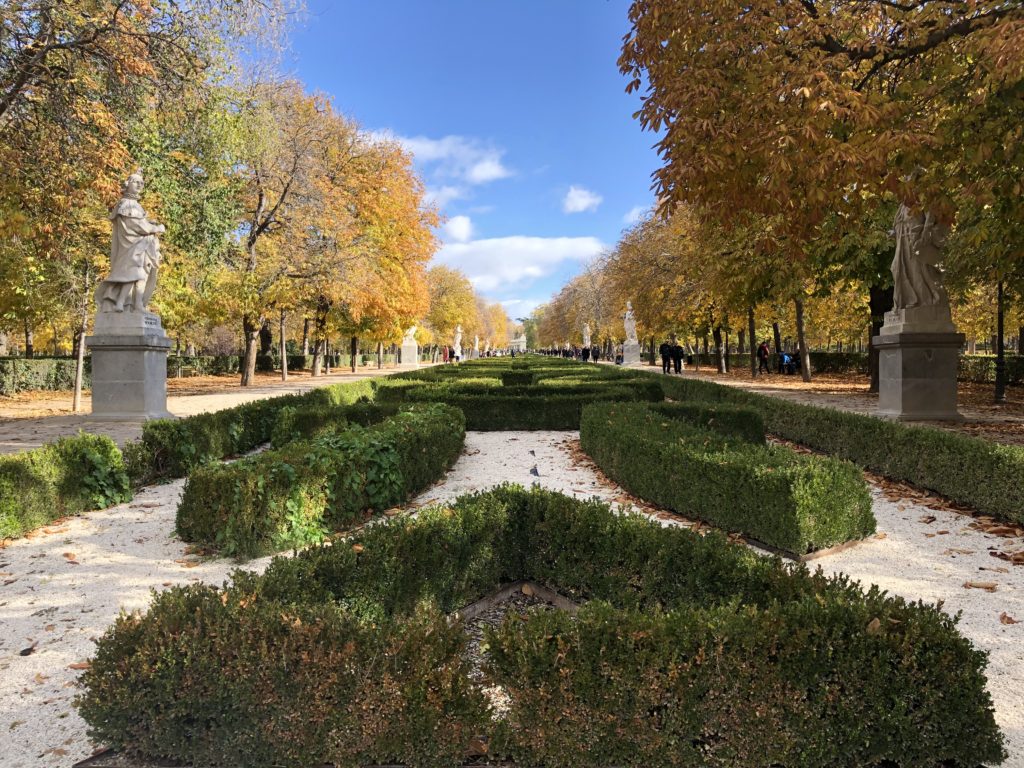
Experience the beauty of the leaves changing while in a beautiful new landscape. What is more romantic than wandering in a park halfway across the world as the trees change colors?
Are you looking for affordable ways to stay in Europe? Check out our Teach in a Homestay programs!
You may be thinking, a volunteer program that requires me to pay a program fee?
It’s reasonable to be turned off by the program fee, but the truth is that you just can’t spend an extended period of time in Western Europe for cheap. Rent is high, food is expensive, and as a North American, you aren’t eligible for a visa that will allow you to make any real money working (read more here). The Teach English in a Homestay in Spain program costs $1,710 and allows you to stay in Madrid for up to 3 months. Think you could do it cheaper?
Let’s break it down. Here are some numbers for you, taken from internet research combined with my experience living in Madrid for 2 years:
Average cost of a hostel: $20/night for a dorm, $30 for a private room
Meal in a restaurant: ~$10 (low estimate)
Groceries: $35/week (low estimate)
If you manage to find an apartment, the rent would be $350-$550/month for a room in a shared apartment, plus utilities (which are roughly the same price as in the US). This is pretty much impossible to line up before you arrive, so you’d have to stay in a hostel for a while until you found a place. I’m speaking from experience: I arrived in Madrid with some advantages most expats don’t have, since I was already fluent in Spanish and had several local contacts, and I spent an entire week making (no exaggeration) over 100 phone calls trying to find an apartment. Many landlords require a huge security deposit for foreign tenants (mine was €1,250), proof of employment, and a year-long lease.
So if you stay in Madrid for the duration of your 90-day tourist visa, find an apartment after 2 weeks, only eat out once a week at cheap places, and find that rare Madrileño landlord willing to charge you 1 month security deposit and give you a short lease and prorated rent, the cost of your Spain adventure will be $2,040-$2,885. If you live in a hostel the whole time, you’ll spend around $2,340.
That $1,440 isn’t looking so bad now, right?
Prices obviously vary a lot from country to country, but Madrid is one of cheapest major cities in Europe. Europe just isn’t cheap.
But I want to see Europe! Won’t my teaching job interfere with my freedom to travel?
Your position will only occupy you for 15 hours a week, leaving you free to explore the city during the week, and to travel beyond your host city on the weekends! One of the many fabulous things about living in Europe is RyanAir! Here are some sample ideas (prices from Madrid)
Weekend in Brussels: $49 round trip (2.5 hr flight)
Weekend in London: $73 round trip (2.5hr flight)
Weekend in Paris: $56 round trip (2hr 10min flight)
Weekend in Morocco (Fez): $47 round trip (1.5 hr flight)
Also in bus/train range:
Granada
San Sebastian
also: Barcelona, Valencia, Cordoba, Lisbon, and the beaches of the Costa del Sol!
And the biggest payout of all:
Sure, you could shell out the extra money and go it alone, living in a hostel or renting a room in an expat apartment. You’ll spend your days, your nights, and your weekends with other foreigners, going to Irish-themed pubs in touristy neighborhoods and speaking your own language with people from your own culture. There’s a huge expat scene in Madrid, and in every other major European city, and it’s all too easy to fall into it and never actually experience the city the way the locals do. It might be fun, but you could speak English over Budweisers at a place called Finnegan’s without ever leaving your country.
Living in a homestay, you will get an immersive, cultural exchange experience. You will speak Spanish. You’ll eat Spanish food at long, wine-soaked dinners with Spanish friends and family members. You’ll learn where to find the best tortilla de patata (hint: it’s not in Puerta del Sol) and how to order a beer (you probably didn’t know this but you want it mixed with lemon soda). You’ll learn how Spanish people talk and think and live, and you’ll learn it from the inside, not as a tourist.
So before you let the price tag and the part-time job scare you off, consider what this program would offer you: a chance to live in Europe for cheap and travel to some of the world’s greatest cities, all while experiencing the cultural exchange of living with a local family. It’s a pretty good deal.
Check out our Teach in a Homestay programs to get your cultural immersion experience started!