Author: Morgan Johnson

  • The Art of Communicating with Different Cultures

    ‘Who are you ?’ said the Caterpillar. This was not an encouraging opening for a conversation. Alice replied, rather shyly, `I..I hardly know, sir, just at present — at least I know who I was when I got up this morning, but I think I must have been changed several times since then.’ ~ Lewis Carroll , Alice’s Adventures in Wonderland & Through the Looking Glass

    As an empathetic, educated adult, you might think you understand a few things. Like who you are, for instance, and what you believe. I know there are many unsure souls in their twenties wandering about and finding themselves, but I have always, mas o menos, been confident at least in what kind of person I am. I have known I wanted to be a teacher since I was twelve years old. I have known, since I can remember, that I like to read, that I prefer dogs as a whole over people, and that I value kindness above all else.

    Having lived in Peru for more than two months now has not changed any of these things.

    In fact, I believe many of my beliefs have been further solidified and strengthened. However, teaching and learning in another country and living immersed in another culture and language has granted me an unparalleled opportunity to examine and understand myself, my language, and my culture through a new perspective.

    That said, who you think you are, and who you are in your own country and language, may not transfer over to your host country. In America, I am of average height. In Peru, I am tall. In the grand diversity of California, everyone blends in; in Peru, I find myself standing out. My liberal ideology often feels at odds with the culture and beliefs here. My communication style sometimes clashes with that of Peruvians.

    Suddenly, I am very different.

    If you are in another country for very long, interacting with locals whose culture and customs and language are different from yours, it seems inevitable that someone, ultimately, will be offended. Hopefully it will be only a minor offense with a quick solution. In my almost three months in Peru, there have been several moments of miscommunication between my homestay family and me. Some can be chocked up to my still developing Spanish, but most have been because of cultural differences.
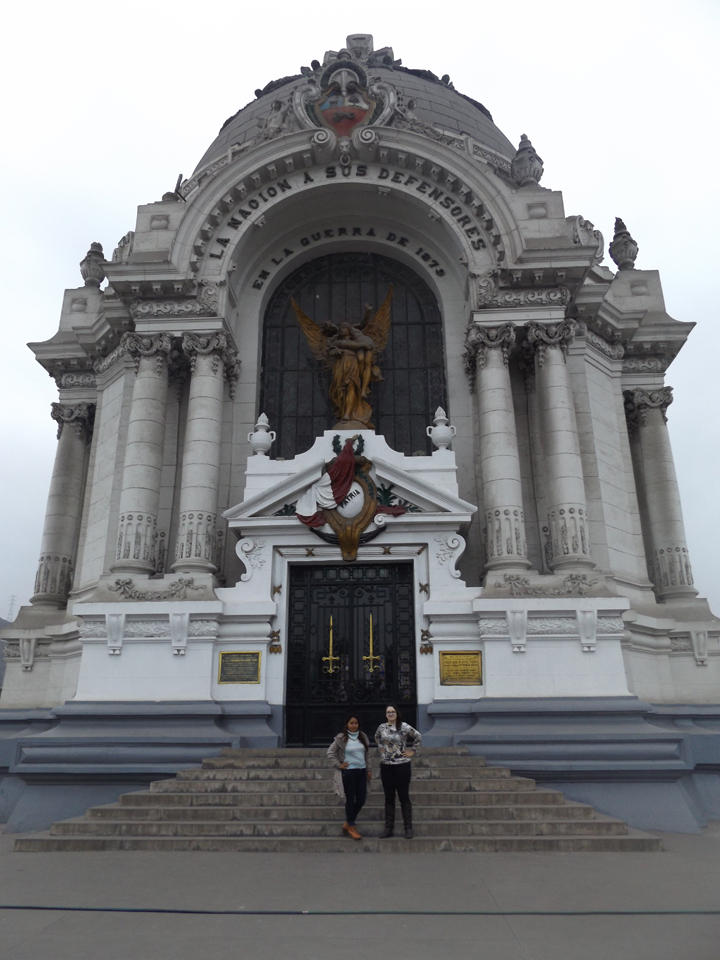
    Cemeterio-de-Angel-in-front

    Some of these incidents were handled well by both parties, and some were learning experiences.

    My most recent experience of this occurred just this week. Throughout the program, I have been teaching the college age daughter of my Peruvian homestay family. We often go out walking together, shopping, or running errands.
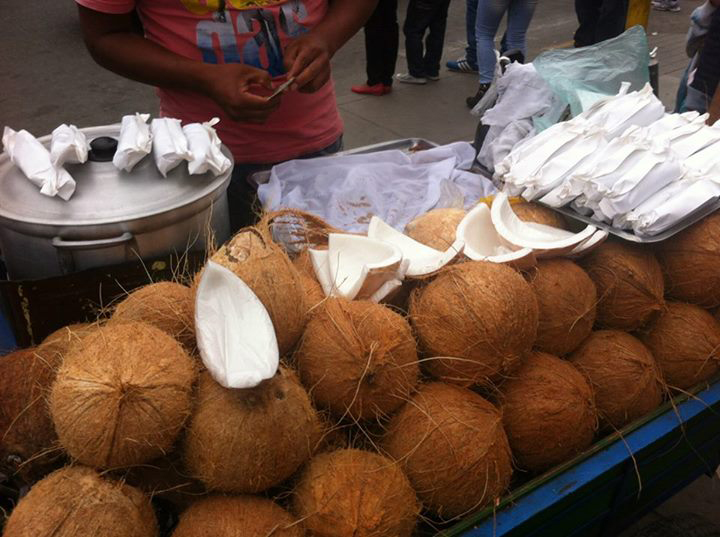
    buying-coconut

    Nearly every time we have gone out, my homestay sister has asked me to borrow something from my ever-stocked purse. These have included: my cellphone, a pen, paper, toilet paper, tissues, spare change, etc. The first several times, I thought nothing of it. However, after awhile, I began to feel annoyed.

    Finally, as I offered over my stash of toilet paper once again (yes, you need to carry your own TP in Peru), I tried to casually suggest she bring her own next time. I could see she was offended by this suggestion just as I was offended by having to tell her so. After a few moments of annoyance between us, we communicated and discovered the problem: cultural difference.

    I, as an American, am used to adults having to be more or less prepared and self-reliant. She, as a Peruvian, is accustomed to happily relying on friends and family. This is one incident of many that are just part of a cultural exchange. My host family and I are learning from each other. We are discovering the differences and similarities in our languages, cultures, and individual ways of living and thinking.

    We have learned that what is “right” for us may be “wrong” for another. But really, it’s not “right” and “wrong” — just different.

    ‘…I should think you’ll feel it a little queer, won’t you?’
    `Not a bit,’ said the Caterpillar.
    `Well, perhaps your feelings may be different,’ said Alice; `all I know is, it would feel very
    queer to me .’~
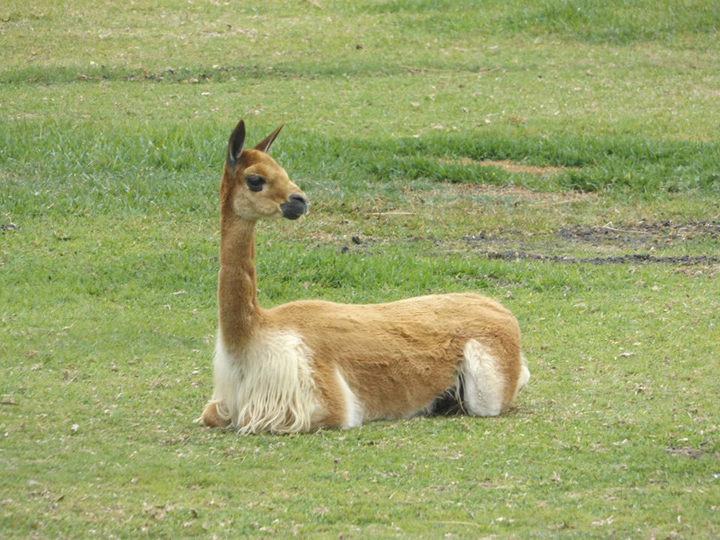
    vicuna

  • The Difficult Days Abroad; Getting Sick, Needing Space and Soaking in the Culture

    Being sick in your own country, in your own house, in your own bed with Netflix, with your husband to bring you blankets, and your dog to snuggle is bad enough. What about being sick in a country where you can barely speak the language and still struggle with the culture?

    Last week I got a stomach infection while living and teaching here in Peru. Most travelers are familiar with the dangers of eating foreign food, consuming water in a developing country, and the tummy troubles of long plane and car rides. Before my trip, I told my doctor I was going to be in Peru for three months. She promptly wrote a prescription for antibiotics to take with me.

    Of course I forgot those antibiotics at home in California. Thankfully, in Peru you can purchase many antibiotics over the counter. Still, ten days of antibiotics means a long recovery. During those days I was at my most vulnerable. I wanted nothing more than to be home in my own bed with my husband and dog and cartoons in English. Instead, I had my host mother following me around the house giving me strange, well-intentioned herbal remedies that my stomach didn’t really appreciate. Miserable, I cried and not-so-secretly wished to go home.

    Those difficult days created difficulties with my homestay family. Our cultural differences came to a head, and they knew I didn’t want to be there.

    I have finished my antibiotics and can eat somewhat normally again. I spoke with my homestay family and ended up staying in a hotel in the touristy area of Lima for a couple days. There, I was able to rest, and we all gained some needed space.

    Barranco Lima Peru July 2015 022 IMG_5019

    I returned to my homestay today, and all is well again. Two of my three months with my new Peruvian family are up. Three months is a long time to be away from your home and a long time to have a foreigner in your house.

    Lisa-Peru-homestay

    We have to remember that life in a foreign country is still a regular old life. At times it can seem like a dream vacation, but at other times it can seem troublesome and like too much work. The week I was sick was absolutely miserable. However, since then I have already jumped back into teaching, learning, and the joys of a traveling life. I have visited ancient Pre-Incan ruins, walked along a lovely beach, sipped Peruvian espresso and Pisco Sours, witnessed the wingspan of an Andean condor, and more– all right here in Lima.

    IMG_5020

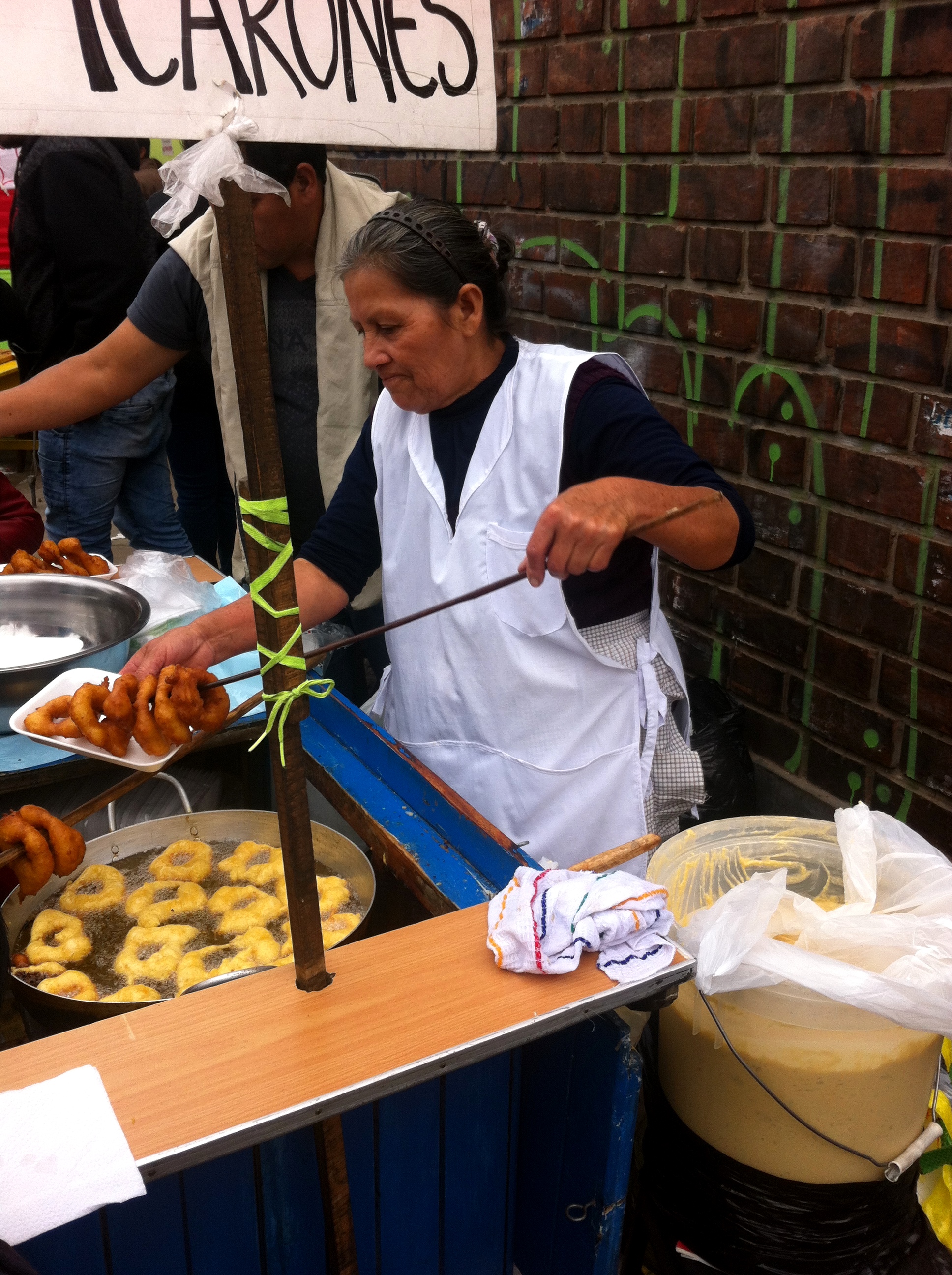
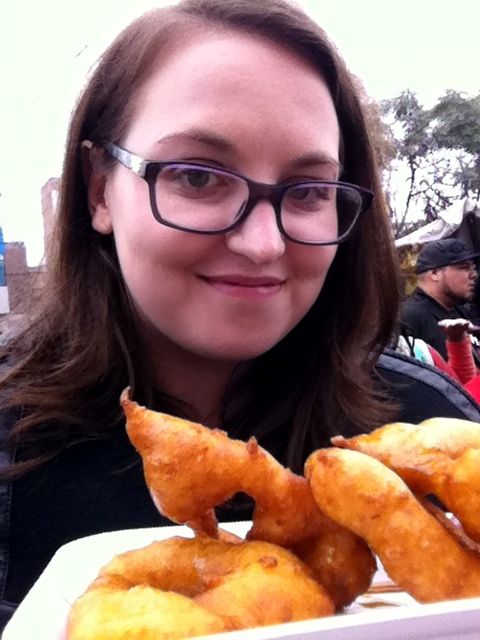
    I have to remember now to soak in all that I can as the weeks come and go. Soon, I will be home again. In my time so far I have gotten to know the city of Lima, Peruvian culture, and the Spanish language. Soon that time will be over. I have only a few more weeks in Peru. Time to eat more picarones and use up the rest of my camera batteries.

    Program-blog-button

  • Adjusting to Differences During My Homestay in Peru

    Everybody’s different. Every individual culture, religion, and language, of course, is unique. And, yes, sure, we admit casually that different languages and religions and cultures are fascinating and obviously different from our own. But how often are we really, actually exposed to those differences? And I don’t mean Chipotle or even your local Norwegian folk festival. I mean, when are you really picked up out of your own life, with your own family, friends, culture, food, religion, customs, etc. and dropped smack-down in the middle of a different one?

    In a homestay.

    I have been in my homestay in Lima, Peru for more than three weeks now. In my last post I discussed culture shock. I just now am beginning to adjust to all these myriad differences, after almost a month since my arrival.

    Inside and outside the house, I feel as if I’m in a new world. That’s not to say I fell down the rabbit hole and everything is topsy-turvy. It’s more like ending up in Oz. The world continues to obey the laws of physics and other such rules, but my own customs, language, and culture have long been left behind in Kansas (or in California in this case). Some differences are harder than others, and some are admirable. All are fascinating.

    iglesiaenmirafloresperu

    My homestay is located in the area of San Juan de Lurigancho in Lima, Peru. This part of the capital is its most populous district and is one of the pueblos jovenes, the newer parts of the city that are still being developed. My homestay does not have a microwave, we wash our clothes by hand, and there is no hot water. Immediately, I realized how much I have become accustomed to such conveniences of daily life, how most people I know have come to expect them, and how many would not ever even consider choosing to live without them, even for a few months as I am.

    Another difficult difference of living in a homestay is adjusting to the personal habits and beliefs of your specific family. If you normally live on your own as an adult, you are the one making decisions and setting your own schedule. Suddenly you are at the whims of a new household and its rules about what, where, and when to eat, sleep, clean, etc.

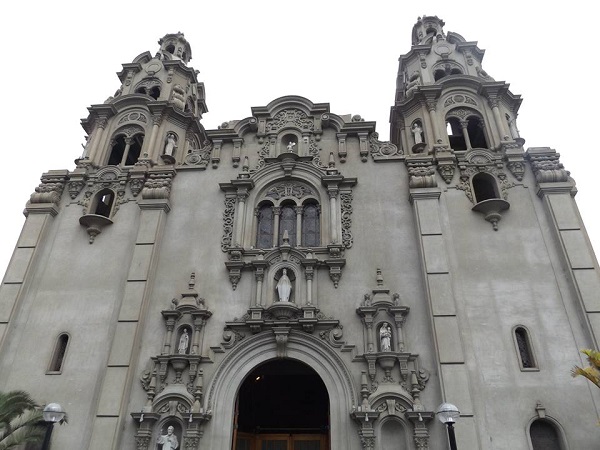
    My host family is very strictly Catholic, as are most Peruvian families, and this greatly affects their home and my life in it. Schedules are worked around church and mass, meals are never eaten before prayer, and certain topics are taboo and or at least frowned upon (like my truffula tree tattoo, my liberal belief system, etc.). When I merrily sketched a picture of the Statue of Liberty for the 4th of July and explained its significance, my family told me that they appreciated its beauty but that it was, in fact, a false idol.

    However, one difference I have particularly found to my liking here is the inclusion and appreciation of indigenous cultures. I have witnessed more than one parade and dance tribute to the native cultures in Peru, and I have noticed an occasional sign written in Quechua, and many older adults know more than a few words of their ancestors’ native language.

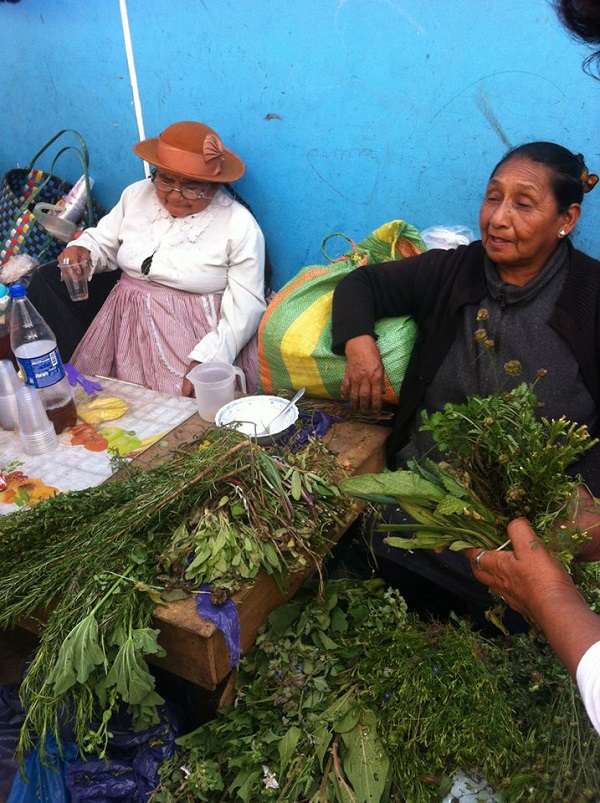
    Additionally, at least in the region where I am living, most people get their food fresh every morning from the local market. Vegetables and fruit are brought everyday into town, and chickens are butchered in the same place they are sold to local families to be eaten later that day. Virtually no food in my homestay is processed or even canned, and so I am able to witness and taste the wondrous variety of dishes and flavors of healthy Peruvian food.

    buyingherbsinmarketperu

    With all the differences I am dealing with, I know that I am living like a real Peruvian. I really am experiencing another country as the people who live there do. I walk to the market with my host mom, cook pescado and quinoa, clean the house with my homestay sister, and hang up my clothes to dry on the roof in the company of the dog. I watch dramas in Spanish, buy churros and quail eggs on the street, and pay two soles to have a ride on a “moto-taxi” to the supermarket to buy bread.

    tryingquaileggsperu

    For now, I am learning, teaching, and sharing. In two more months, I will be back in California, appreciating my unique experience but knowing that there is no place like home.

  • Motivated by Compassion: Prepping for Peru

    Sientate, por favor,” I tell my 11-year-old furbaby, Atti. She sits as I’ve asked, plopping her scruffy butt on the floor and wagging her tail– not because she understands Spanish, but because she recognizes what I want from my intonation and tone. Still, I smile at her. She lets me practice my burgeoning language skills without judgement and always offers an encouraging tail wag.

    In this moment spent with my little dog, I am reminded of my reasons for wanting to participate in Greenheart Travel’s Teach in Peru Program. They are the same reasons I became a teacher and continue to be a student. Above all, I want to connect with the world. Granted, in this case I’m only connecting to my silly little mutt, but the principle remains.

    lisa and attiI studied English in college and study Spanish today to be both teacher and student of language. Language connects us because it allows us to communicate who we are. We can communicate ideas and emotions and spread understanding and compassion.

    While studying for my BA from the University of Oregon, I studied abroad in Querétaro, Mexico for five weeks. It was my first time out of the country, and I definitely experienced culture shock. Coming from a far-left, tree-hugging, counterculture-embracing town like Eugene, Oregon and being tossed into a conservative, strictly Catholic, oh-gosh-I-wish-I-could-speak-better-Spanish homestay was difficult. I struggled at times to understand not only the language, but the people and the culture. And yet, I wanted more.

    To be truly empathetic and compassionate, to really be able to understand the world and not just the tiny portion of it that is your college, your hometown, or state, or country, religion, political views, language, and everything that makes us who we are, we need to clamber out of our comfortable space into the unknown.

    Today, I teach English as a Second Language in California, one of the most diverse places on our planet. I have deep respect for my students and cherish the pieces of their culture and language that I am exposed to while teaching them. I know it will make me a better teacher to experience a new country and language like my students have, but, truthfully, that’s not the real reason I want to travel and teach with Greenheart.

    I want to learn. I want to teach. I want to share my culture and language and experience Peruvian culture and perfect mi español. The real reason I joined the fellow adventurers of Greenheart Travel is that I am motivated by compassion; I want to be a better human being and connect with the world.

    So here I find myself staring down at the big brown eyes of my dog– whom I will miss terribly (oh, and my husband too!)– while I am in Peru for three months, and I practice my Spanish to prepare for my trip teaching and learning with Greenheart Travel.

    “Ven aquí. Vámanos!” I tell her. “Come here. Let’s go!”

    Program-blog-button