Author: Kathleen Weary

  • Observations Outside of the Classroom; Pets in Costa Rica

    Observations Outside of the Classroom; Pets in Costa Rica

    Are you a dog person or a cat person? Personally, I love dogs and before coming here, I was very curious about the practice of owning pets in Costa Rica. Whenever I discovered that my host family had a dog, I was overjoyed! But I still had many questions, and wondered if it was as popular as it is in the United States. I soon discovered many things about pets in Costa Rica, and now, I am able to answer the questions I previously had.

    What kinds of pets are typically owned?

    Like the United States, dogs and cats are the pets you most commonly see. But also like the United States, people do have pets like birds and fish as well, and in rural areas, some have chickens, horses, and pigs.

    How do pet owners view their pets?

    In the United States, some people have such a deep love for their pets that they describe it to be the same love they have for their children. Also, a lot of pets are very spoiled and get what they want, even if it is inconvenient for their owner sometimes. In Costa Rica, pets are of course loved and cared for, but it seems as though not as many people live to make their pets have everything they want.

    Are pets as heavily protected as they are in US?
    dog-eating-meat

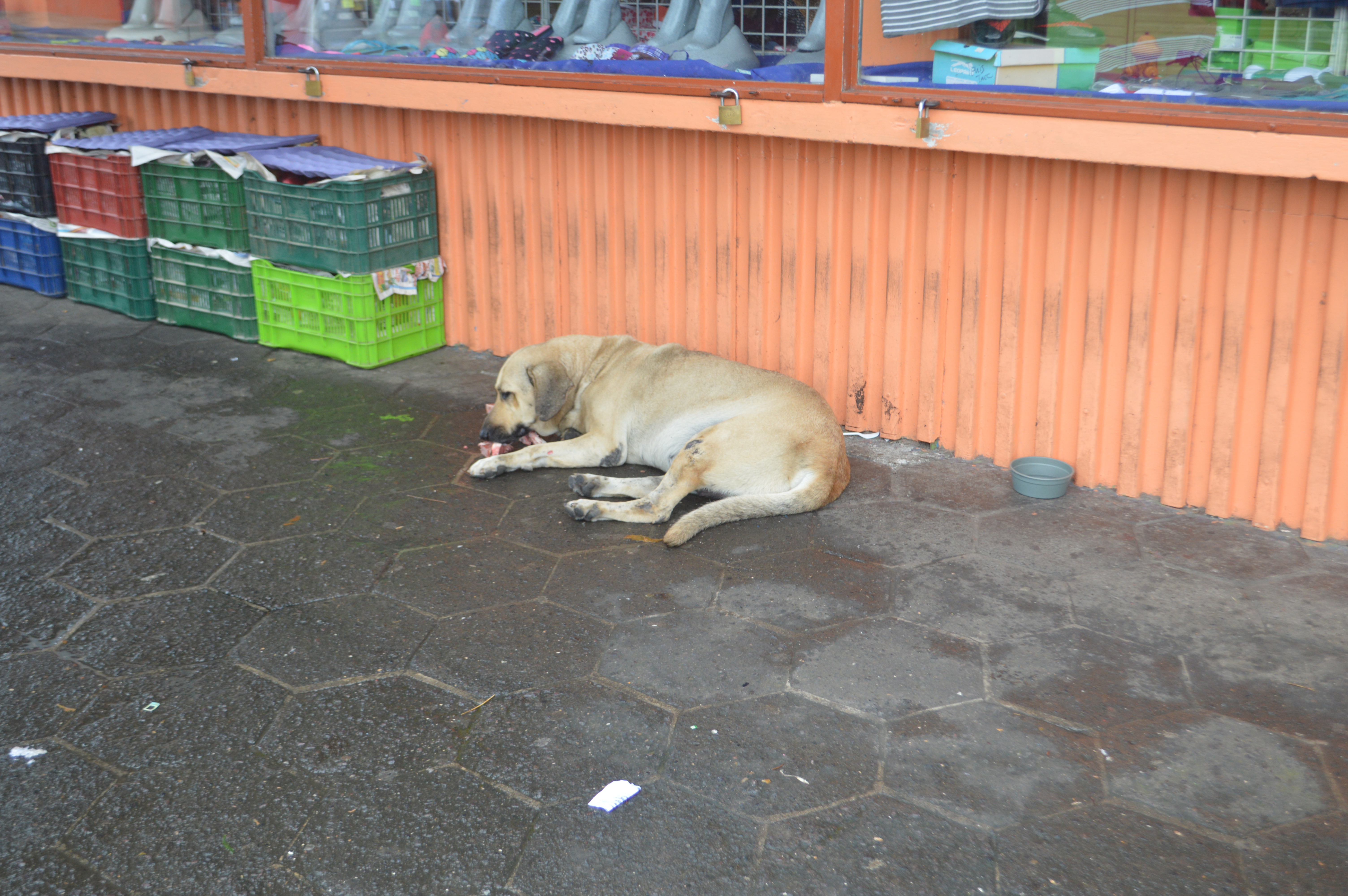
    In the US, there are laws and penalties regarding animal abuse and it is viewed as a very serious matter. In Costa Rica, it is basically the same. When it comes to strays, stray dogs virtually do not exist in the United States. When a stray dog is discovered, they are usually found and taken to shelters, signs are put out, or people take them in. Stray cats are more common, but usually many people take pity on stray cats as well and give them food. In Costa Rica, stray dogs are a pretty big problem. There are dogs everywhere, and they walk around a lot looking for food. There are organizations that are trying to rid Costa Rica of this issue, but it has not been completely solved.

    How are pets viewed in the community?

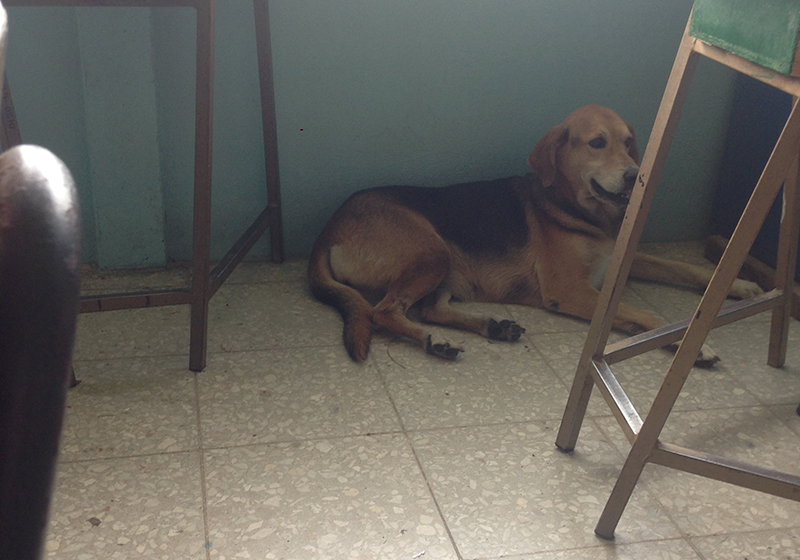
    As mentioned above, there are many stray dogs in Costa Rica and they are everywhere. They are basically like wild animals, and Costa Ricans are used to it. There are restrictions like in the US, for example, pets are not permitted in the supermarket. However, if a dog enters the supermarket, it is no big deal. Many people walk their dogs without leashes, and often peoples’ pets will just follow them. There have been a few times that I walked to school and my host family’s dog followed me and sat next to me in class. Even crazier than that, a dog that belongs to another family has also followed me to school, showed up at my house, and even walked over a mile with me and host mom!
    dog-at-school


  • What I’ve Learned So Far in Costa Rica

    What I’ve Learned So Far in Costa Rica

    Before studying abroad in Costa Rica, you will hear all about culture shock and tips for getting through it. However, despite what I was told and what I read prior to my arrival, I had my own expectations for what I thought living here would be like. When I arrived, I soon realized that the experience was not going to be exactly what I thought it would. During my first few weeks here, I had a very difficult time expressing what I felt due to the language barrier, getting used to the differences between Costa Rica and the United States, and of course, trying to soothe my homesickness.

    Within the first few hours of being at my host home, I realized how difficult attempting to communicate with my family was. I took two years of Spanish at school. On top of that, I practiced Spanish a lot in my free time, watched Spanish television, and read many things about Costa Rican Spanish in particular. However, nothing truly prepared me for speaking with them.

    When I could not communicate what I wanted to say or how I was feeling, I was frustrated to say the least. I was very angry at myself and felt unintelligent. So if you are currently in the situation I was, remember that you aren’t stupid for not being able to communicate what you want to say. You are learning and with learning comes mistakes and hardships. For this issue, I find it helpful to do one of two things: explain what I am trying to say using circumlocution. If that doesn’t work, I use an English to Spanish dictionary.

    I also had my own preconceived notions about how Costa Rica was going to be. I had heard from people that it would be different, which I of course knew, as far as climate, culture, and language. However, I somehow expected that it would have every unimportant thing that I was used to in the United States, such as a hot water tank that heats the water for steaming hot showers, or the amount of fast food restaurants. However, I soon learned that although it may be an adjustment for me, different is beautiful. I am so lucky to see another side of things. Being in Costa Rica has been so enlightening, and getting to experience something different beats going to Chick-Fil-A.

    Finally, another huge problem I had was homesickness. When things aren’t going your way or you’re having a tough time, it’s easy to want to take a nap in your bed, pet your cat, or hug your mom. However, I pushed through my homesickness by remembering why I wanted to study abroad and truly reflecting on how great this experience is. Chances are, I will live in the United States for the rest of my life. My time here is short, and must be enjoyed. I try to remember that my time here will end sooner than I think and focus on learning, growing, observing, and experiencing. I appreciate every moment that I have experienced thus far in Costa Rica, despite what I thought as it was happening, because although I have experienced difficulties, they have helped me to improve who I am as person and helped me to appreciate my time here.


  • Five Ways My Costa Rican High School Differs from My American High School

    Five Ways My Costa Rican High School Differs from My American High School

    Every country has things that make it unique and set it apart from other countries. This can include everything from languages and dialect, food eaten, holidays celebrated, scenery, things that are socially acceptable within the society of the country, and the way businesses, such as offices and schools, are set up.

    The mix of social acceptability and the way businesses are set up within a foreign country can definitely make a workplace or school have a much different environment than what you are used to. I am experiencing this in school right now, as my Costa Rican high school definitely has a much different environment than my high school back home. In this post, I am going to be sharing five differences between the two.

    1.)    The Schedule

    At my school in the US, you arrive at 7:25 a.m. and have homeroom. Classes begin at 7:40 a.m., you have nine periods, the classes are the same each day and depend on what you signed up for, there aren’t many (if any) people with the same exact schedule as you. Then, you go back to homeroom in the afternoon and are dismissed from there at 2:40 p.m.. On Fridays, you arrive at 7:40, have nine periods, slightly shorter, and are dismissed from homeroom at 12:10 p.m..

    However, at my school in Costa Rica, you arrive at 7:00 a.m. and report to your first period. You can have up to twelve periods, sharing the exact same schedule as the people in your group, and then leave directly from your last class at 4:10. However, the classes vary by day, and you may be able to arrive later than 7:00 or go home before 4:10.

    2.)    The Freedom

    In the US, there are no students roaming the hallways in their free time. Mainly because there is none. If you do not have a core class during a given period and are also not interested in any electives, you will be placed in a study hall where attendance is taken and you usually have to sit in a silent classroom. You are also restricted on the number of study halls you can take, so you may have to spend a year in art class when you definitely aren’t an artist.

    In Costa Rica when you don’t have a class, you are free to relax and roam the school, or, as mentioned above, go home or arrive late depending on your schedule for the day.

    3.)    The Lunch

    While I am aware that some American schools offer off-campus lunch, mine does not! We are required to report to the cafeteria at our designated lunch time, and we can bring a packed lunch, eat the school cafeteria food, or of course, not eat if that’s what we want.

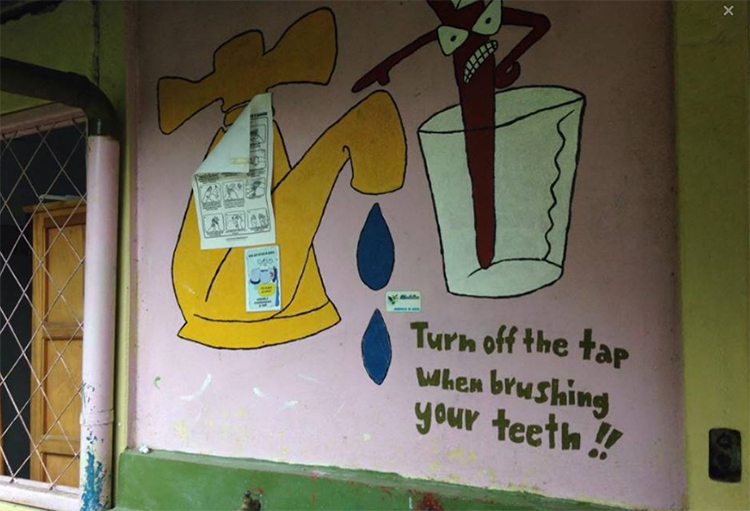
    In Costa Rica, you can eat food from the cafeteria, bring a packed lunch, or leave and go home (or to the store) to get some food. Also, this is a bit random, but in the United States, you have to sign out to go to the bathroom if you want to brush your teeth after you eat. Here, it is weird to not brush your teeth after you eat: everyone does it.

    brush your teeth in CR

    4.)    The Rules

    At my home high school, there are strict rules in place about cell phone use, behavior, computer use, and more. You are expected to be respectful and not talk while the teacher is teaching, raise your hand, and complete work silently (or quietly if it is group work.) Cell phones are not permitted; you can even get in trouble for having it in your pocket! Additionally, social media websites are blocked on school computers and there are certain rules about what sites you can use. Also, animals (other than fish) are not permitted in my American school.

    In Costa Rica, it is a whole different story. The teachers are more relaxed with rules and offer students flexibility. There are also dogs that roam the school!

    5.)    The Workload

    At home, I was constantly busy with work in class. There is not much free time, you are usually listening to a lecture or completing worksheets and projects from the start of class until the end. On top of that, there was always a test to study for, an essay to write, or homework to do after school. I was usually quite stressed out and definitely busy with schoolwork.

    Here, there is not an awful lot of work to be done. The homework is sparse and sometimes, classes are either cancelled or not much work has to be done. It is a lot more of a relaxed environment.

    Cassidy Bopp is 16 years old and lives in Saltsburg, Pennsylvania . Her goal during her study abroad program is to “gain a better understanding of the culture in Costa Rica and to see more of the world, and really take it in and appreciate it to the fullest.” Follow Cassidy’s adventure in Costa Rica on her blog post updates throughout her program.

  • What I’ve Been Eating in Costa Rica

    What I’ve Been Eating in Costa Rica


    I have been in Costa Rica to study abroad for over two weeks, and of course, I have eaten many Costa Rican dishes in this time! I enjoy mostly everything I eat here in Costa Rica and have grown to appreciate the fact that it is much more natural and healthy than food in the United States. I decided to share what I ate in a day in Costa Rica to show an example of what is eaten in Costa Rica… I promise it isn’t always Gallo Pinto!

    Breakfast:

    On this day, my breakfast included coffee, five little pieces of toast, butter, some avocado, and some fried plantains. Also, in the little container pictured in the photo above, there is some delicious homemade jelly!

    Lunch:

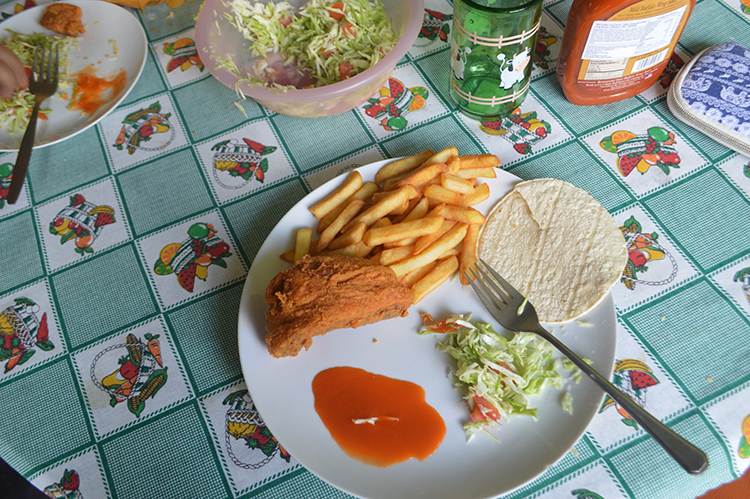
    My lunch was fried chicken, tortillas, and fries from a fast food place. Also, with it, I had cabbage and tomato salad with lemon juice. The buffalo sauce is not Costa Rican, but I’ve been loving it! I found it at the supermarket here and my host mom loves it too!

    Lunch in costa rica

    Dinner:

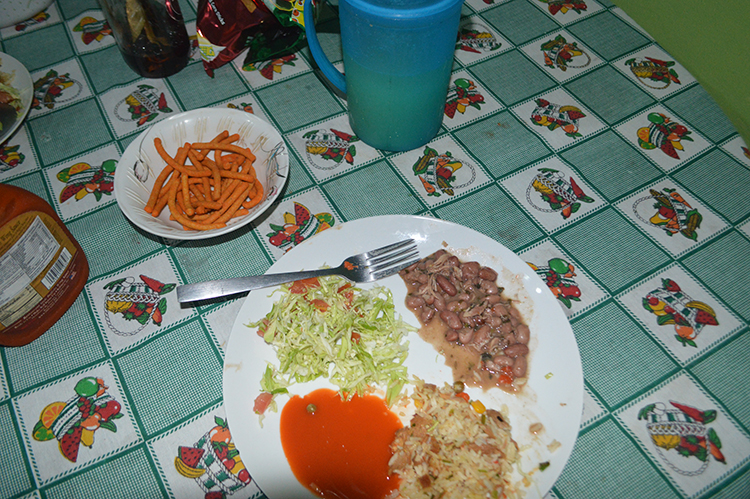
    My dinner consisted of rice with meat, peas, and corn, beans with chicken, cabbage and tomato salad with lemon juice, and crunchy corn sticks (kind of like a cheese curl.) I also, of course, had to add buffalo sauce. To drink, shown in the blue pitcher, I had a “cas” (a type of fruit) drink, which is very popular in Costa Rica!

    Dinner in costa rica

    Snacks:

    I forgot to take a picture, but as a snack I had a Coca-Cola and a little bag of chips similar to Doritos, made in Costa Rica. They actually have a Guacamole flavor, which I love!


    Program-blog-button


    cassidy-bio-picCassidy Bopp is 16 years old and lives in Saltsburg, Pennsylvania . Her goal during her study abroad program is to “gain a better understanding of the culture in Costa Rica and to see more of the world, and really take it in and appreciate it to the fullest.” Follow Cassidy’s adventure in Costa Rica on her blog post updates throughout her program.
  • Student Spotlight on Cassidy Bopp, Greenheart Travel’s Correspondent in Costa Rica

    Student Spotlight on Cassidy Bopp, Greenheart Travel’s Correspondent in Costa Rica

    Greenheart Travel is excited to send a group of amazing high school students to study abroad as part of our 2016 Travel Correspondent Scholarship awards. To help introduce our inspiring writers, we are doing a series of spotlight interviews to help you get to know a little more about who they are, where they will be headed and what inspired them to study abroad.

    Read on to meet 16-year-old, Cassidy Bopp, our Greenheart Travel Correspondent from Saltsburg, Pennyslvania who’ll be traveling abroad to study in Costa Rica!

    Favorite thing to do in your free time?

    In my free time, I like to take pictures, go for walks, and hang out with friends.

    cassidy and friends

    Have you traveled abroad before?

    No, I have never traveled abroad. This will be my first time!

    What got you interested in learning a new language and studying abroad?

    For as long as I can remember I have wanted to travel, but taking a Spanish class my first year of high school got me even more interested in learning different languages and experiencing other cultures.

    What are you most excited about experiencing or seeing during your high school abroad program?

    I am most excited to meet new kinds of people and expand my mindset and knowledge when it comes to other cultures.

    Why do you feel it’s important to travel to a new place and experience a different culture?

    To me, it is important to travel and experience different cultures in order to learn that the way your culture is, is not the only right way to live. It reduces ignorance and shows you how much is out there in the world.

    What are you nervous about?

    I am nervous about communicating with people in the beginning, because my Spanish is far from perfect.

    Screen Shot 2016-07-20 at 3.59.29 PM

    How have you prepared for your time living and studying abroad?

    I have prepared by spending several hours reading about the culture, food, weather, and more. I have also done a lot of Duolingo to improve my Spanish, looked at the regional dialect, and found people from my host city to follow on social media to see what it’s like.

    How do you think you will change the most during your time abroad?

    I think my Spanish will improve significantly, along with my stress management in certain situations and my knowledge of the culture.


    Program-blog-button


    cassidy-bio-picCassidy Bopp is 16 years old and lives in Saltsburg, Pennsylvania . Her goal during her study abroad program is to “gain a better understanding of the culture in Costa Rica and to see more of the world, and really take it in and appreciate it to the fullest.” Follow Cassidy’s adventure in Costa Rica on her blog post updates throughout her program.