Author: Angelica Berrios

  • 10 Thai Dishes to Experience While Traveling in Thailand

    10 Thai Dishes to Experience While Traveling in Thailand

    When most foreigners think of Thai food, Pad Thai and spring rolls jump to mind. If you spend some time teaching or living in Thailand; however, you might be surprised at the immense diversity of the food. Not only is the food an artful balance of sweet-spicy-sour-salty (often in the same bowl), but cultural exchange has shaped much of the cuisine.

    There are the rustic and earthy flavors of Esan, the seasonal dishes of the north and the spices of the south. Noodle dishes abound, many of Chinese origin. Chinese communities also helped inspire the annual vegetarian festival that is celebrated during the rainy season. You can find Muslim influence in everything from street stall roti to peanut-based satay.  

    So, the culinary culture of Thailand is far from homogenous. That being said, most meals are paired with rice. In fact, rice is so ubiquitous that an everyday greeting translates to, “Have you eaten rice yet?” Thais are seriously passionate about their eating. It’s reflected in their language, and of course in their cuisine.
    Here are ten dishes worth tasting, although it could easily be a list of fifty:

    Oodles of Noodles

    Some Thai friends invited me to their restaurant, where we sampled bowl after bowl of noodles. With each new dish they asked me for the English name. My answer was always “noodles”. They would laugh because their naming depended on the size of the noodle, how it was made, the color, and what was in it. I guess it’s similar to telling an Italian that risotto and gnocchi are both “pasta.”

    Here are three of my favorite noodle dishes:   

    1. Pad See Ew (Stir-Fried Noodles)
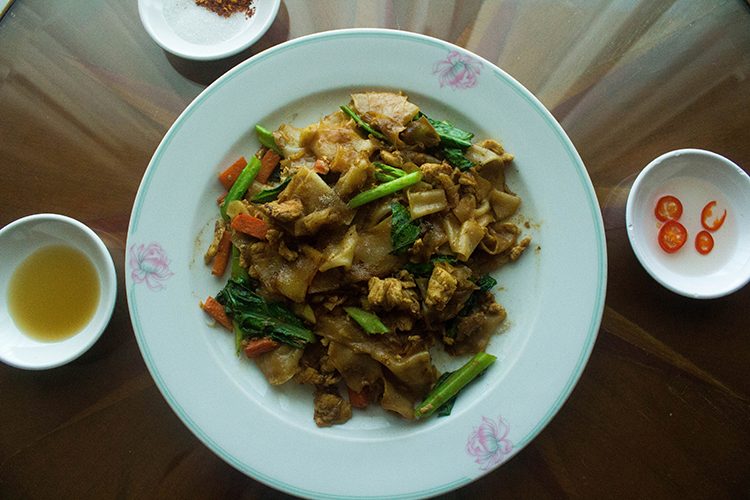
    Hold up on the Pad Thai and order yourself the lesser-known Pad See Ew! Characterized by wide, flat noodles (sen yai) fried with Chinese broccoli, soy sauce and egg, this dish can be found all over Thailand. It’s typically served with thinly sliced meat, but can easily be adapted to the vegetarian palate.    

    2. Kow Soi (Curry Noodles)
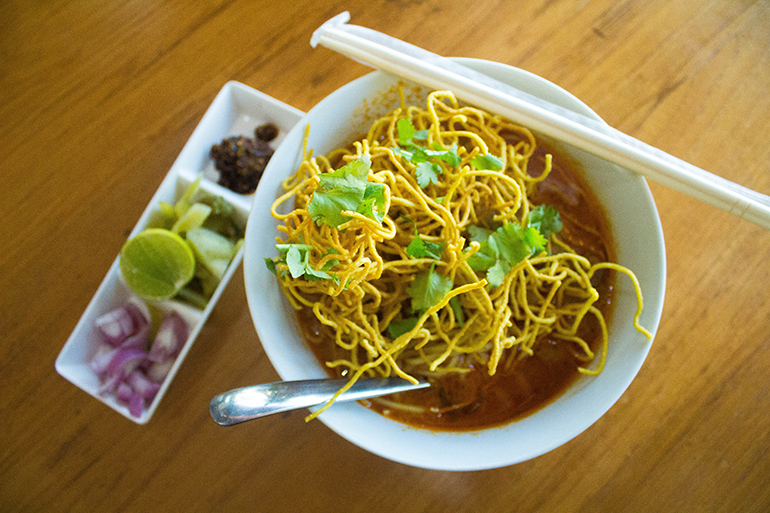
    Chiang Mai’s signature dish is soft egg noodles, pickled vegetables, and a so-tender-it-falls-off-the-bone leg of chicken swirl in fragrant, curry-like soup. Topped off with deep-fried noodles for an incredibly satisfying crunch.

    3. Bamee Moo Daeng (Yellow Noodles and Red Pork)
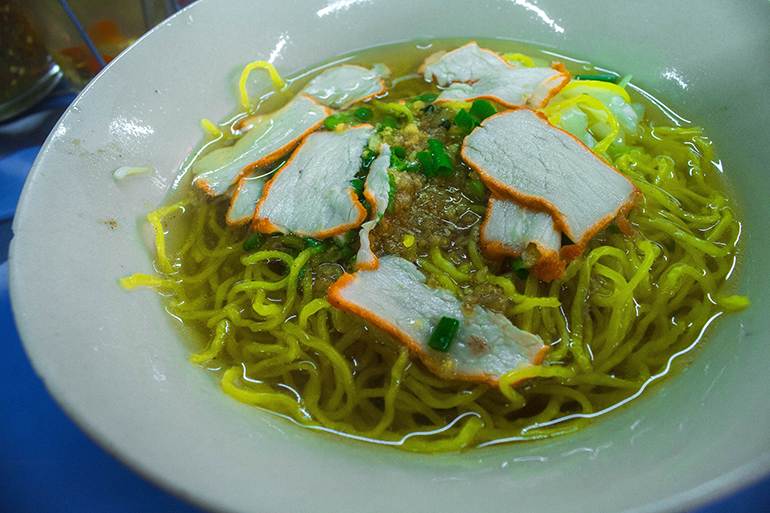
    A dish with electric colors, adapted from China that is simple but oh-so-satisfying. If you’re craving comfort, delve into a hot bowl of thin yellow noodles, fried garlic, fishballs, blanched greens and crispy red pork.

    Thai Cuisine Beyond Noodles…

    Gaeng Hang Lay Moo Curry (Pork Belly Curry)  
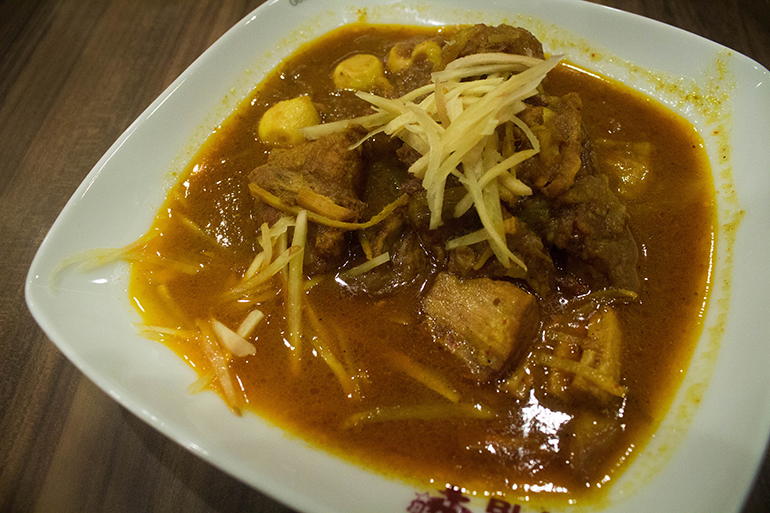
    When I asked a friend from Chiang Kham to recommend a northern dish, this was his immediate suggestion, and for good reason. It’s decadent and sweet and savory and wonderful. Soft pork belly swims in an ocean of hot red curry.

    What makes the dish, though, is the seasoning. The flavor is distinctly Thai, but hints Indian due to the slew of spices blended into the curry—cardamom, turmeric, fennel and masala to name a few. The dish actually descended from Indian down to Myanmar, and from there made its way to Thailand. It’s an excellent example of how intercultural Thai cuisine truly is.   

    Kai Med Ma Muang (Chicken and Cashew Nuts)
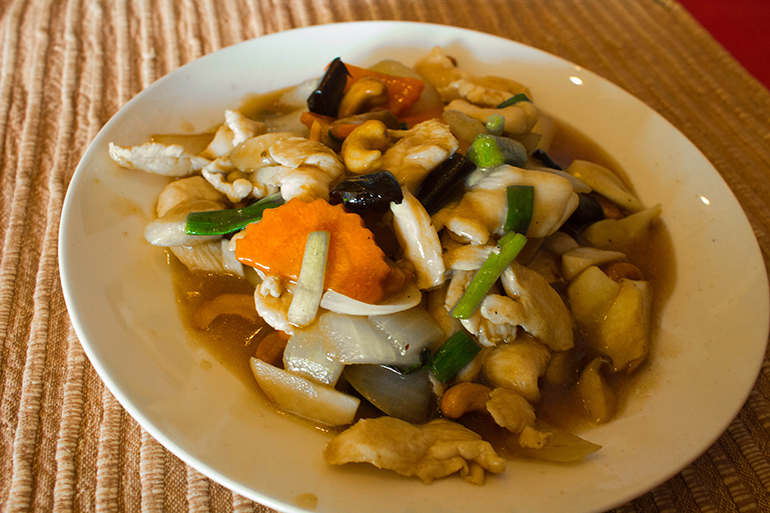
    Cashew and chicken stir fry! Dried chilies add smoke and spice. Delicious over jasmine rice.  

    Panang Curry
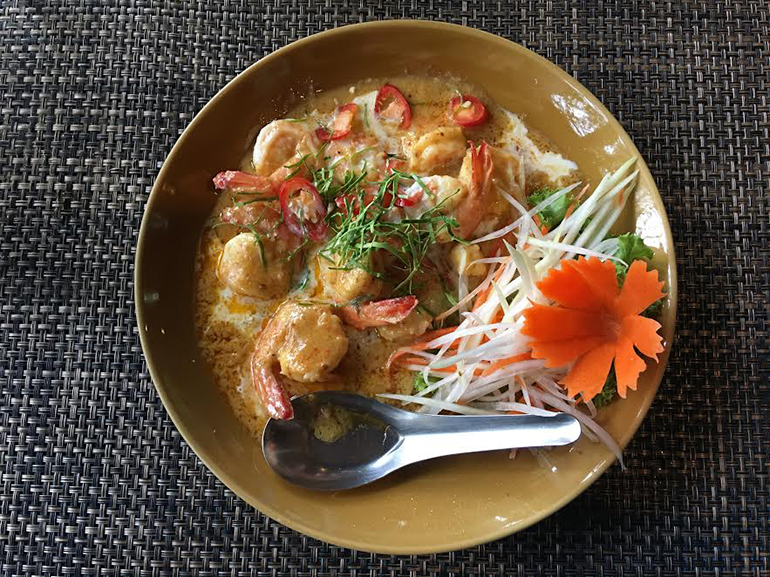
    A kind of thick curry with many variations. Coconut lends it a rich creaminess, and the consistency, in combination with nutty undertones, differentiate it from soupier red curry. It typically contains some kind of meat, like shrimp or chicken.

    Som Tam (Green Papaya Salad)
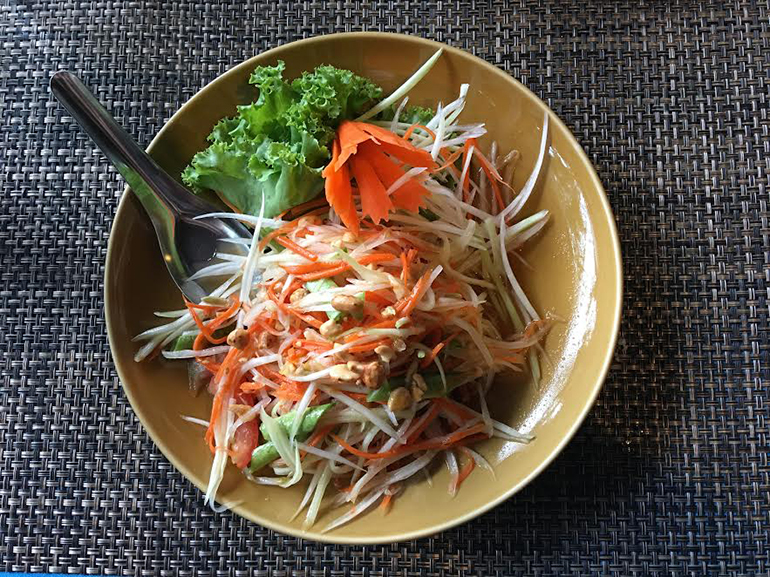
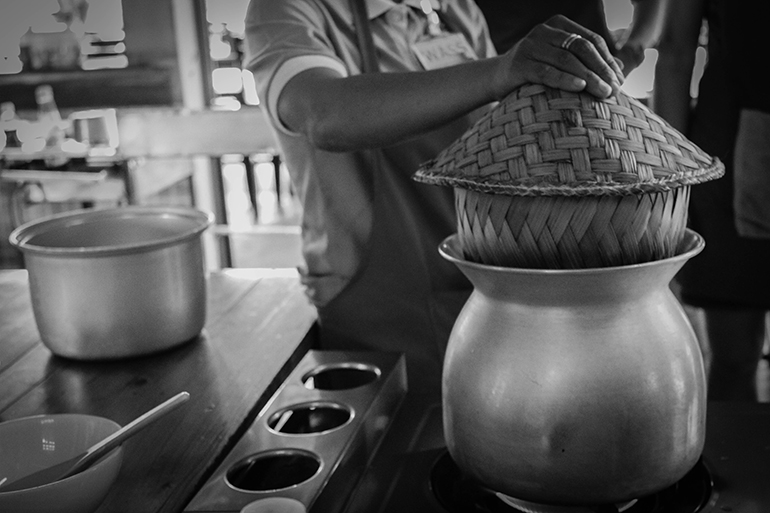
    It tastes a bit different anywhere you order it, but it’s always a tastebud explosion— crisp, unripe papaya is pounded into a mortar with a tantalizing mixture of sour citrus, salty fish sauce, sweet palm sugar and spicy chilis. It’s popularly combined with grilled chicken and sticky rice. If you’re feeling traditional, use your hands by first taking a pinch of sticky rice and then reaching into the papaya salad

    Tom Kha Kai (Chicken Coconut Soup)
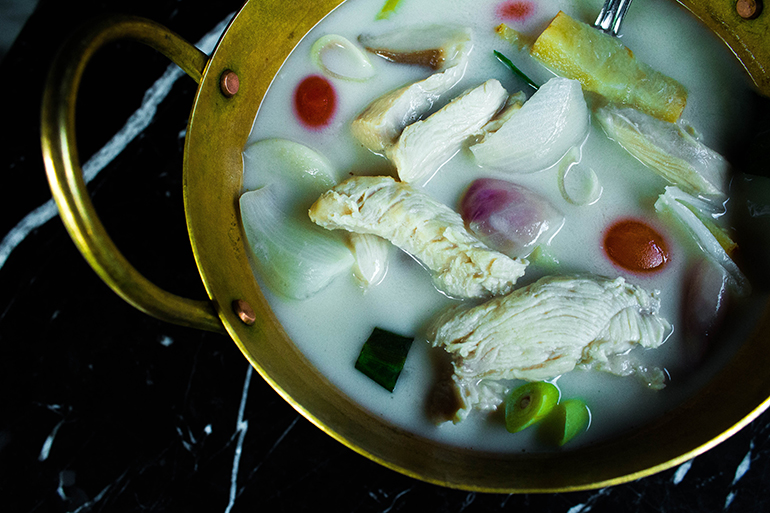
    A mouthwatering and surprisingly refreshing soup that’s great for sharing. It’s not quite creamy—silky is a more apt descriptor. Lemongrass, kaffir and lime juice add a punch.   

    Larb (Minced Meat Salad)
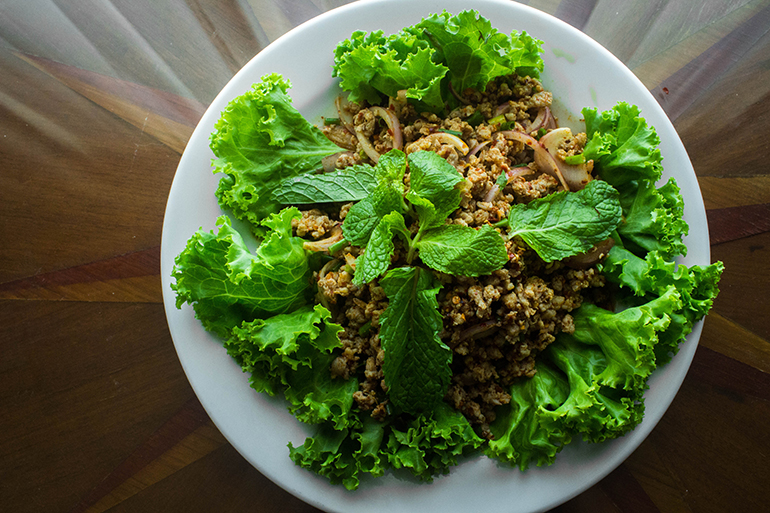
    Although it varies from region to region, larb is basically som tam for carnivores. Minced meat (or mushroom) is mixed with spices and toasted rice. It’s often served with vegetables, and is typically dressed with either lime juice, fish sauce or some combination thereof. In the north it’s heavily spiced, and sometimes served raw. Be careful with this, for obvious reasons—it’s best to opt for the stir-fried version.

    Thom Kao (Rice soup)
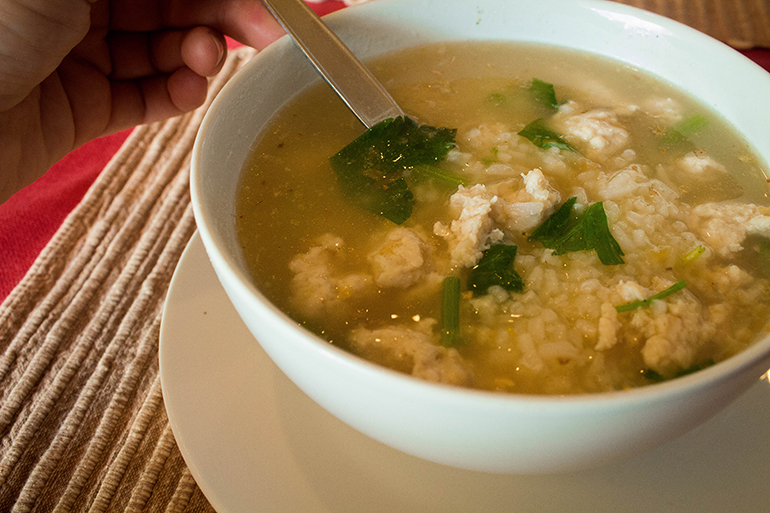
    The chicken-noodle-soup-of-Thailand, and apparently a popular breakfast entrée among locals. The rice is cooked until thick and soft, sensationally flavored with garlic, lemongrass, scallions and fresh cilantro. 

    BONUS: Fruit.
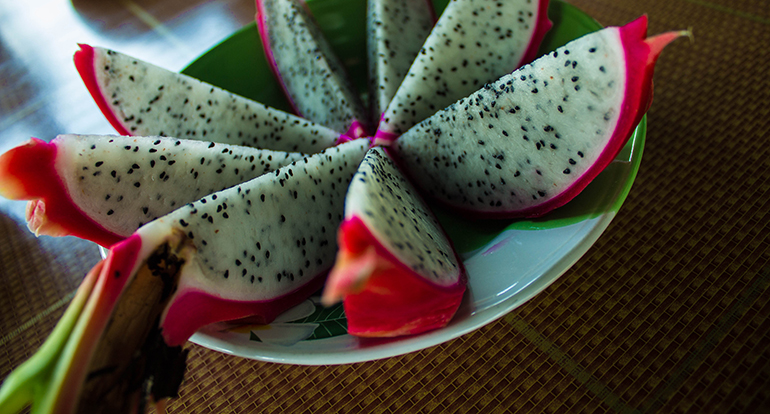
    Unless you come from someplace tropical you’ll likely encounter fruits you’ve never heard of like:

    • lychee-like longan
    • dragonfruit from cactus
    • sweet-and-sour pomelo
    • adorably fuzzy rambutan
    • crunchy rose apple
    • waxy jackfruit
    • nearly two dozen different kinds of bananas

    Some of the fruits are entirely alien-looking. If you’re in a city, look for small stalls that have a selection on ice. They’re typically 10-20 baht for a serving, and many are paired with a little bag of seasoning—the classic chili, sugar, salt.


    About the Author:

    Greenheart Travel English teacher, Chiara Burns, is a wanderer, wonderer, insomniac and a firm believer in the powers of serendipity and human kindness. Chiara likes traveling, fantasy literature, deadlifting, and photoshopping Tom Hanks’ face onto photos of the family dogs. You can read more about her adventures in Thailand on her blog, The Road to Everwhere.

     

    Teach in Thailand to taste all the “Land of Smiles” has to offer.

  • 4 Tips on Overcoming Culture Shock While Teaching in Thailand (and Beyond)

    4 Tips on Overcoming Culture Shock While Teaching in Thailand (and Beyond)

    The morning I left for my placement to teach in Thailand, I quite literally had ants in my pants. As I moved across the parking lot, my skirt swept through a pile of the large, angry bugs and after trying to sit in the driver’s seat (the wheel is on the right here in Thailand, whoops) I spent the next fifteen minutes crying out and flailing madly in the backseat that I’d been resigned to.

    The taxi driver didn’t speak English, had no idea that I was being assaulted by giant ants, and was likely afraid for her safety. No wonder farang have a reputation for being hard to please. Don’t let them drive and they have a seizure in the back of your car.  

    When I got to the bus station I was lost, I didn’t know where to wait, I couldn’t read the signs, I dropped things and tripped over my too-long skirt. The clumsiness was exacerbated by the fact that everywhere I looked, people were staring—I understood that blonde hair and light eyes is an unusual sight in Thailand, but I was irritated at the obvious gawking.

    Culture shock didn’t feel like I expected it to. I expected to be sad. Lonely. Homesick. It wasn’t the case.

    Have you ever spent so much time around another person that everything they do starts to irritate you? You hear them inhale and you want to tear out their jugular? That was my flavor of culture shock. I was pissed and had no one to blame it on. And I realized that this was my first bout with the inevitable phenomenon we teachers-in-training had all been warned about.

    It’s important to recognize that culture shock affects people differently; some people cry; some people lose their tempers; some people mutter curse-words for the duration of the five-hour bus ride to their placements. Between obscenities, I thought about how I would handle the coming weeks.

    They’re panning out well, and here’s what I’ve learned:  

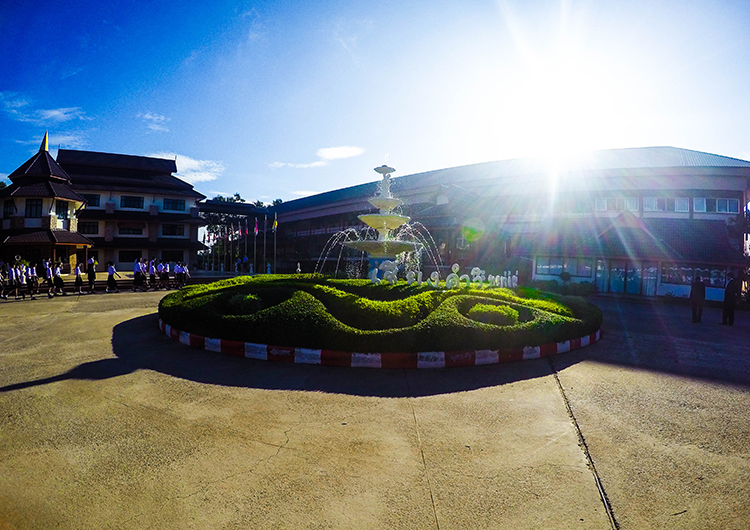
    school-in-thailand-photo-by-chiara-burns
    Chiara’s school in Thailand.

    1. Take Control Where You Can

    Many events are going to be out of your control. Important details will be shared an hour (or maybe even just five minutes) before they play out. You might end up giving an impromptu speech in front of a few thousand students. A flight might be booked on your behalf without you knowing. Oh, and by the way, class is canceled today.

    My advice is to take control where you can. Exercising your decision-making capabilities and giving yourself choices can help you establish a sense of stability. And when you have that, it’s easier to handle the many surprises with calm and grace. So make time for yourself.

    • Carve a few hours out of every workday to do what fulfills you.
    • Practice your crafts, whatever they are.
    • Consume the media that brings you joy.
    • Go hiking or find a gym.
    • Make lists: cross items off. Set goals: crush them. Have a plan: stick to it.

    It’s never a bad idea to invest in yourself, and asserting personal control where it’s appropriate to do so can have a truly positive impact on your well-being.

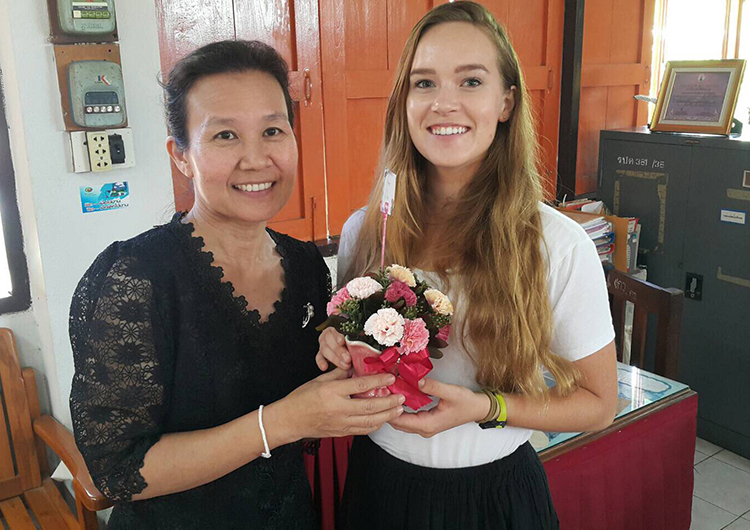
    chiara-burns-with-thai-woman
    Chiara investing in relationships with members of her community.

    2. Be Part of the Community

    You are here, in this foreign place, for a reason. Hopefully, that reason has something to do with learning more about the local community and way of life. In the short time I have been here, I have learned that Thai people value harmony, and this prioritization leads them to take such excellent care of each other. In a small, quiet town like Chiang Kham, there are many opportunities to experience this kindness firsthand.

    For instance, I made friends with a lovely woman who owns a restaurant across the street from my school. She hardly speaks English and I currently speak even less Thai, but it doesn’t matter. Most days I get my lunch there. I say hello, I smile, I ask how she is and then I say “mun deum”—same same. At which point she gets to work on my usual lunch. Sometimes she sits with me and shares warm corn scraped from the cob, or sugar-coated nuts. We trade Thai and English words for objects around the room. We smile.  

    The first day I arrived at my placement, I signed up for Muay Thai with a local on his little farm-looking property. Although I was not able to continue my training there, the connections I made with the fighters there are something I cherish. Having my ass kicked by a six year old was both humbling and heartwarming, and it was something we could all laugh about.

    By spending time in the community, I learned something valuable: you don’t need to speak the same language to connect, to share, and to reach a kind of understanding.  

    This is nowhere more obvious than in your own classroom. One of the greatest resources available to you are your own students.

    Do your job to the best of your ability and the result is life-changing. Few things are more fulfilling than walking into a room full of kids who cheer at the sight of you. Let those interactions with your students remind you why you’ve come to this place. I encourage you to embrace the role of “teachuh” (which most people will call you, regardless of whether they’re your student or not) because when you invest your time and energy into the community, it has a beautiful way of reciprocating.  

    students-in-thailand-photo-by-chiara-burns
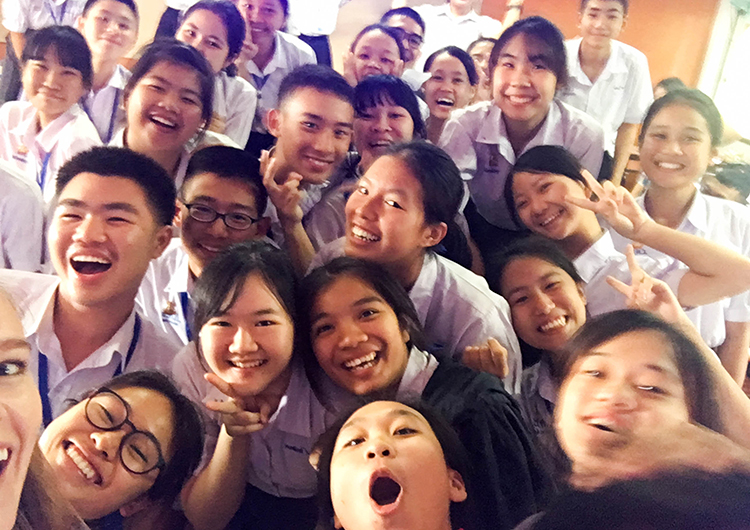
    A group of Chiara’s students in Thailand.

    3. Seek Laughter

    Cultural blunders, regular discomfort and routine confusion are part of the learning experience. Whenever you can, laugh it off. There will be heat rash and language barriers and bugs in places you don’t want them. Often, you’ll be the butt of the joke. Don’t take it too seriously.

    As a foreigner in a foreign land, it’s inevitable. A lot of what happens is easy to laugh about after the fact, but if you can learn to find humor as the mishaps occur, you’ll be better off for it. It’s something I’ve learned from my students. Thai kids are happy, lighthearted. They smile, they’re engaged with one another and humor is a constant companion. Be like Thai kids. Choose laughter.

    meditation-photo-by-chiara-burns

    4. Loving-Kindness Meditation

    It was a long bus ride to my placement… Compounded by my own negative feelings which, at that point, were spiraling wildly out of control. Everyone hated me. I didn’t belong. Nothing made sense. I was angry, I was scared. I needed to shift my mindset. So I turned to a loving-kindness meditation.

    This is a strategy for a little bit of direct, immediate relief. There are a wide variety of meditations, and loving-kindness meditations are traditionally called metta. It’s originally a Buddhist practice meant to cultivate compassion and goodwill. Even within this particular form of meditation, there are many, many variations. Typically, it involves a mantra directed at some combination of people; yourself, someone you revere, someone you love, someone you’re indifferent toward, and someone you strongly dislike.

    Here’s my version:

    • Sit comfortably, close your eyes, and breathe deeply.
    • Focus your attention on your chest area, on your heartbeat, and the rising-falling sensation of your breath.
    • Repeat the following mantra, or your own variation.

    May I be joyous, safe, and at peace. May I be filled with love and kindness. May I be illuminated, unburdened.

    • When feelings of warmth arise, bring to mind the image of someone you deeply love and respect.
    • Repeat the mantra for them “May he/she be joyous, safe…”
    • Then, move onto an acquaintance.
    • Finally move onto someone you are struggling with.

    At this point I turned my attention to the boy sitting next to me. I felt like there was an insurmountable gap between me and the people I was going to live and work with. The meditation faltered and I lost the feeling. So I switched devices and instead I visualized all the things this boy had ever done for his mother. It was random, I made it up as I went, but it worked.

    The ironic part is that his mother turned out to be sitting behind us and when we arrived in Chiang Kham, they struck up a conversation with me, took me to lunch and went out of their way to ensure I was safely settled in the new town. The universe has a delightful way of bringing events full circle.

    The Best of Times, The Worst of Times…

    Sabai sabai. That is the Thai way. A state of comfort, relaxation and tranquility. It can be yours so long as you’re willing to endure the initial challenges. If you’re struggling with culture shock please remember that the beauty of your experience abroad lies just beyond these trials—or, perhaps, within them.

    Do you have advice for handling culture shock while living abroad? Share your tips in the comments below!


    About the Author:

    Greenheart Travel English teacher, Chiara Burns, is a wanderer, wonderer, insomniac and a firm believer in the powers of serendipity and human kindness. Chiara likes traveling, fantasy literature, deadlifting, and photoshopping Tom Hanks’ face onto photos of the family dogs. You can read more about her adventures in Thailand on her blog, The Road to Everwhere.
    Are you ready to put these tips into practice by teaching abroad in Thailand?